← All universities

Yale University

New Haven, United States · Urban

Ivy LeagueAAUPrivateResearch
Acceptance
3.9%
QS World
#23
Tuition/yr
$70,075
Students
15,000
Founded
1701

TYCHR ADMISSIONS GUIDE

Yale University Admissions Guide for International Students

Founded in 1701, Yale University is an Ivy League institution unlike any other: a place where intellectual ambition meets a deeply personal sense of community. Yale's residential college system ensures that every student — regardless of background or nationality — belongs to a home within a home, a tight-knit community of scholars who eat, study, and build lifelong friendships together.

For international students, Yale represents one of the most generous and accessible top universities on earth. With a need-blind admissions policy that extends to applicants from every country, and a financial aid programme that meets 100% of demonstrated need without loans, Yale's leadership in both academic excellence and genuine affordability is unmatched among elite American institutions.

Campus

Yale University — campus in pictures

Real, freely-licensed photographs of the campus (via Wikimedia Commons).

Yale NUS College Campus   Aug 2019
Yale NUS College Campus Aug 2019Joshua Vargas · CC BY-SA 4.0 · via Wikimedia Commons
Eastern cottontail on Cross Campus, Yale University, New Haven, Connecticut
Eastern cottontail on Cross Campus, Yale University, New Haven, ConnecticutChristian David · CC BY-SA 4.0 · via Wikimedia Commons
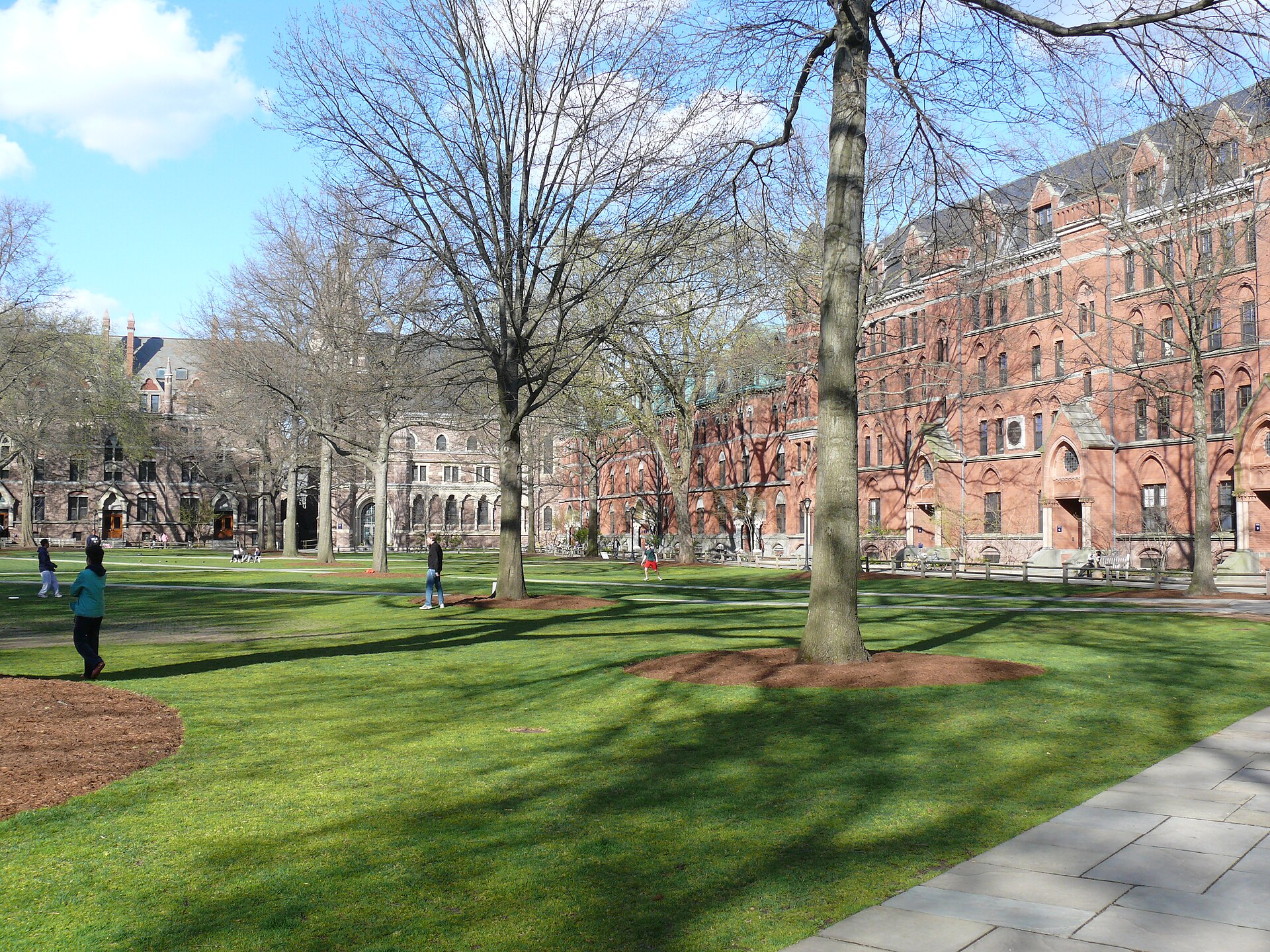
Yale University Old Campus
Yale University Old CampusAd Meskens · CC BY-SA 3.0 · via Wikimedia Commons
Architecture - Yale University Campus - New Haven - CT - USA - 01
Architecture - Yale University Campus - New Haven - CT - USA - 01Adam Jones from Kelowna, BC, Canada · CC BY-SA 2.0 · via Wikimedia Commons
Yale University Campus Scene - New Haven - CT - USA - 05
Yale University Campus Scene - New Haven - CT - USA - 05Adam Jones from Kelowna, BC, Canada · CC BY-SA 2.0 · via Wikimedia Commons
Yale University Campus Scene - New Haven - CT - USA - 02
Yale University Campus Scene - New Haven - CT - USA - 02Adam Jones from Kelowna, BC, Canada · CC BY-SA 2.0 · via Wikimedia Commons

WHY YALE

Why Yale — Prestige, Community, and Extraordinary Generosity

Yale is not simply one of America's great universities — it is one with a distinctive philosophy: that learning happens best inside a community. The residential college system, the breadth of its academic offerings, and its extraordinary commitment to access make Yale a uniquely compelling choice for ambitious international students.

1Ivy League Prestige
Ranked #5 nationally (US News), #10 globally (Times Higher Education), and #23 in the QS World University Rankings, Yale's academic reputation opens doors across every profession and continent.
2The Residential College System
Yale's 14 residential colleges are the heart of undergraduate life. Every incoming student is randomly assigned to a college they will call home for all four years — complete with dining hall, community events, traditions, and a Head of College who knows your name. Nothing else in American higher education replicates this.
3Need-Blind Generosity for Every Student on Earth
Yale is one of a handful of universities in the world that is need-blind for all applicants — including international students. Once admitted, Yale meets 100% of your demonstrated financial need through grants, not loans. Families earning below $100,000 per year typically pay nothing to attend.
4The Breadth of a Liberal Arts Education
Yale's curriculum is designed for students who want to study everything. Whether you want to combine Molecular Biology with Philosophy, or Computer Science with Music, Yale's distributional requirements and extraordinary breadth of offerings ensure you build a genuinely broad intellectual foundation while pursuing your deepest interests.
5World-Leading Arts and Humanities
The David Geffen School of Drama, the Yale School of Music, the Yale School of Art, and the Yale Repertory Theatre make New Haven one of the world's great centres for the performing and visual arts. Yale undergraduates have extraordinary access to these resources from day one.
6New Haven and the Northeast
New Haven is a vibrant, walkable city with a nationally recognised food scene, rich arts culture, and direct rail links to New York City (90 minutes) and Boston (2.5 hours). The Northeast corridor's internship and career ecosystem is within reach throughout your undergraduate years.

SELECTIVITY

Yale Acceptance Rate & Class Profile

Yale is one of the most selective universities in the world. With an acceptance rate of 3.9%, Yale evaluates every application through a holistic process centred on two questions: who is most likely to make the most of Yale's resources, and who will contribute most significantly to the Yale community.

Admission to Yale is not solely about grades and test scores — it is about who you are as a scholar, a community member, and a person. Yale's admissions officers read every file multiple times, and teacher recommendations and essays carry extraordinary weight in the process. The high school transcript is the single most important document, but it is never the only one.

3.9%
Acceptance rate
1480–1560
SAT middle 50%
33–35
ACT middle 50%
42+
Typical IB score

AT A GLANCE

Yale University — Quick Facts

1701
Founded
Private (non-profit)
Type
Urban
Campus setting
~15,000
Total enrolment
20%
International students
6:1
Student:faculty ratio

THE APPLICATION

What a Complete Yale Application Looks Like

Yale accepts applications through the Common Application, the Coalition Application on SCOIR, and the QuestBridge Application. You submit only one platform per cycle. Yale states it does not advantage students who apply through any particular platform.

01REQUIREDApplication Platform
Choose one: Common App, Coalition Application on SCOIR, or QuestBridge. Yale treats all three equally. QuestBridge applicants complete academic interest questions separately through the Yale QuestBridge Questionnaire rather than the standard supplement.
02REQUIREDYale Supplemental Essays
Short answer questions on academic interests (200 words), three 'short takes' of approximately 35 words each, and one 400-word essay (Common App and Coalition only). These are among the most distinctive and demanding supplemental prompts in the Ivy League.
03REQUIREDSchool Report and Official Transcript
Official transcripts from every secondary school attended, submitted through your school counsellor. The high school transcript is the single most important document in the Yale application and is read with attention to rigour, trajectory, and context.
04REQUIREDTwo Teacher Recommendations
From two different academic subjects. Yale reads these extremely carefully — choose teachers who can speak to your intellectual character and curiosity, not merely those in whose class you earned the highest grade.
05REQUIREDCounsellor Recommendation and School Report
Your school counsellor submits a recommendation alongside the school's academic profile. Give counsellors at least six weeks. For students at lesser-known international schools, this letter is a critical context-setting document for the admissions committee.
06REQUIREDStandardised Test Scores (SAT or ACT)
Yale requires the SAT or ACT for all applicants as of the 2026 cycle, restoring the pre-2020 policy. International leaving examinations — IB Diploma, A-Level, CBSE, Gaokao — do not fulfil this requirement. You must sit the SAT or ACT separately.
07OPTIONALSupplementary Arts or STEM Materials
Applicants may submit optional work in Visual Art, Dance, Music, Film, or STEM research. These are evaluated seriously and can meaningfully differentiate strong creative or research-focused applicants.

HOLISTIC REVIEW

What Yale Admissions Officers Are Looking For

Yale's holistic review is guided by two foundational questions: 'Who is likely to make the most of Yale's resources?' and 'Who will contribute most significantly to the Yale community?' Yale evaluates applicants across three primary dimensions, plus context.

01Academic Potential
Yale looks for a sharp, inquiring mind with the capacity and desire to use it constructively. Academic performance is the most important dimension — the transcript, read in the context of what was available to you, is central. Yale explicitly values the 'rigour of secondary school record' as its most important academic factor.
02Investment in Others
Yale uses the language of 'moral concern and consideration for others' — collegiality, empathy, respect for difference, and concern for the common good. This shows in how you write about your community, your collaborators, and the world beyond yourself in essays and recommendations.
03Willingness to Explore
Yale values open-mindedness, curiosity, creativity, and an enterprising spirit. This is particularly important given Yale's liberal arts ethos — Yale wants students who will take full advantage of the extraordinary breadth of what is available to them.
04Extracurricular Distinction
Depth over breadth is Yale's consistent signal. What have you built, created, or transformed? Yale looks for the impact you have had on your community, not the number of clubs on your activities list.
05Context of Opportunity
Every applicant is evaluated in context. Yale reads applications school-by-school, understanding that a student from a rural school in Nigeria who achieved excellence with limited resources demonstrates something different — and equally admirable — as a student from a full-IB international school in Singapore.
https://admissions.yale.edu/what-yale-looks-for

APPLICATION DEADLINES

Yale Application Rounds — SCEA, QuestBridge, and Regular Decision

Yale offers Single-Choice Early Action (SCEA) — a non-binding early round that is among the most strategically significant early options at any US university. SCEA is non-binding, meaning you are not required to attend if admitted. However, 'single-choice' means you cannot apply to other private universities early in the same cycle.

QuestBridge Match applicants are bound to attend if matched. Consider applying Regular Decision if you need to compare financial aid offers from multiple institutions, or if additional time would meaningfully strengthen your application.

RoundDeadlineDecision
Single-Choice Early Action (SCEA)November 1Mid-December
QuestBridge National College MatchNovember 1Mid-December
Regular DecisionJanuary 2Late March

CAMPUS LIFE

Student Life at Yale — Residential Colleges, Traditions, and New Haven

Yale's undergraduate experience is built around the residential college system — 14 colleges, each a self-contained community with its own dining hall, library, gym, common spaces, Dean, and Head of College. Every incoming student is randomly assigned to a college before they arrive, and it becomes their home, social community, and institutional identity for all four years.

Beyond the residential colleges, Yale has over 500 student organisations spanning every interest: from the Yale Political Union (one of the oldest collegiate debating societies in the US) to a cappella groups, the Yale Daily News (the oldest college daily in the country), theatre troupes, and nationally competitive academic teams. Yale also carries a distinctive senior society tradition — Skull and Bones (founded 1832), Scroll and Key, and Wolf's Head form the famous 'Big Three,' whose members include five US Presidents, dozens of senators, and generations of cultural and business leaders.

The 14 Residential Colleges
Benjamin Franklin, Berkeley, Branford, Davenport, Ezra Stiles, Grace Hopper, Jonathan Edwards, Morse, Pauli Murray, Pierson, Saybrook, Silliman, Timothy Dwight, and Trumbull. Each has its own architecture, culture, intramural sports teams, Dean, and traditions that students carry long after graduation.
College Teas and Traditions
Each residential college hosts 'college teas' — social gatherings featuring academics, politicians, artists, and public figures as guests. Colleges also organise off-campus trips to Broadway shows, ski resorts, and orchards, along with on-campus concerts, dinners, and annual events unique to each community.
Arts, Drama, and Music
Yale undergraduates have extraordinary access to world-class arts resources: the David Geffen School of Drama, the Yale School of Music, the Yale School of Art, and the Yale Repertory Theatre. Over 500 student performances and screenings take place each year — many free of charge.
New Haven
New Haven is a vibrant city widely credited as the home of the American apizza, with a rich arts community and world-class Yale public museums including the Yale Art Gallery (one of the oldest in the US, free admission) and the Peabody Museum of Natural History. New York City is 90 minutes by train.
https://admissions.yale.edu/residential-colleges

OUTCOMES

Career Outcomes and the Yale Alumni Network

Yale graduates are among the most professionally successful in the world. The Yale alumni network spans every major industry and country, activated through a culture of mentorship that begins the moment you arrive on campus. Five US Presidents, dozens of Supreme Court justices, and generations of cultural and intellectual leaders have studied at Yale.

Stats

95%
Employment or graduate school within 6 months
$80,000
Average starting salary
20%
International students

Cards

Law and Public Service
Yale Law School is consistently ranked the #1 law school in the United States. Yale's tradition of public service is unrivalled — five US Presidents, dozens of Supreme Court justices, senators, diplomats, and heads of state have studied at Yale. The pathway from Yale College to public service careers is among the strongest of any university on earth.
Finance and Consulting
Goldman Sachs, McKinsey, Morgan Stanley, BlackRock, and every major private equity and hedge fund recruit heavily from Yale. The Yale School of Management (SOM) MBA is among the most prestigious in the world, and undergraduates build the networks and analytical foundations to match.
Arts, Media, and Culture
Hollywood, Broadway, and the national arts and media scene are disproportionately populated with Yale alumni. The drama, art, and music programmes produce working directors, writers, playwrights, and musicians who remain influential throughout their careers.
Medicine and Science
Yale School of Medicine is a world-leading research institution. Yale undergraduates with strong science preparation enter medical school pipelines and research careers with access to an exceptional faculty-to-student ratio and one of the best research environments available to undergraduates.

FREQUENTLY ASKED QUESTIONS

Yale Admissions — FAQs for International Students

Is Yale need-blind for international students?+

Yes. Yale is one of only a handful of universities in the world with need-blind admissions for all applicants, including international students. A family's ability to pay plays no role in the admissions decision. Once admitted, Yale meets 100% of every family's demonstrated financial need through grants — no loans required.

Does Yale require the SAT or ACT for international applicants?+

Yes. As of the 2026 admissions cycle, Yale has restored its pre-2020 requirement of the SAT or ACT for all applicants. International leaving examinations (IB Diploma, A-Levels, CBSE, Gaokao) do not fulfil this requirement. Yale does not prefer the SAT over the ACT — choose based on your strengths.

What is Single-Choice Early Action (SCEA) and should I apply?+

SCEA is Yale's non-binding early round with a November 1 deadline and mid-December decisions. 'Single-choice' means you cannot apply to other private universities Early Action or Early Decision in the same cycle. You can still apply to public universities and non-US universities early. Apply SCEA if Yale is your clear first choice and your application is complete and strong by October.

How does the residential college system work for international students?+

Every incoming Yale student — including all international students — is randomly assigned to one of 14 residential colleges before they arrive. This becomes their community for all four years: a dining hall, a Dean, social events, intramural sports, and a cohort of fellow students who become close friends. Many international students describe the residential college as the defining feature of their Yale experience.

Does Yale prefer certain majors for international applicants?+

No. Yale admits students to Yale College broadly — you declare a major in your first or second year. Yale's class is deliberately diverse across intended fields. A student intending to study Global Affairs is evaluated with the same holistic criteria as one intending to study Computer Science or Drama.

What makes Yale's supplemental essays different from other Ivy League supplements?+

Yale's short-takes format — three responses of approximately 35 words each — is uniquely demanding. These tiny essays reward wit, specificity, and voice. Yale is testing whether you can communicate something genuinely interesting about yourself in the space of a tweet. Most applicants underestimate how much craft they require.

Can international students receive Yale's full financial aid?+

Yes. Yale's aid is completely equitable between domestic and international students. Families earning below $100,000 per year with typical assets typically pay nothing to attend. Families earning below $200,000 typically receive scholarships covering at least full tuition. Aid is automatic upon admission and does not require annual reapplication.

Does Yale conduct alumni interviews for international students?+

Yes. Yale conducts alumni interviews for many applicants worldwide. After you submit your application, Yale will contact you if an interview is available in your area. The interview is conversational, not evaluative in a traditional sense — your interviewer assesses intellectual curiosity and personal character, not academic performance.

ACADEMIC REQUIREMENTS

Yale Academic Requirements — The Honest Guide for International Students

Yale's 3.9% acceptance rate means that academic excellence is a necessary condition for admission — but never a sufficient one. Understanding what the typical Yale academic profile actually looks like, and what your specific curriculum signals to a Yale admissions reader, is the essential starting point for building a competitive application.

This section gives you the honest picture of Yale's academic profile: what GPA, test scores, and curricular choices distinguish admitted students, and what the critical differences are for IB, A-Level, AP, and other international curricula. The key is rigour — Yale rewards students who take the most challenging courses available to them and perform at the highest level.

ACADEMIC PROFILE

Yale Academic Profile — Stats of Admitted Students

Yale does not publish a minimum GPA or score threshold. The figures below reflect the competitive range for admitted students. Think of them not as minimums but as the zone within which strong applicants operate. Falling below the 25th percentile on any dimension makes the academic profile harder to defend holistically.

3.9
Minimum GPA (unweighted)
1480–1560
SAT middle 50%
33–35
ACT middle 50%
42+
Typical IB score

TESTING POLICY

Yale's Test Policy — SAT and ACT Required for All Applicants

As of the 2026 admissions cycle, Yale has restored its requirement that all applicants submit SAT or ACT scores — a policy paused during COVID-19 and reinstated with the class entering in 2026. This requirement applies to all applicants regardless of nationality or educational background.

Yale does not prefer the SAT over the ACT; the choice should be based on which test plays to your specific strengths. Yale's middle 50% SAT range is 1480–1560, and the ACT range is 33–35. Strong test scores within or above these ranges provide a clear positive academic signal, but scores alone do not determine admission.

International leaving examinations — IB Diploma, A-Levels, CBSE, Gaokao, and equivalents — do not fulfil Yale's standardised testing requirement. You must sit the SAT or ACT as a separate component of your application.

SAT AND ACT

SAT and ACT at Yale — Ranges, Strategy, and Preparation

Yale's SAT middle 50% (1480–1560) and ACT middle 50% (33–35) represent the band where most admitted students fall. Submitting scores within or above these ranges provides a clear positive signal; scores below the 25th percentile (SAT 1480, ACT 33) make the academic component of the file harder to defend.

SAT Strategy
Yale superscores the SAT — combining the highest Evidence-Based Reading and Writing score with the highest Math score from multiple sittings. This means taking the SAT more than once can be advantageous if you have clear section-specific strengths to improve. Aim for a composite of 1480+ before submitting; 1550+ is a more comfortable target for competitive files.
ACT Strategy
Yale accepts the ACT on equal footing with the SAT. The ACT rewards speed and familiarity with the Science section's data interpretation format. A composite of 33+ on the ACT is broadly competitive. Unlike the SAT, Yale evaluates your single best ACT sitting — not a superscore. Submit your highest single sitting.
Choosing Between SAT and ACT
Take diagnostic tests for both before committing. Students with strong quantitative reasoning and careful reading habits often do better on the SAT. Students who process multiple question types quickly and are comfortable with the Science section often favour the ACT. The right decision depends entirely on your individual test profile — make it early, ideally by Grade 10.

INTERNATIONAL CURRICULA

IB, A-Level, and AP at Yale — What Yale Expects from Each Curriculum

Yale's admissions officers are experienced readers of international transcripts. They evaluate every application in the context of the specific school and curriculum you attended. The central question is always whether you took the most challenging courses available to you and performed at the highest possible level.

INTERNATIONAL BACCALAUREATEIB Diploma
A competitive IB application to Yale typically reflects a total score of 42 or above (out of 45), with 7s at Higher Level in subjects relevant to your intended major. Yale values intellectual ambition in subject selection — combining HL Mathematics (Analysis and Approaches preferred), HL sciences, and HL humanities simultaneously demonstrates genuine academic commitment. The Extended Essay (aim for A or B grade) provides useful supplementary evidence of independent research capability.
Score 42+ | HL 7s in relevant subjects | Extended Essay A or B
UK AND INTERNATIONAL A-LEVELSA-Levels
Competitive A-Level applicants to Yale typically hold predicted or achieved grades of A*AA to A*A*A*. For STEM applicants: Mathematics, Further Mathematics, and a science subject at A-Level. For humanities applicants: English, History, Languages. Yale understands A-Level predicted grade conventions and reads strong predictions alongside GCSE/IGCSE performance as corroborating evidence.
A*AA to A*A*A* | GCSE/IGCSE confirms predictions | Subject rigour matters
ADVANCED PLACEMENTAP Courses
For students in the US system or at schools offering AP courses, a pattern of 5s across multiple rigorous AP subjects is the expected academic signal. Yale does not specify a minimum number of AP exams, but the most competitive applicants typically sit 5–8 AP exams with predominantly 5s. The rigour of the subjects chosen (Calculus BC, Physics C, Chemistry, CS, World History, English) matters more than the count. AP 5s can earn course credit at Yale, allowing students to access advanced coursework from the start.
5s in multiple rigorous subjects | Quality over quantity | Credit available for AP 5s
CBSE, GAOKAO, AND MOREOther International Curricula
Yale evaluates CBSE, ISC, Gaokao, and other national curricula through the same contextual lens. Top-percentile performers with strong records of intellectual initiative and extracurricular distinction are competitive. If your curriculum does not include IB or A-Levels, this is not a disadvantage — Yale reads your performance relative to what was available at your school.
Evaluated in context | National rank/standing matters | SAT/ACT required separately

SUBJECT PREPARATION

Subject Preparation for Yale — What a Coherent Academic Profile Looks Like

Yale has no formal prerequisite subjects for undergraduate admission — students are admitted to Yale College and declare a major in the first or second year. However, the most competitive applicants demonstrate subject preparation coherent with their stated academic interests.

Mathematics
HL Mathematics: Analysis and Approaches (IB), A-Level Mathematics and Further Mathematics, or AP Calculus BC is expected for any quantitatively oriented applicant. Participation in national or international mathematics competitions — AMC, AIME, USAMO, national Olympiads — is a meaningful differentiator for highly selective STEM programmes.
Sciences
For science-focused applicants, HL sciences with strong marks (IB 7s or A-Level A*s) are the expected baseline. Research experience — through school science fairs, RSI, Simons, or other competitive programmes — is the strongest possible academic differentiator for science applicants at Yale's level of selectivity.
Humanities and Social Sciences
Yale is famous for the quality of its humanities. Applicants interested in History, Political Science, Global Affairs, Literature, or Philosophy should demonstrate broad reading beyond the school curriculum, strong analytical writing, and ideally an independent research project, thesis, or publication that demonstrates genuine scholarly engagement.
Computer Science
For CS-focused applicants, programming projects with real users or meaningful scale, competitive programming achievements (USACO Silver or above, IOI qualification), and coursework that goes beyond standard school offerings are meaningful signals. Yale's CS department combines strong theoretical foundations with interdisciplinary reach across the arts and sciences.
Arts and Drama
Yale accepts optional arts supplements in Visual Art, Dance, Music, and Film. For serious arts applicants, this is a critical component of the application — not a supplement in the diminutive sense. Yale's drama programme and music school are national and international benchmarks, and the undergraduate arts community is extraordinarily active.

ENGLISH PROFICIENCY

English Language Requirements at Yale

Non-native English speakers who have not completed at least two years of secondary education in English-medium instruction are expected to submit an English language proficiency test score. Yale accepts TOEFL, IELTS, Cambridge English Qualifications, the Duolingo English Test, and InitialView.

Yale's application essays are the most important practical demonstration of English proficiency in the file. Admissions officers read every essay with close attention to the quality of the writing — not merely its grammatical correctness but its clarity, precision, and voice. A student who writes compelling English in their supplemental essays demonstrates proficiency more powerfully than any test score alone.

TestMinimumNotes
TOEFL iBT100Scores of 110+ provide a stronger margin
IELTS Academic7.0From Yale's published minimum thresholds
Duolingo English Test120Accepted alongside TOEFL and IELTS
Cambridge EnglishAcceptedB2 First, C1 Advanced, C2 Proficiency
InitialViewAcceptedVideo interview proficiency platform

GRADE-BY-GRADE GUIDE

Building Your Yale Profile — Grade 9 to Grade 12 Roadmap

A competitive Yale application is built over four years, not four months before the deadline. Here is the year-by-year progression that the strongest Yale applicants follow.

1Grade 9 — Foundation
Begin with the most rigorous courses available at your school. Establish the subjects you genuinely love — this is the year to explore broadly. Join one or two activities you care about. Resist the temptation to join every available club; what matters is the depth of commitment you develop, not the breadth of memberships.
2Grade 10 — Deepening
Identify your academic focus area and begin to go deeper into it. Take diagnostic SAT and ACT tests to understand which plays to your strengths. Begin any competitive academic pursuits — math olympiad, science fair, debate circuits, writing competitions — that take years to develop and cannot be started in Grade 12.
3Grade 11 — Acceleration
Pursue your primary extracurricular with genuine commitment and take on a leadership or project role that demonstrates impact. Begin structured SAT or ACT preparation. For IB students, choose HL subjects strategically. Explore summer research, internship, or academic enrichment programmes that deepen your primary area of interest.
4Grade 12 — Application Year
Sit your SAT or ACT early (August or September) to lock in scores before application work begins. Request teacher and counsellor recommendations in June — before the school year ends — giving recommenders minimum six weeks. Begin Yale essays in September. Apply SCEA by November 1 if Yale is your clear first choice and your application is genuinely complete and competitive.

ACADEMIC PITFALLS

Academic Mistakes That Cost International Students at Yale

These are the most common academic pitfalls in Yale applications from international students — each of which is avoidable with the right strategy and timeline.

  • Choosing easier courses to protect GPA rather than demonstrating academic ambition through rigour. Yale explicitly evaluates 'strength of curriculum' as a separate academic factor from grades alone.
  • Treating the SAT or ACT as an afterthought. Yale's restored test requirement means strong scores are now a non-negotiable component of a competitive application — plan preparation from Grade 10.
  • Submitting an IB application with a predicted total below 40. While some students below this threshold are admitted, the odds change substantially and the rest of the application must compensate with exceptional strength.
  • Believing that a near-perfect academic profile is sufficient. Yale's 3.9% acceptance rate means that exceptional academics are the baseline for every admitted student — not the distinguishing feature.
  • Requesting teacher recommendations too late. Your most impactful recommenders support dozens of applications. Give them at least six to eight weeks and provide a clear brief about the themes you hope they will address.
  • Submitting English test scores at the minimum threshold. Aim for TOEFL 110+ or IELTS 7.5+ to demonstrate that language is not a constraint on your academic capacity — the admissions file should never raise this question.
  • Declaring a major without intellectual grounding in it. Yale's admissions officers read your coursework, activities, essays, and recommendations as a coherent story. Inconsistency between stated interests and the academic record raises questions that essays cannot easily answer.

COST AND FINANCIAL AID

The Real Cost of Yale — One of the Most Generous Aid Programmes on Earth

Yale's sticker price is among the highest in the US. But for the majority of families who qualify for financial aid — including international families — Yale's actual cost is far lower. As of January 2026, Yale announced that families earning below $200,000 receive scholarships covering at least full tuition. Families earning below $100,000 pay nothing at all.

Yale is need-blind for all applicants worldwide and meets 100% of every admitted student's demonstrated need through grants, not loans. This is not a marketing claim — it is Yale's official financial aid policy, backed by one of the largest university endowments in the world and in place for over sixty years.

ANNUAL COSTS

Yale Annual Cost Breakdown

These figures reflect Yale's institutional cost data for a single academic year. All amounts are in US dollars. Your net cost after financial aid will depend on your family's demonstrated financial need as assessed through the CSS Profile.

ComponentAnnual CostNotes
Tuition$70,075Academic year tuition
Total Cost of Attendance$94,425Includes tuition, housing, meals, books, personal expenses
Estimated Cost of Living$20,000New Haven living expenses estimate
Application Fee$80Non-refundable; paid per application submission

FINANCIAL AID FOR INTERNATIONALS

Yale Financial Aid for International Students — Need-Blind, No-Loan, 100% of Need

Yale's financial aid commitment to international students is extraordinary and structurally unique among elite global universities. Yale is need-blind in admissions for all applicants worldwide — a family's ability to pay plays zero role in the decision to admit or deny any student.

Once admitted, Yale meets 100% of every admitted student's demonstrated financial need through scholarship grants, not loans. The average annual Yale scholarship is $75,220. Yale's aid packages for international students also include housing, meals, and twice-yearly travel allowances to and from campus. Financial aid is adjusted for economic differences between the US and your home country, and is automatically renewed each year without requiring reapplication.

$75,220
Average annual Yale scholarship
88%
Yale College graduates with zero student loan debt
55%
Students receiving need-based aid
21%
Students whose families pay nothing
https://admissions.yale.edu/financial-aid-international-applicants

INCOME BANDS

What Yale Actually Costs — By Family Income

Yale publishes the following illustrative breakdown of typical annual family payments at different income levels. These are approximations — individual packages depend on family financial circumstances as assessed through the CSS Profile. International student packages are additionally adjusted for economic differences between the US and your home country.

International families may receive more generous packages than these figures suggest, as Yale's aid office adjusts for economic differences between the United States and your home country.

Annual IncomeTypical PaymentNotes
$100,000$0Full cost of attendance covered — zero family contribution
$150,000$10,000Approximate; varies by assets and family size
$200,000$20,000At least full tuition covered by scholarship
$250,000$43,000Partial scholarship; no loans required
$300,000$53,000Reduced grant; loan-free package
$350,000$63,000Smallest grant tier; still entirely loan-free

SCHOLARSHIPS

Yale Scholarships and Aid Programmes

Yale does not award merit-based scholarships. All financial aid at Yale is need-based, disbursed as grants from Yale's endowment — one of the largest in the world. There are no merit scholarships, athletic scholarships, or extracurricular achievement awards at the undergraduate level.

NEED-BASED GRANTYale Scholarship
The primary financial aid vehicle for all Yale undergraduates. Award amounts are individualised based on family financial circumstances. Average annual award: $75,220. This is a grant — not a loan — and does not require repayment.
LOW-INCOME STUDENTSQuestBridge Scholarship
Yale is a QuestBridge partner university. QuestBridge National College Match awards cover Yale's full cost of attendance — tuition, room, board, and fees — for matched students. Extremely competitive; designed for students from low-income backgrounds with exceptional academic achievement. Binding match.
ALL INTERNATIONAL APPLICANTSNeed-Blind Admission Promise
Yale has practised need-blind admissions for over sixty years — and as of 2026 this explicitly extends to all international applicants. Applying for financial aid carries zero risk of negatively affecting your admission. This is among the most consequential commitments any university makes to international students.
IMPORTANT NOTENo Merit Aid
Yale does not offer merit scholarships for academic achievement, test scores, athletics, or extracurricular distinction at the undergraduate level. All financial aid is tied exclusively to demonstrated financial need. Families with high incomes who do not demonstrate need receive no Yale financial aid regardless of the student's academic profile.

HOW TO APPLY FOR AID

How International Students Apply for Yale Financial Aid

Yale's financial aid application runs parallel to the admissions application. International students apply for aid at the time of admission — you cannot request aid after the initial application cycle. The process begins with the CSS Profile.

1Submit the CSS Profile
The College Scholarship Service (CSS) Profile is required for all Yale financial aid applicants. Yale's CSS code is 3987. SCEA applicants must submit the CSS Profile by December 1. Regular Decision applicants must submit by February 15. Begin the CSS Profile well in advance — it is more detailed and time-consuming than the FAFSA.
2Gather Supporting Financial Documents
International students submit financial documentation through the IDOC platform after completing the CSS Profile. Required documents typically include tax returns, employer letters, and evidence of all income sources. Self-employed family finances require additional supporting documentation — give yourself time to gather these materials.
3Review Your Aid Offer
Yale releases financial aid decisions alongside admissions decisions. Review your aid package carefully — it should include a breakdown of your Yale Scholarship amount, any expected student contribution, and the total family contribution. Your initial package will contain no loans.
4Request a Review If Needed
If your family's financial circumstances have changed significantly since submitting the CSS Profile — job loss, medical expenses, change in family size — contact Yale's financial aid office to request a professional review. Yale's office is experienced at accommodating these adjustments.
5Annual Renewal — No Reapplication Required
Once enrolled, your Yale financial aid is automatically renewed each year without reapplication. Your package is adjusted if your family's financial situation changes significantly. International students notify the financial aid office directly in cases of material change.
https://admissions.yale.edu/financial-aid-international-applicants

COST FAQs

Yale Cost and Financial Aid — FAQs for International Students

Will applying for financial aid hurt my chances of admission at Yale?+

No. Yale's need-blind admissions policy applies to all applicants, including international students. Applying for financial aid has absolutely zero impact on your admissions decision. This has been Yale's official policy for over sixty years and is among the strongest institutional commitments in American higher education.

How much would Yale cost for a family earning $80,000 per year internationally?+

Families earning below $100,000 per year with typical assets typically pay nothing to attend Yale — tuition, room, board, and fees are covered entirely by the Yale Scholarship. This applies to international families as well, with additional adjustments for economic differences between the US and your home country.

Does Yale offer merit scholarships for high-achieving students?+

No. Yale's undergraduate financial aid programme is entirely need-based. There are no merit scholarships, academic achievement awards, or extracurricular grants. All financial aid is determined by demonstrated financial need as assessed through the CSS Profile.

What is the CSS Profile and when is it due?+

The CSS Profile is the College Scholarship Service financial aid application required by Yale and most elite US universities. Yale's CSS code is 3987. For SCEA applicants, the CSS Profile deadline is December 1. For Regular Decision applicants, the deadline is February 15. Submit as early as possible — the CSS Profile often takes several weeks to complete and requires family tax documents.

Are Yale scholarships renewed automatically each year?+

Yes. Yale scholarship awards are automatically renewed each year without annual reapplication. Your package adjusts if your family's financial circumstances change significantly — contact Yale's financial aid office directly in that case. International students do not need to resubmit the CSS Profile annually.

What is QuestBridge and should international students apply?+

QuestBridge is a programme connecting high-achieving low-income students with full scholarships at partner universities, including Yale. If your family income is below approximately $65,000 per year, QuestBridge National College Match awards can cover Yale's full cost of attendance. The application is highly competitive but worthwhile for eligible students. QuestBridge Match to Yale is binding — you are committed to attend if matched.

YALE ESSAYS

Yale Essays — Why They Matter and How to Approach Them

Yale's supplemental essays are among the most distinctive in the Ivy League. The short-takes format — three responses of just 35 words each — demands a kind of precision and personality that most applicants haven't encountered before. These essays separate students with identical academic profiles, and they are read with corresponding seriousness.

Yale's essays are read by admissions officers who have reviewed thousands of applications. They know within two sentences whether an essay is generic. The key to Yale's supplements is specificity and voice: writing what only you would write, in the way only you would write it. This section gives you the strategic framework to write essays that are genuinely and distinctively yours.

ESSAY OVERVIEW

How Many Essays Does Yale Require?

Yale's supplemental essay requirements vary slightly by application platform. All Common App and Coalition applicants complete the full supplement below. QuestBridge applicants complete academic interest questions through the separate Yale QuestBridge Questionnaire. The Common App Personal Statement (650 words) is submitted to all schools simultaneously.

ALL APPLICANTS · 650 WORDSCommon App Personal Statement
Choose one of the seven Common App prompts, or write your own topic. Yale reads all seven equally — there is no preferred prompt. This essay is your primary space to write about yourself as a full human being, not just as an academic achiever.
ALL APPLICANTS · 200 WORDSAcademic Interests Short Answer
Select up to three academic areas you are considering and discuss a topic or idea related to those areas. This is your opportunity to demonstrate genuine intellectual curiosity and knowledge of Yale's specific academic offerings.
COMMON APP & COALITION · ~35 WORDS EACHShort Takes — Three Responses
Three separate prompts, each with a maximum of approximately 200 characters (about 35 words). These are the most uniquely Yale component of the supplement. They test your wit, economy of language, and ability to reveal personality in a single breath.
COMMON APP & COALITION · 400 WORDSYale Essay
Choose one of three prompts. 400 words maximum. This essay engages with a substantive topic — your connection to a community, a meaningful intellectual disagreement, or a personal experience that shapes how you will contribute to Yale.

2026–2027 PROMPTS

Yale Supplemental Essay Prompts — 2026–2027 Cycle

The following prompts are sourced from Yale's official essay topics page for the 2026–2027 application cycle. Verify current prompts at the official page before submitting your application.

REQUIRED · 650 WORDSCommon App Personal Statement
Official Text: Choose one of the seven Common App essay prompts, or write on a topic of your choice. 650 words maximum. Yale reads all seven prompts equally.
Strategic Guide: Yale has no preferred prompt. Choose the option that gives you the most natural opportunity to write something specific, honest, and distinctively you. Generic inspiration stories — overcoming difficulty through sport, the trip that changed your worldview, discovering a passion — are extremely common and require extraordinary specificity to stand out. The essays that are remembered are concrete: a precise moment, a real argument, a genuine tension between two things you care about. Write what you actually think and feel, not what you imagine a Yale admissions officer wants to read.
Source: https://admissions.yale.edu/essay-topics
REQUIRED · 200 WORDSAcademic Interests Short Answer
Official Text: Students at Yale have time to explore their academic interests before choosing a major. Tell us about your academic interests and why they interest you. You may select up to three academic areas and discuss a topic or idea related to those areas. (200 words maximum.)
Strategic Guide: This is not a place to list subjects — it is a place to demonstrate genuine intellectual curiosity. Name the specific questions you are fascinated by, not just the fields. 'I am interested in Economics' communicates nothing. 'I want to understand why economic development in sub-Saharan Africa diverged so sharply from Southeast Asia despite similar post-colonial starting conditions' tells Yale something real about your intellectual life. Be specific, be honest, and connect your interests to something you actually think about outside of school.
Source: https://admissions.yale.edu/essay-topics
REQUIRED · ~35 WORDSShort Take 1 — Your Creation
Official Text: What college course, book, or work of art would you like to create? (Approximately 35 words.)
Strategic Guide: Thirty-five words is the space of a tweet. Every word earns its place or it gets cut. Don't try to be profound — try to be specific and memorable. A precise title, a concrete argument, a particular visual or musical idea that nobody else would come up with is far more powerful than an earnest general aspiration. Surprising answers are more memorable than safe ones.
Source: https://admissions.yale.edu/essay-topics
REQUIRED · ~35 WORDSShort Take 2 — Your Development
Official Text: What aspect of yourself do you hope to develop in college? (Approximately 35 words.)
Strategic Guide: This question rewards honest self-awareness — not a polished pitch of your strengths. The most effective answers name a genuine gap: something you honestly want to build, challenge, or stretch. Generic answers (leadership, empathy, global perspective) are forgettable. Specific, honest answers that reveal actual self-knowledge are not. Resist the impulse to look good — try to sound real.
Source: https://admissions.yale.edu/essay-topics
REQUIRED · ~35 WORDSShort Take 3 — The Missing Detail
Official Text: What is something about yourself that is not already reflected elsewhere in your application? (Approximately 35 words.)
Strategic Guide: This is your wildcard — use it generously. This is the most flexible space in the Yale supplement, and it is genuinely asking what Yale would not otherwise know from reading the rest of your file. Use it to share something unexpected, quirky, revealing, or simply human that doesn't fit neatly anywhere else. Avoid repeating themes or information already present in your other essays.
Source: https://admissions.yale.edu/essay-topics
REQUIRED · 400 WORDSYale Essay — Choose One of Three
Official Text: Choose one: (1) Reflect on a time you discussed an important issue with someone who held a differing viewpoint. Why was the conversation meaningful to you? (2) Describe your connection to a community. Why is this community meaningful to you? (3) Describe a personal experience that will influence the way you engage in your college experience. Why will this experience affect the way you engage at Yale?
Strategic Guide: 400 words is short — this essay requires aggressive editing. Whichever prompt you choose, ground your answer in a specific moment, relationship, or place. The question is not asking for a summary of a theme; it is asking for one honest insight illustrated by a specific story. Choose the prompt that gives you the most genuine, particular material to work with — not the one that sounds most impressive on its surface.
Source: https://admissions.yale.edu/essay-topics

PERSONAL STATEMENT

Writing Your Common App Personal Statement for Yale

The Common App personal statement is your primary space to write about yourself as a full human being — not just an academic record or an activities list. Yale reads it looking for evidence of intellectual character, personal distinctiveness, and genuine voice.

Yale's admissions officers read thousands of personal statements each cycle. The ones they remember share a single quality: specificity. Not inspiration — specificity. A real moment, a real person, a real argument. The essays that fail are almost always too broad: an essay about 'my passion for science' could have been written by any of the thousands of applicants who share that passion. The essay that will be remembered is about the specific experiment that went wrong at 2am before a science fair, what you learned from it, and how it changed the way you approach a problem.

Yale reports no preference for any particular Common App prompt. Write the essay that you can write most specifically and honestly — the prompt is a vehicle, not a prescription.

SUPPLEMENT STRATEGY

Yale Supplement Strategy — How to Approach Each Component

Yale's supplement has three distinct types of writing, each serving a different purpose in the evaluation. Approach each type with a distinct strategy.

Academic Interest Short Answer
This is the intellectual core of your Yale supplement. Yale's liberal arts curriculum is genuinely broad — you are expected to have real intellectual interests that extend beyond your primary subject. Name the specific questions that fascinate you. Demonstrate reading beyond your school curriculum. If you can authentically connect your interests to a specific Yale course, professor, or programme, do so — but only if the connection is genuine and researched.
The Short Takes (35-Word Responses)
Draft each response at 100 words and cut aggressively to 35. The instinct is to be safe and earnest — resist it. The short takes reward wit, surprise, and a distinctive voice. A single unexpected 35-word response that reveals something genuinely interesting about you is more valuable than a careful, polished one that could have been written by anyone applying to Yale.
The 400-Word Yale Essay
400 words is not long enough for an extended narrative. Choose the prompt where you have the most specific, honest material available. Start close to the central moment — not the backstory. Use the conclusion to land a clear, particular insight, not a broad generalisation. Every sentence in a 400-word essay must do visible work.
Cohesion Across the Full Application
Yale's admissions officers read your entire file together. Your essays, short takes, academic interests, activities list, and recommendations should collectively build a coherent picture of who you are. They need not all say the same thing — but they should not contradict each other. Each element should contribute something the others do not.

TOPIC SELECTION

Choosing What to Write About for Yale

Topic selection is the single most consequential decision in Yale essay writing. The wrong topic — too generic, too inspirational, disconnected from who you actually are — produces an essay that even skilled writing cannot rescue.

Write Toward Specificity
The best Yale essays are about something very specific: one moment, one argument, one person, one question. 'I am passionate about social justice' is a category. 'I spent six months trying to understand why a specific housing policy in my city was failing the people it was designed to serve' is a person with a real intellectual life. Always move from the general to the specific.
The Test: What Only You Could Write
The most effective diagnostic for a Yale essay topic is: could any other applicant have written this essay? If the honest answer is yes, go deeper. The activities list shows what you did — the essays should show who you are when you do it, and why that makes you distinctively you.
Common Frameworks That Require Extra Care
Admissions officers at Yale have read thousands of essays about: overcoming adversity through sport, the trip that transformed a worldview, the immigrant experience, the passion for medicine prompted by a relative's illness. These topics can be written beautifully — but only with unusual specificity and honesty. If your topic falls into one of these categories, ask whether you are writing the version that is genuinely yours, or the version that sounds impressive.

ESSAY MISTAKES

Yale Essay Mistakes That Cost Competitive Applicants

These are the most common essay pitfalls in Yale applications — each of which costs applicants who are otherwise academically strong.

  • Writing what you think Yale wants to read instead of what is genuinely true for you. Yale's admissions officers identify performative writing immediately — and it undermines otherwise strong applications.
  • Treating the short takes as less important than the main essay. These 35-word responses are among the most carefully read content in the supplement precisely because they are so short and so revealing.
  • Using the same story or theme across multiple essays. Yale's application is long enough that repetition is noticed and noted. Each essay component should reveal something the others do not.
  • Starting the main essay too broadly with background or context. Every word in a 400-word essay counts — start close to the central moment, not the setup.
  • Failing to read your essays aloud before submitting. The most persistent prose problems — vague adjectives, passive constructions, unclear transitions — are caught by reading aloud rather than silently.
  • Exceeding the word limit on short takes. A maximum of approximately 35 words is not a suggestion. Exceeding it signals an inability to follow clear instructions — a concerning signal in an application process.
  • Submitting essays without genuinely honest critical feedback. Essays reviewed only by parents or friends who want to be supportive are almost always less specific, less honest, and less effective than they could be.

ESSAY FAQs

Yale Essays — FAQs for International Students

How long are Yale's supplemental essays?+

Yale's supplemental components have different lengths: the academic interest short answer is 200 words; the three short takes are approximately 35 words (200 characters) each; the main Yale essay is 400 words. The Common App personal statement is separately capped at 650 words. Total Yale-specific writing is roughly 700 words plus the personal statement.

Are Yale's short takes really only 35 words?+

Yes — approximately 35 words or 200 characters each. This is among the shortest formal essay components at any Ivy League university. These responses require more craft and precision than much longer pieces. The recommended drafting strategy is to write at 100+ words first, then cut aggressively until the response is sharp, specific, and exactly at the limit.

How important are Yale's essays compared to grades and test scores?+

At Yale's 3.9% acceptance rate, a strong academic profile (grades, scores, rigour) is a necessary condition — not a sufficient one. The essays are the primary mechanism by which admissions officers distinguish between thousands of applicants who all have near-perfect academic profiles. They carry extraordinary weight and are read multiple times.

Does Yale read all Common App prompts equally?+

Yes. Yale has stated publicly that it reads all seven Common App prompts equally and has no preference for any particular option. Choose the prompt that gives you the most natural opportunity to write something specific and honest — not the one that sounds most impressive or most 'Ivy League.'

Should I mention Yale's residential colleges in my supplement?+

Only if the connection is genuinely researched and specific. A reference to a particular residential college's traditions, culture, or specific programme that reflects real knowledge and authentic fit can be powerful. A generic mention of 'the community of the residential colleges' or 'the 14 colleges' demonstrates that you've read Yale's website, not that you've thought carefully about Yale.

Can I reuse essay content from other Ivy League applications for Yale?+

The Common App personal statement is the same document submitted to all schools, so that overlaps by design. However, Yale's supplemental essays — especially the short takes and the academic interest short answer — should be written fresh for Yale. Reused supplement content from other schools is often detectable by experienced readers, and demonstrates a lack of genuine engagement with Yale specifically.

Do Yale admissions officers care about grammar and writing mechanics?+

Yes — writing quality is evaluated seriously, but in context. Grammar and mechanics must be at the level where they do not interfere with reading. More importantly, Yale's readers care about clarity, precision, and authentic voice. An essay with genuine insight and a minor mechanical imperfection is far stronger than a technically perfect essay with nothing distinctive to say.

Courses — schools, degrees & intake

78 degrees across 5 groupings.

School of Engineering & Applied Science · 13 degrees

Applied Physics

BachelorsEntry SAT 1480–1560 / ACT 33–35 / IB 42 / GPA 3.9+ (test required, holistic review)Deadline 2025-11-01

Biomedical Engineering

BachelorsEntry SAT 1480–1560 / ACT 33–35 / IB 42 / GPA 3.9+ (test required, holistic review)Deadline 2025-11-01

Chemical Engineering

BachelorsEntry SAT 1480–1560 / ACT 33–35 / IB 42 / GPA 3.9+ (test required, holistic review)Deadline 2025-11-01

Computer Science

BachelorsEntry SAT 1480–1560 / ACT 33–35 / IB 42 / GPA 3.9+ (test required, holistic review)Deadline 2025-11-01

Computer Science & Economics

BachelorsEntry SAT 1480–1560 / ACT 33–35 / IB 42 / GPA 3.9+ (test required, holistic review)Deadline 2025-11-01

Computer Science & Mathematics

BachelorsEntry SAT 1480–1560 / ACT 33–35 / IB 42 / GPA 3.9+ (test required, holistic review)Deadline 2025-11-01

Computer Science & Psychology

BachelorsEntry SAT 1480–1560 / ACT 33–35 / IB 42 / GPA 3.9+ (test required, holistic review)Deadline 2025-11-01

Electrical Engineering

BachelorsEntry SAT 1480–1560 / ACT 33–35 / IB 42 / GPA 3.9+ (test required, holistic review)Deadline 2025-11-01

Electrical Engineering & Computer Science

BachelorsEntry SAT 1480–1560 / ACT 33–35 / IB 42 / GPA 3.9+ (test required, holistic review)Deadline 2025-11-01

Environmental Engineering

BachelorsEntry SAT 1480–1560 / ACT 33–35 / IB 42 / GPA 3.9+ (test required, holistic review)Deadline 2025-11-01

Mechanical Engineering

BachelorsEntry SAT 1480–1560 / ACT 33–35 / IB 42 / GPA 3.9+ (test required, holistic review)Deadline 2025-11-01

Computing and the Arts

BachelorsEntry SAT 1480–1560 / ACT 33–35 / IB 42 / GPA 3.9+ (test required, holistic review)Deadline 2025-11-01

Computing and Linguistics

BachelorsEntry SAT 1480–1560 / ACT 33–35 / IB 42 / GPA 3.9+ (test required, holistic review)Deadline 2025-11-01

Faculty of Arts & Sciences — Natural Sciences & Mathematics · 17 degrees

Applied Mathematics

BachelorsEntry SAT 1480–1560 / ACT 33–35 / IB 42 / GPA 3.9+ (test required, holistic review)Deadline 2025-11-01

Astronomy & Astrophysics

BachelorsEntry SAT 1480–1560 / ACT 33–35 / IB 42 / GPA 3.9+ (test required, holistic review)Deadline 2025-11-01

Biology

BachelorsEntry SAT 1480–1560 / ACT 33–35 / IB 42 / GPA 3.9+ (test required, holistic review)Deadline 2025-11-01

Chemistry

BachelorsEntry SAT 1480–1560 / ACT 33–35 / IB 42 / GPA 3.9+ (test required, holistic review)Deadline 2025-11-01

Earth and Planetary Sciences

BachelorsEntry SAT 1480–1560 / ACT 33–35 / IB 42 / GPA 3.9+ (test required, holistic review)Deadline 2025-11-01

Ecology and Evolutionary Biology

BachelorsEntry SAT 1480–1560 / ACT 33–35 / IB 42 / GPA 3.9+ (test required, holistic review)Deadline 2025-11-01

Mathematics

BachelorsEntry SAT 1480–1560 / ACT 33–35 / IB 42 / GPA 3.9+ (test required, holistic review)Deadline 2025-11-01

Mathematics & Philosophy

BachelorsEntry SAT 1480–1560 / ACT 33–35 / IB 42 / GPA 3.9+ (test required, holistic review)Deadline 2025-11-01

Mathematics & Physics

BachelorsEntry SAT 1480–1560 / ACT 33–35 / IB 42 / GPA 3.9+ (test required, holistic review)Deadline 2025-11-01

Molecular Biophysics & Biochemistry

BachelorsEntry SAT 1480–1560 / ACT 33–35 / IB 42 / GPA 3.9+ (test required, holistic review)Deadline 2025-11-01

Molecular, Cellular & Developmental Biology

BachelorsEntry SAT 1480–1560 / ACT 33–35 / IB 42 / GPA 3.9+ (test required, holistic review)Deadline 2025-11-01

Neuroscience

BachelorsEntry SAT 1480–1560 / ACT 33–35 / IB 42 / GPA 3.9+ (test required, holistic review)Deadline 2025-11-01

Physics

BachelorsEntry SAT 1480–1560 / ACT 33–35 / IB 42 / GPA 3.9+ (test required, holistic review)Deadline 2025-11-01

Physics & Geosciences

BachelorsEntry SAT 1480–1560 / ACT 33–35 / IB 42 / GPA 3.9+ (test required, holistic review)Deadline 2025-11-01

Physics & Philosophy

BachelorsEntry SAT 1480–1560 / ACT 33–35 / IB 42 / GPA 3.9+ (test required, holistic review)Deadline 2025-11-01

Statistics & Data Science

BachelorsEntry SAT 1480–1560 / ACT 33–35 / IB 42 / GPA 3.9+ (test required, holistic review)Deadline 2025-11-01

Environmental Studies

BachelorsEntry SAT 1480–1560 / ACT 33–35 / IB 42 / GPA 3.9+ (test required, holistic review)Deadline 2025-11-01

Faculty of Arts & Sciences — Humanities · 15 degrees

Classics

BachelorsEntry SAT 1480–1560 / ACT 33–35 / IB 42 / GPA 3.9+ (test required, holistic review)Deadline 2025-11-01

Comparative Literature

BachelorsEntry SAT 1480–1560 / ACT 33–35 / IB 42 / GPA 3.9+ (test required, holistic review)Deadline 2025-11-01

East Asian Languages & Literatures

BachelorsEntry SAT 1480–1560 / ACT 33–35 / IB 42 / GPA 3.9+ (test required, holistic review)Deadline 2025-11-01

English Language & Literature

BachelorsEntry SAT 1480–1560 / ACT 33–35 / IB 42 / GPA 3.9+ (test required, holistic review)Deadline 2025-11-01

French

BachelorsEntry SAT 1480–1560 / ACT 33–35 / IB 42 / GPA 3.9+ (test required, holistic review)Deadline 2025-11-01

German Studies

BachelorsEntry SAT 1480–1560 / ACT 33–35 / IB 42 / GPA 3.9+ (test required, holistic review)Deadline 2025-11-01

Italian Studies

BachelorsEntry SAT 1480–1560 / ACT 33–35 / IB 42 / GPA 3.9+ (test required, holistic review)Deadline 2025-11-01

Linguistics

BachelorsEntry SAT 1480–1560 / ACT 33–35 / IB 42 / GPA 3.9+ (test required, holistic review)Deadline 2025-11-01

Music

BachelorsEntry SAT 1480–1560 / ACT 33–35 / IB 42 / GPA 3.9+ (test required, holistic review)Deadline 2025-11-01

Near Eastern Languages & Civilizations

BachelorsEntry SAT 1480–1560 / ACT 33–35 / IB 42 / GPA 3.9+ (test required, holistic review)Deadline 2025-11-01

Portuguese

BachelorsEntry SAT 1480–1560 / ACT 33–35 / IB 42 / GPA 3.9+ (test required, holistic review)Deadline 2025-11-01

Spanish

BachelorsEntry SAT 1480–1560 / ACT 33–35 / IB 42 / GPA 3.9+ (test required, holistic review)Deadline 2025-11-01

Theater & Performance Studies

BachelorsEntry SAT 1480–1560 / ACT 33–35 / IB 42 / GPA 3.9+ (test required, holistic review)Deadline 2025-11-01

Russian

BachelorsEntry SAT 1480–1560 / ACT 33–35 / IB 42 / GPA 3.9+ (test required, holistic review)Deadline 2025-11-01

Humanities

BachelorsEntry SAT 1480–1560 / ACT 33–35 / IB 42 / GPA 3.9+ (test required, holistic review)Deadline 2025-11-01

Faculty of Arts & Sciences — Social Sciences · 9 degrees

Anthropology

BachelorsEntry SAT 1480–1560 / ACT 33–35 / IB 42 / GPA 3.9+ (test required, holistic review)Deadline 2025-11-01

Economics

BachelorsEntry SAT 1480–1560 / ACT 33–35 / IB 42 / GPA 3.9+ (test required, holistic review)Deadline 2025-11-01

History

BachelorsEntry SAT 1480–1560 / ACT 33–35 / IB 42 / GPA 3.9+ (test required, holistic review)Deadline 2025-11-01

Philosophy

BachelorsEntry SAT 1480–1560 / ACT 33–35 / IB 42 / GPA 3.9+ (test required, holistic review)Deadline 2025-11-01

Political Science

BachelorsEntry SAT 1480–1560 / ACT 33–35 / IB 42 / GPA 3.9+ (test required, holistic review)Deadline 2025-11-01

Psychology

BachelorsEntry SAT 1480–1560 / ACT 33–35 / IB 42 / GPA 3.9+ (test required, holistic review)Deadline 2025-11-01

Sociology

BachelorsEntry SAT 1480–1560 / ACT 33–35 / IB 42 / GPA 3.9+ (test required, holistic review)Deadline 2025-11-01

Women's, Gender & Sexuality Studies

BachelorsEntry SAT 1480–1560 / ACT 33–35 / IB 42 / GPA 3.9+ (test required, holistic review)Deadline 2025-11-01

Economics and Mathematics

BachelorsEntry SAT 1480–1560 / ACT 33–35 / IB 42 / GPA 3.9+ (test required, holistic review)Deadline 2025-11-01

Faculty of Arts & Sciences — Interdisciplinary & Area Studies · 24 degrees

African Studies

BachelorsEntry SAT 1480–1560 / ACT 33–35 / IB 42 / GPA 3.9+ (test required, holistic review)Deadline 2025-11-01

American Studies

BachelorsEntry SAT 1480–1560 / ACT 33–35 / IB 42 / GPA 3.9+ (test required, holistic review)Deadline 2025-11-01

Archaeological Studies

BachelorsEntry SAT 1480–1560 / ACT 33–35 / IB 42 / GPA 3.9+ (test required, holistic review)Deadline 2025-11-01

Architecture

BachelorsEntry SAT 1480–1560 / ACT 33–35 / IB 42 / GPA 3.9+ (test required, holistic review)Deadline 2025-11-01

Art

BachelorsEntry SAT 1480–1560 / ACT 33–35 / IB 42 / GPA 3.9+ (test required, holistic review)Deadline 2025-11-01

Cognitive Science

BachelorsEntry SAT 1480–1560 / ACT 33–35 / IB 42 / GPA 3.9+ (test required, holistic review)Deadline 2025-11-01

East Asian Studies

BachelorsEntry SAT 1480–1560 / ACT 33–35 / IB 42 / GPA 3.9+ (test required, holistic review)Deadline 2025-11-01

Ethics, Politics & Economics

BachelorsEntry SAT 1480–1560 / ACT 33–35 / IB 42 / GPA 3.9+ (test required, holistic review)Deadline 2025-11-01

Ethnicity, Race & Migration

BachelorsEntry SAT 1480–1560 / ACT 33–35 / IB 42 / GPA 3.9+ (test required, holistic review)Deadline 2025-11-01

Film & Media Studies

BachelorsEntry SAT 1480–1560 / ACT 33–35 / IB 42 / GPA 3.9+ (test required, holistic review)Deadline 2025-11-01

Global Affairs

BachelorsEntry SAT 1480–1560 / ACT 33–35 / IB 42 / GPA 3.9+ (test required, holistic review)Deadline 2025-11-01

History of Art

BachelorsEntry SAT 1480–1560 / ACT 33–35 / IB 42 / GPA 3.9+ (test required, holistic review)Deadline 2025-11-01

History of Science, Medicine & Public Health

BachelorsEntry SAT 1480–1560 / ACT 33–35 / IB 42 / GPA 3.9+ (test required, holistic review)Deadline 2025-11-01

Jewish Studies

BachelorsEntry SAT 1480–1560 / ACT 33–35 / IB 42 / GPA 3.9+ (test required, holistic review)Deadline 2025-11-01

Latin American Studies

BachelorsEntry SAT 1480–1560 / ACT 33–35 / IB 42 / GPA 3.9+ (test required, holistic review)Deadline 2025-11-01

Medieval Studies

BachelorsEntry SAT 1480–1560 / ACT 33–35 / IB 42 / GPA 3.9+ (test required, holistic review)Deadline 2025-11-01

Modern Middle East Studies

BachelorsEntry SAT 1480–1560 / ACT 33–35 / IB 42 / GPA 3.9+ (test required, holistic review)Deadline 2025-11-01

Native American & Indigenous Studies

BachelorsEntry SAT 1480–1560 / ACT 33–35 / IB 42 / GPA 3.9+ (test required, holistic review)Deadline 2025-11-01

Religious Studies

BachelorsEntry SAT 1480–1560 / ACT 33–35 / IB 42 / GPA 3.9+ (test required, holistic review)Deadline 2025-11-01

South Asian Studies

BachelorsEntry SAT 1480–1560 / ACT 33–35 / IB 42 / GPA 3.9+ (test required, holistic review)Deadline 2025-11-01

Southeast Asia Studies

BachelorsEntry SAT 1480–1560 / ACT 33–35 / IB 42 / GPA 3.9+ (test required, holistic review)Deadline 2025-11-01

Urban Studies

BachelorsEntry SAT 1480–1560 / ACT 33–35 / IB 42 / GPA 3.9+ (test required, holistic review)Deadline 2025-11-01

Black Studies

BachelorsEntry SAT 1480–1560 / ACT 33–35 / IB 42 / GPA 3.9+ (test required, holistic review)Deadline 2025-11-01

Russian, East European & Eurasian Studies

BachelorsEntry SAT 1480–1560 / ACT 33–35 / IB 42 / GPA 3.9+ (test required, holistic review)Deadline 2025-11-01

Want your real chances at Yale University?

Create a free TYCHR account for your personalised admit-chance, a shortlist you can track, exact entry requirements, and essay + counselling help.