University of Pennsylvania
Philadelphia, United States · Urban
IVY LEAGUE · PHILADELPHIA · EST. 1740
University of Pennsylvania Admissions Guide for International Students
Penn is the Ivy League institution Benjamin Franklin built for practitioners — people who refuse to separate ideas from action. If you see yourself at the intersection of business and policy, science and management, or liberal arts and engineering, Penn's twelve schools, eight coordinated dual-degree programmes, and genuinely urban Philadelphia address give you a platform unlike anywhere else in the Ivy League.
This guide walks international students through Penn's holistic admissions process — from academic benchmarks and the four-school choice to supplemental essays, dual-degree strategy, and the realities of financial aid for non-U.S. citizens.
Campus
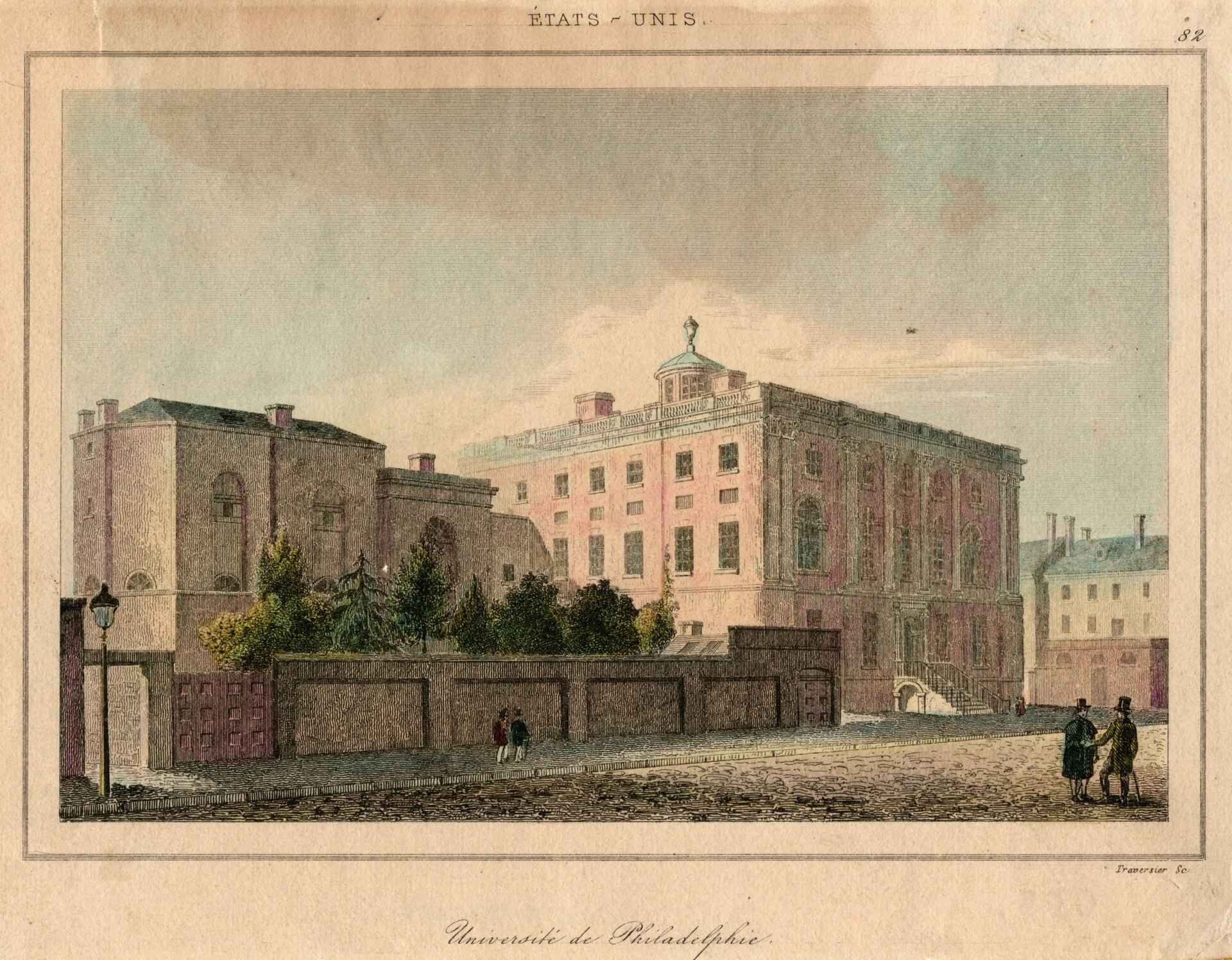
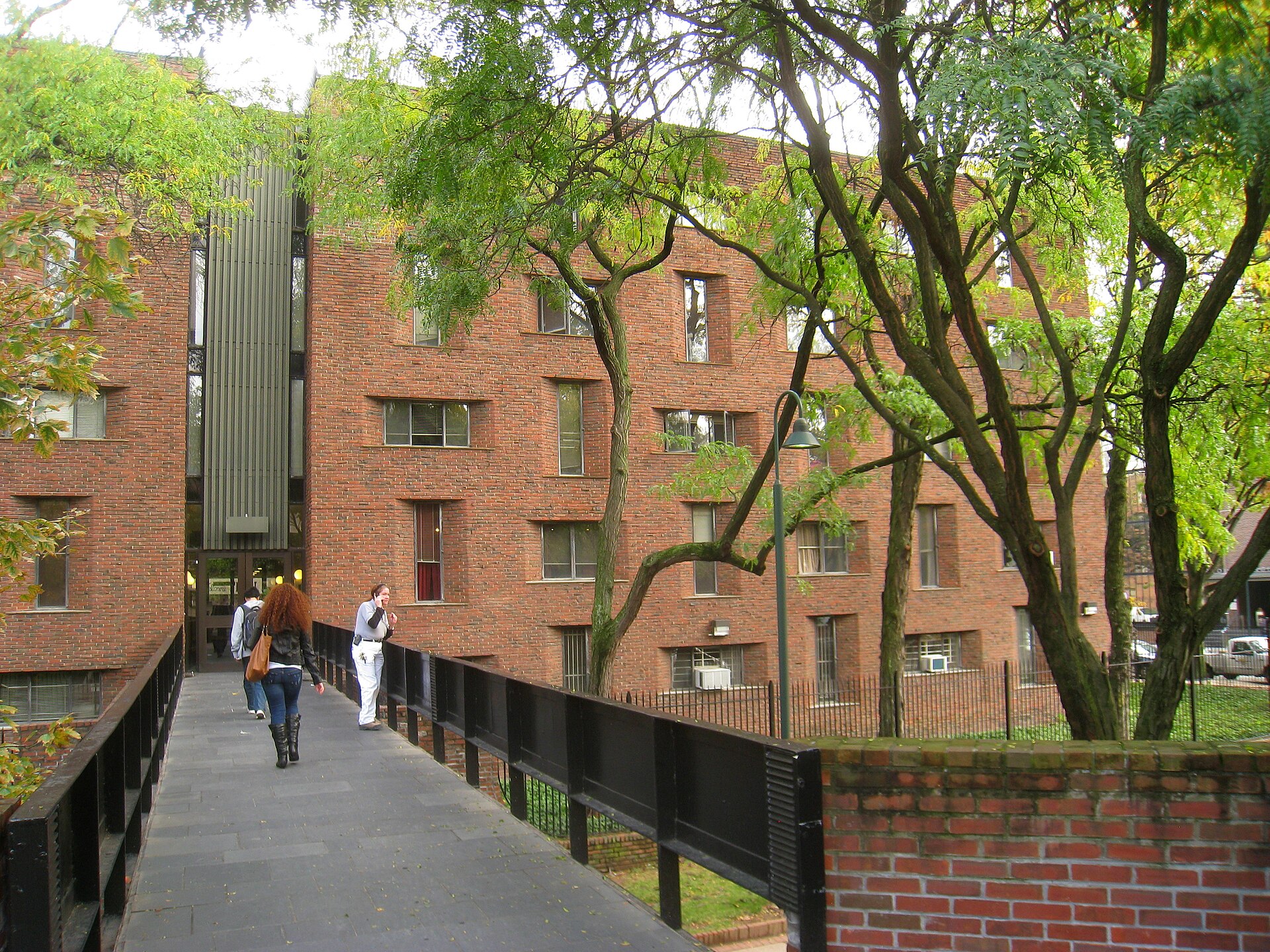
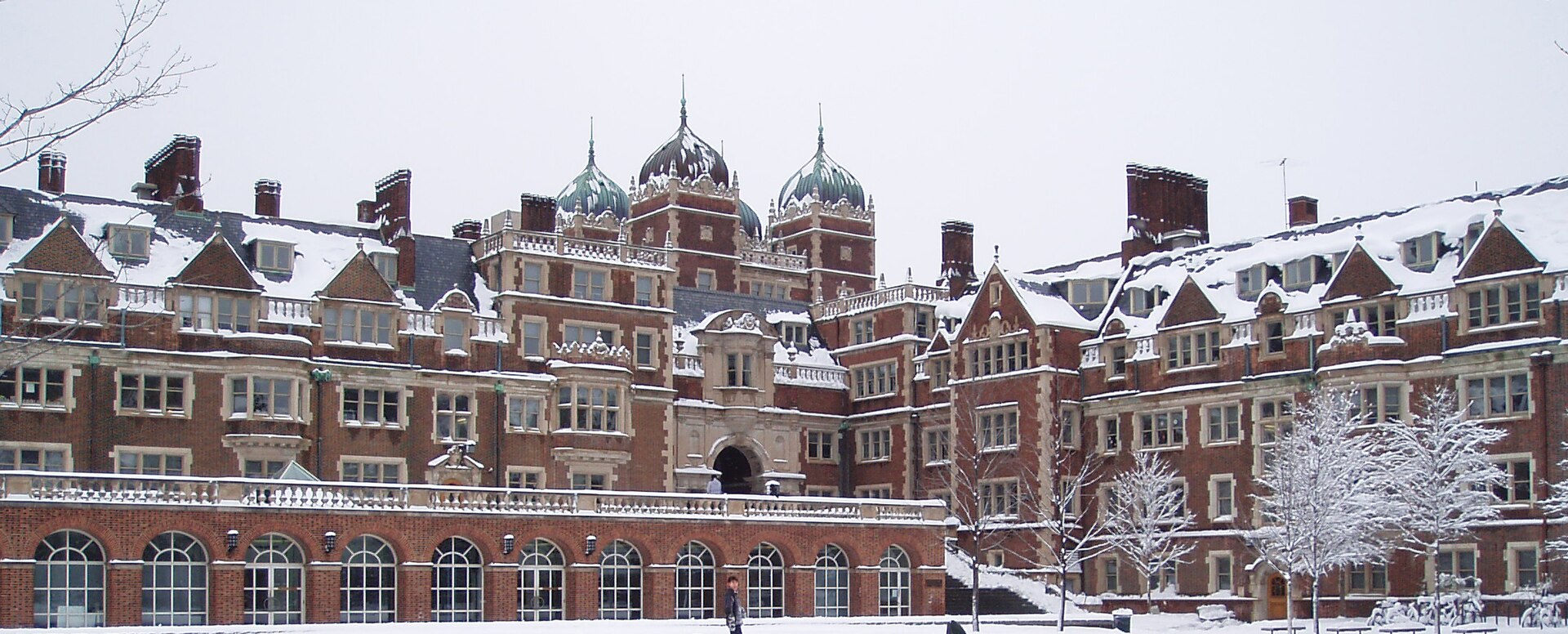
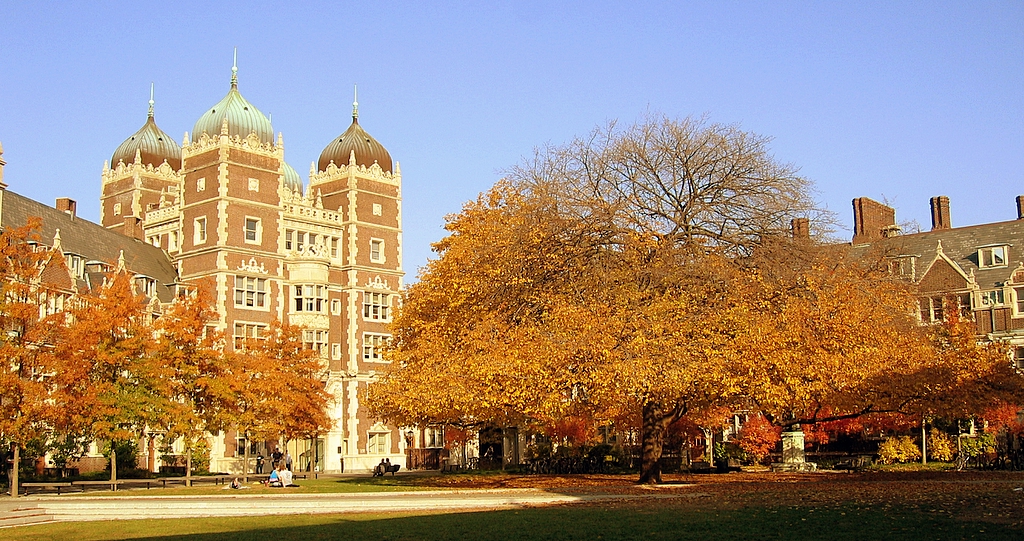
University of Pennsylvania — campus in pictures
Real, freely-licensed photographs of the campus (via Wikimedia Commons).


Why Penn — Wharton, Interdisciplinary Programmes & Philadelphia
Penn is built around one conviction: that the most consequential problems require crossing disciplinary lines. Its four undergraduate schools, eight coordinated dual-degree programmes, and a genuinely urban campus make Penn the most explicitly interdisciplinary of the Ivies — and the only one where you apply to a specific school, not a generalist college.
SELECTIVITY
Penn Acceptance Rate & Class Profile
Penn is among the most selective universities in the world. With an acceptance rate of approximately 4.9%, Penn competes directly with its Ivy League peers for the most academically exceptional and personally compelling international students. The acceptance rate for Early Decision applicants is meaningfully higher than Regular Decision — applying ED signals genuine first-choice commitment and typically provides a statistical advantage. Penn's holistic review considers academic excellence alongside character, intellectual curiosity, and your specific fit with one of its four undergraduate schools.
AT A GLANCE
Penn at a Glance
APPLICATION COMPONENTS
What a Penn Application Consists Of
Penn accepts applications through three platforms: the Common Application, the Coalition Application, and the QuestBridge Application (for QuestBridge Finalists). You apply to one of Penn's four undergraduate schools — or a coordinated dual-degree programme — and your application is evaluated in that context. Every component listed below matters; Penn uses genuinely holistic review.
HOLISTIC REVIEW
What Penn Admissions Actually Evaluates
Penn's admissions committees read every application in teams, looking beyond the data for what they call "the intangible qualities that make you authentically you." Penn's philosophy is rooted in Benjamin Franklin's ethos — practical, intellectually curious, socially engaged. The profile they admit is specific and consistent.
APPLICATION DEADLINES
Penn Application Deadlines & Application Rounds
Penn offers two application rounds for first-year applicants: Early Decision (binding) and Regular Decision. There is no Early Decision II or non-binding early action option. ED is strongly recommended if Penn is your clear first choice — the acceptance rate is meaningfully higher than RD, and binding commitment signals genuine interest. Applications are accepted via Common App, Coalition App, and QuestBridge.
International students applying for financial aid must do so simultaneously with their admissions application. Financial aid requests after admission are not considered.
| Round | Deadline | Notification | Notes |
|---|---|---|---|
| Early Decision (ED) | November 1 | Mid-December | Binding — must withdraw all other applications if admitted |
| Regular Decision (RD) | January 5 | Early April | Non-binding; allows financial aid comparison |
| Financial Aid — ED | November 6 | With ED decision | CSS Profile + FAFSA (if applicable) |
| Financial Aid — RD | February 1 | With RD decision | International students must apply simultaneously |
CAMPUS & CITY LIFE
Life at Penn — Campus, Philadelphia & Community
Residential life at Penn is built around the College House system — six residential communities that mix first-year students with upperclassmen, graduate students, and Faculty-in-Residence. After first year, most students move into off-campus West Philadelphia housing or return to College House. Penn has over 600 student organizations — ranging from the Wharton Undergraduate Finance Club (which places students at top banks every year) to Penn THRIVE (community engagement), Penn Speaks (speaker series), and dozens of cultural and identity-based organisations for international students.
Philadelphia adds a dimension no other Ivy League city quite matches: a genuine mid-size American city with major institutions in healthcare, law, finance, and the arts. Penn students intern at CHOP (Children's Hospital of Philadelphia), Jefferson Health, Comcast, Deloitte's Philadelphia office, and a growing technology and biotech startup scene around University City.
Penn's 299-acre campus in West Philadelphia is self-contained but genuinely integrated with the city around it. Unlike many campus universities where 'the city' is a 30-minute train ride, Penn's campus borders Center City Philadelphia directly — internships, healthcare clinics, restaurants, and cultural institutions are accessible within minutes. The campus is urban without feeling cramped: a mix of Georgian and modern architecture, green quadrangles, and purpose-built research facilities.
CAREER OUTCOMES
Penn Career Outcomes & Alumni Network
Penn's career outcomes are among the strongest of any university in the world — driven in particular by Wharton's recruiting infrastructure and the Penn Career Services network. Wharton undergraduates recruit directly into Goldman Sachs, McKinsey, Bain, BCG, and Google in numbers unmatched by any other undergraduate programme. Penn Engineering feeds into Google, Amazon, and the most competitive software engineering roles. For international students, Penn's brand is recognised in most major global markets.
Stats
Cards
FREQUENTLY ASKED QUESTIONS
Penn Admissions FAQs for International Students
Does Penn accept international students to all four undergraduate schools?+
Yes. Penn accepts international students to the College of Arts and Sciences, the Wharton School, the School of Engineering and Applied Science, and the School of Nursing. International students may also apply to coordinated dual-degree programmes (M&T, Huntsman, LSM, VIPER, NHCM). You apply to one school or programme — not to Penn generally — so your school choice is a significant decision that shapes your application strategy.
Is Penn need-blind for international applicants?+
No. Penn is need-aware for international students who are not citizens or permanent residents of the United States, Canada, or Mexico. This means your financial aid request can influence your admission decision. However, Penn commits to meeting 100% of demonstrated financial need for every international student admitted with a financial aid package. The university distributes over $10 million annually in institutional aid to international students. Apply for aid simultaneously with your admissions application — post-admission requests are not considered.
Should I apply Early Decision if I need financial aid as an international student?+
This requires careful thought. ED increases your statistical odds of admission meaningfully, but it is binding — meaning you cannot compare Penn's financial aid package with offers from other universities. If your family's financial situation is complex or you expect to need significant aid, RD allows you to compare offers. If your financial situation is clearer and Penn is your first choice, ED gives you the best shot at admission.
What is the difference between applying to Wharton and applying to CAS at Penn?+
These are distinct schools with different curricula, cultures, and application essays. Wharton is the undergraduate business school — students take finance, accounting, marketing, and management from Year 1 alongside liberal arts requirements. CAS is Penn's liberal arts college — students can take economics, PPE (Politics, Philosophy, and Economics), cognitive science, and any other non-business, non-engineering major. Applying to the wrong school for your interests is a common mistake; Penn's school-specific essay exists precisely to test whether your choice is genuine.
Can international students transfer between Penn's schools?+
Internal transfers between Penn's undergraduate schools are possible but uncommon and not guaranteed. It is strategically better to apply to the school that genuinely fits your interests than to apply to a school you perceive as 'easier' and plan to transfer from.
How competitive are Penn's dual-degree programmes (M&T, Huntsman, LSM)?+
Extremely competitive — more selective than Penn itself. M&T (Management & Technology) and Huntsman (International Studies and Business) are among the most selective undergraduate programmes in the United States. If you apply to a dual-degree programme and are not admitted, Penn typically considers you for the individual school you listed — but this varies by programme, so check each programme's policies.
Does Penn require standardised test scores from international applicants?+
Yes. Penn's current policy is test-required — all applicants must submit SAT or ACT scores. There is no test-optional pathway at Penn for the current application cycle. International applicants should plan to sit the SAT or ACT and aim for scores in the admitted middle-50% band or above.
What English language tests does Penn accept, and what are the minimums?+
Penn accepts the TOEFL (minimum 100 iBT), IELTS (minimum 7.5), and Duolingo English Test (minimum 120). Students who have completed all of their secondary education in English may be exempt — consult Penn's admissions website for exact exemption criteria.
ACADEMIC REQUIREMENTS
Penn Academic Benchmarks — The Honest Picture for International Students
Penn is an Ivy League research university that applies to one of four distinct undergraduate schools. Its academic floor is high — but academic excellence alone is not sufficient. Penn's holistic review means that a compelling intellectual identity, evident in your coursework choices and your essays, matters as much as your grade point.
Penn is test-required, meaning all applicants must submit SAT or ACT scores. The minimum GPA threshold in the facts file is 3.9 — but admitted students overwhelmingly exceed this, and GPA alone tells Penn little without the context of course rigor. For IB students, a band of 40 or above is competitive; for A-Level students, A*AA to A*A*A* is the expected range. This guide explains what these benchmarks mean in practice and what Penn's admissions team is actually evaluating.
BY THE NUMBERS
Penn's Admitted Student Academic Profile
The figures below represent the middle 50% of Penn's admitted class — meaning 25% of admitted students are below these bands and 25% are above. Aim for the 75th percentile or above if you want your scores to strengthen rather than merely not hurt your application.
TEST POLICY
Penn is Test-Required — What This Means for You
Unlike many Ivy League peers, Penn has not adopted a test-optional policy. All applicants — domestic and international — must submit SAT or ACT scores. This is an important distinction: there is no path to Penn that bypasses standardised testing.
Penn's test-required stance reflects its belief that standardised scores, combined with academic transcripts, provide meaningful academic context — particularly for international students whose school systems may be unfamiliar to Penn's admissions readers. For international students, strong SAT or ACT scores serve as an internationally legible academic signal. Scores within or above the middle-50% band are expected; scores significantly below the 25th percentile will work against an otherwise strong application.
Penn superscores the SAT, taking the highest section scores across multiple sittings. Submit all SAT scores — Penn will construct the best composite. For the ACT, Penn considers the single highest composite sitting.
SAT & ACT
SAT & ACT at Penn — Benchmarks and Strategy
Penn's admitted middle 50% for the SAT is 1510–1570, and for the ACT is 34–36. These are among the highest bands of any university in the world. Here is what these numbers mean and how to approach testing strategically as an international applicant.
INTERNATIONAL CURRICULA
IB, A-Levels & AP at Penn — Specific Benchmarks
Penn is experienced at evaluating academic performance across the IB Diploma, UK A-Levels, Indian CBSE/ISC, Gaokao, and many other international secondary systems. The IB competitive band from Penn's facts data is 40 — in practice, the most competitive applicants score 40–45 with strong Higher Level profiles.
SUBJECT PREPARATION
Academic Preparation by Penn School
Penn has four undergraduate schools with distinct academic cultures and subject expectations. Matching your subject preparation to your intended school is fundamental — and Penn's school-specific essay tests whether you've made a genuine, informed choice.
ENGLISH PROFICIENCY
English Language Requirements for International Penn Applicants
Penn requires English proficiency from applicants whose primary language of instruction is not English. The minimum score thresholds are sourced from Penn's official published requirements. Note that these are minimums — competitive applicants typically score well above these thresholds.
Students who have completed all of their secondary education in English at an English-medium school may be exempt from the English proficiency requirement — consult Penn's admissions website for exemption criteria. Note that even if your scores meet the minimum, the quality of your written English in your essays and short answers is itself an English proficiency signal that Penn evaluates carefully.
| Test | Minimum Score | Notes |
|---|---|---|
| TOEFL iBT | 100 | Internet-based total score |
| IELTS | 7.5 | Academic IELTS overall band |
| Duolingo English Test | 120 | Overall score |
FOUR-YEAR STRATEGY
Building Your Penn Profile — Grade 9 to Grade 12
A competitive Penn application is built over four years, not assembled in Grade 12. The most important decisions are made in Grades 9 and 10 — course rigor, extracurricular commitment, and intellectual exploration that compounds over time.
PITFALLS
Academic Mistakes Penn Applicants Make
These are the most common academic application mistakes — from international students in particular. Avoid them.
Items
- Applying to the wrong Penn school for your interests. Wharton vs CAS is not a prestige call — it is a curriculum and culture match. Penn reads your school-specific essay to test whether your choice is genuine.
- Treating test scores as optional. Penn is test-required. Failing to submit scores is not a strategic decision — it disqualifies the application.
- Grade-optimising over rigor. Taking easier courses to maintain a 4.0 is visible to Penn's admissions team through the school profile. Course rigor is evaluated separately from grades.
- Submitting SAT scores below 1480. A score significantly below Penn's 25th percentile (1510) works against an application. Prep aggressively to reach at least 1510 before submitting.
- Underestimating the IB Extended Essay. Penn reads the EE subject and grade as supplementary evidence of intellectual seriousness. An EE that is off-topic or generic undermines the academic narrative.
- Not contextualising your academic record. Penn evaluates you in the context of your school. Students from international schools should ensure their school counsellor's report clearly explains the curriculum, grading, and course offerings.
- Preparing a generic activity list. Penn's holistic review asks what impact you had, not what titles you held. Describe the specific actions you took and the measurable outcomes that resulted.
Faqs
Does Penn prefer IB over AP or A-Levels?+
No. Penn evaluates all three curricula equally and is experienced at reading transcripts from IB, AP, A-Level, CBSE, and many other international systems. The question Penn asks is whether you challenged yourself relative to what was available at your school — not which system you were in.
Does Penn consider intended major in admissions?+
Yes — unlike some Ivies that admit to a generalist college, Penn admits students to a specific school. Your intended major influences which school's admissions committee reviews your application, and your school-specific essay must demonstrate fit with that school's curriculum. This makes the school choice critical.
Can I apply to Wharton if my school doesn't offer business coursework?+
Yes. Penn does not require formal business coursework for Wharton admission. What it does require is demonstrated curiosity about business, commerce, or economics — through self-directed projects, competitions, research, or entrepreneurship. Your essays must make the case for why Wharton specifically, even if your school has no business department.
COST & FINANCIAL AID
What Penn Actually Costs — An Honest Guide for International Families
Penn is one of the most expensive universities in the world at sticker price — but for international students who qualify for and receive need-based aid, the net cost can be dramatically lower. The critical distinction: Penn is need-aware for international applicants, meaning your financial circumstances can affect your admission chances. Understanding this before you apply is essential.
This section uses only figures from Penn's official facts data. We describe the aid landscape qualitatively where sourced amounts are not available. We do not invent income-band tables or fabricate net price estimates.
ANNUAL COSTS
Penn Cost of Attendance — Annual Estimate (All Figures Approximate)
The figures below represent annual estimated costs based on Penn's published data. All figures are in USD. Costs typically increase each academic year; verify current figures with Penn's Student Financial Services before applying.
Total four-year cost at sticker price exceeds $380,000. Penn's financial aid programme exists specifically to make attendance possible for families who cannot pay full cost — but international students face a need-aware admissions process that limits the number of international aid recipients admitted each year.
| Component | Annual Cost Usd | Notes |
|---|---|---|
| Tuition | $63,204 | Same for domestic and international students |
| Total Cost of Attendance | $95,612 | Includes tuition, fees, housing, meals, personal |
| Cost of Living (Philadelphia) | $21,000 | Housing, meals, and personal expenses estimate |
| Application Fee | $75 | One-time, non-refundable; fee waivers available |
FINANCIAL AID FOR INTERNATIONALS
Penn Financial Aid — What International Students Need to Know
Penn's financial aid policy for international students is nuanced and consequential. Understanding it before you apply can save significant heartache.
Key operational rules: international students must apply for financial aid simultaneously with their admissions application. You cannot request aid after being admitted. You cannot apply for aid in a later year if you did not apply at entry. Penn's aid decision applies to all four years if you maintain eligibility.
Penn is need-aware for international applicants who are not citizens or permanent residents of the United States, Canada, or Mexico. This means your financial circumstances are a factor in your admissions decision. Penn's official advice: 'candidates whose families have the financial means to afford education costs are discouraged from applying for financial aid.' In plain language: requesting aid as an international student reduces your statistical odds of admission.
A portion of Penn's grant funding for international students may be subject to U.S. withholding tax. Penn pays these taxes on students' behalf, but the tax cost appears as a charge in student accounts and cannot be covered by additional grant funding. Factor this into your financial planning.
SCHOLARSHIPS
Scholarships & External Funding for International Penn Applicants
Penn does not offer merit scholarships — all institutional aid is need-based. However, several external funding sources are available to international students attending U.S. universities, including Penn.
NET PRICE REALITY
What Penn Really Costs After Financial Aid
In practice, the limiting factor for international students is the admission hurdle, not the aid quantum. Penn is need-aware for internationals — the number of international students admitted with aid is deliberately constrained. If you are admitted with a Penn aid package, it will be generous. If you are not admitted with aid, you will pay full price or not attend.
Families considering Penn should plan for two scenarios: (1) admission without aid at full cost (~$95,600/year), and (2) admission with aid at a need-determined cost. If scenario 1 is financially impossible, ensure your application strategy accounts for the need-aware admissions dynamic — and consider ED carefully, since a binding ED commitment from a family that genuinely cannot afford full cost without aid requires careful thought.
The sticker price of Penn — over $95,000 per year — is the most expensive version of Penn's cost. For international students who need aid and are admitted with an aid package, the net cost can be reduced to whatever Penn calculates your family can afford. Penn's 100%-of-demonstrated-need commitment means, in theory, that no admitted student with an aid package should need to borrow to attend.
Penn does not have a no-loan pledge in the same form as some peers. The aid package at Penn consists of grants and work-study — not loans — for admitted aid recipients. However, families who need loans can seek private student loans if a U.S. co-signer is available. This is distinct from institutional loan packages; Penn does not build loans into your institutional aid.
HOW TO APPLY FOR AID
Steps to Apply for Financial Aid as an International Student
Financial aid at Penn must be applied for simultaneously with admissions. There is no separate application timeline for international students.
COST FAQs
Penn Cost & Aid FAQs for International Students
Does applying for financial aid hurt my chances as an international student?+
Yes, potentially. Penn is need-aware for international applicants, which means financial circumstances factor into admission decisions. Penn is transparent about this and discourages international students who do not need aid from applying for it. This is a difficult reality — but understanding it before you apply lets you make a more informed strategy.
Can I apply for financial aid after being admitted?+
No. International students must apply for aid simultaneously with their admissions application. If you are admitted without having applied for aid, you are not eligible to request it later — at entry or in future years. This makes the initial decision to request aid consequential.
Does Penn have a no-loan policy for international students?+
Penn does not include institutional loans in aid packages for admitted students. Aid packages consist of grants (money you do not repay) and work-study (on-campus employment). However, families can seek private loans if needed; Penn does not prohibit borrowing. This is different from a formal no-loan pledge.
Are there merit scholarships at Penn for high-achieving international students?+
Penn does not award merit scholarships. All institutional aid is need-based. High academic achievement does not increase your institutional aid amount — it improves your admissions odds but not your financial aid package. For merit-based funding, look to external government and foundation scholarships in your home country.
Is the cost of living in Philadelphia affordable compared to other U.S. Ivy League cities?+
Philadelphia is meaningfully more affordable than New York City (Columbia, NYU) and comparable to or slightly less expensive than Boston (Harvard, MIT). The estimated annual living cost is $21,000 — significantly below what students in Manhattan or Cambridge typically spend. Off-campus housing in West Philadelphia is available at costs lower than Penn's on-campus rates.
ESSAYS
Penn Essays — Why They Matter More Than You Think
Penn's supplemental essays are not generic Ivy League supplements. They are school-specific tests of whether you have made a genuine choice. Penn admits students to one of four undergraduate schools — and every essay in the supplement is designed to reveal whether your choice of Wharton, SEAS, CAS, or Nursing is real, considered, and coherent with your intellectual identity.
Penn receives tens of thousands of applications annually. The majority of applicants to Wharton, for example, write nearly identical essays about their passion for business and their desire to 'make an impact.' The essays that succeed are specific — naming professors, programmes, research centres, or experiences at Penn that no other applicant's essay would name. Generic essays are the most common reason a Penn supplement fails. This guide gives you the tools to avoid that.
SUPPLEMENT STRUCTURE
Penn's Essay Structure — What You Are Writing
Penn's supplement consists of three required essays plus optional additional essays for dual-degree and specialised programme applicants. All applicants also write the Common App Personal Essay (650 words). The total word commitment for a Penn application is significant — plan accordingly.
OFFICIAL PROMPTS
The Penn Essay Prompts — With Strategy
Below are Penn's verified supplemental essay prompts for the 2025–2026 application cycle, with strategic guidance for each. Verify current prompts on Penn's official admissions website before submitting — prompts occasionally change between cycles.
COMMON APP ESSAY
The Common App Personal Essay — Penn's First Look at Who You Are
The personal statement at Penn carries different strategic weight than at universities that do not require supplements. Because Penn's supplements are school-specific and relatively short (200 words each), the personal essay is your primary opportunity to develop a full, layered portrait of yourself as a person — not just as a future Wharton student or SEAS engineer. Choose a topic that reveals something about your character, values, or way of seeing the world that your transcript and activity list cannot.
A common mistake Penn applicants make is writing a personal essay that is functionally a second 'Why Wharton' essay. Penn's admissions readers have already read your school-specific supplement. Your personal essay should show them a dimension of you that your school-specific essay does not — ideally a human, personal dimension that makes them want to admit you as a person, not just as an academic profile.
Penn reads the Common App Personal Essay as your primary narrative document — the place where you introduce yourself before the admissions team dives into your supplements, transcript, and recommendations. It is 650 words chosen from seven prompts (or a topic of your own), and Penn gives equal weight to all seven prompts.
Tychr recommends completing the personal essay before any Penn supplement. The voice and narrative distance you develop in the personal statement will inform the tone of your 200-word supplements, which require compressed, precise expression.
SUPPLEMENT STRATEGY
How to Write Each Penn Supplement — School by School
The strategic approach to Penn's supplements differs by school. Here is what differentiates successful essays in each of the four undergraduate schools.
TOPIC SELECTION
Choosing the Right Topic — What Makes a Penn Essay Work
The most common error Penn applicants make is choosing a topic that is impressive rather than true. Penn's 200-word supplements demand compression — and compressed writing only works when the author knows exactly what they want to say. Here is how to choose topics that work.
- Write what only you can write. Penn reads tens of thousands of essays per year. The ones that are remembered are specific — a precise moment, a named person, a real argument, an honest vulnerability. General inspiration stories disappear into the pile.
- The thank-you note is not an opportunity to thank an obvious figure (a coach, a parent, a teacher who believed in you). Choose someone unexpected or a choice that requires explanation — this signals a more complex inner life.
- The community essay requires research. Visit Penn's website. Read about Penn's unique programmes — PennIIC (innovation hub), the Netter Center for Community Partnerships, the Kelly Writers House, the Perry World House. Name something specific. Penn-specific = credible; generic = transparent.
- Your school-specific essay should name exactly one thing per paragraph — not a list of everything you love about Wharton. Depth over breadth applies to essays as much as to activities.
- Dual-degree programme essays (M&T, Huntsman, LSM) require you to articulate why two degrees in four years is the right vehicle for your specific goals — not just because it sounds impressive. Name how the integration of the two fields adds something neither alone would provide.
- Do not use the essays to repeat information that already appears in your activity list or academic record. Use them to add a dimension — a value, a perspective, an experience — that your transcript cannot show.
ESSAY MISTAKES
Penn Essay Pitfalls — What Gets Applicants Rejected
These are the most common Penn essay failures — from applicants who otherwise had competitive academic profiles.
- Generic 'Why Penn' content. Naming Penn's ranking, the Ivy League, or its 'interdisciplinary environment' without specifics is the most common failure in the community essay. Every competitive applicant says the same thing. Penn AOs have seen 40,000 essays; they notice the ones that don't name anything specific.
- Choosing the wrong school and hoping your essay compensates. If you apply to Wharton because it's prestigious but CAS genuinely fits your interests better, the school-specific essay will reveal the mismatch. Penn reads the supplement specifically to catch this.
- Writing the thank-you note at 350 words and cutting to 200. This produces clunky, airless prose. Draft the thank-you note at 200 words from the start — write in the format the prompt requires.
- Using the personal essay to write a second school-specific essay. If your personal statement is about your entrepreneurial startup and your Wharton essay is also about entrepreneurship, you have two essays covering the same ground. Use the personal statement to add a different dimension.
- Applying to a dual-degree programme as a backup. M&T, Huntsman, and LSM are among the most selective programmes in the United States. Applying to them without genuine intent wastes essay resources and produces weak programme-specific essays that dual-degree committees immediately recognise.
- Describing activities and accomplishments rather than ideas and values. Penn — especially CAS — values intellectual curiosity above achievement. An essay that lists your achievements is a résumé, not a supplement.
- Failing to proofread for Penn-specific errors. Submitting an essay that references 'Harvard's interdisciplinary culture' or 'Columbia's Core Curriculum' is a real, documented occurrence. Read every essay aloud before submitting.
ESSAY FAQs
Penn Essay FAQs — Answered Honestly
Can I apply to Wharton and CAS in the same application?+
No. You apply to one Penn undergraduate school — or one dual-degree programme. You write one school-specific essay corresponding to that school. If you are uncertain between Wharton and CAS, Penn's Economics (CAS) or the PPE (Politics, Philosophy, Economics) programme in CAS may serve as a middle path — liberal arts breadth with economics depth — while the Wharton supplement requires a business-specific focus.
How important is the thank-you note compared to the school-specific essay?+
Both are required and both are read carefully. Penn's short essays are evaluated partly on how well you write under compression — which is harder than a 650-word essay for many applicants. The school-specific essay carries more strategic weight for admissions decisions, but the thank-you note reveals authentic voice and emotional intelligence that can meaningfully distinguish two otherwise similar applicants.
Should I write about my culture or nationality in the community essay?+
Only if it genuinely shapes how you will contribute to Penn's community. The community essay is not an opportunity to explain your background — it is a forward-looking prompt about how you will engage with Penn's specific community. If your cultural background shapes your perspective in a specific way that connects to a specific Penn programme or organisation, include it. If you are leading with nationality because you don't know what else to say about Penn, spend more time researching.
How long does it take to write strong Penn supplements?+
Plan for 4–6 weeks of revision across all three supplements, plus the personal statement. The 200-word constraint is deceiving — short essays are harder to write well than long ones. Allow at least two full drafts per essay, separated by at least a few days. Have a trusted reader who is not your parent review each one.
Can I reuse essays from other schools in Penn's supplements?+
No. Penn's supplements — particularly the school-specific essay and the community essay — require Penn-specific content. A Wharton essay reused from NYU Stern or Ross will reference the wrong programmes, clubs, and faculty. A community essay reused from Cornell will likely contain Cornell-specific language. Always write Penn supplements from scratch or do a thorough Penn-specific revision.
Should dual-degree applicants (M&T, Huntsman) write all the required essays if they are also applying to the school as a fallback?+
Yes. If you apply to M&T (Management and Technology), you write both the SEAS school-specific essay and the M&T programme essays. Penn evaluates dual-degree applicants for the programme first, then considers them for the individual school if not admitted to the programme. Your SEAS or Wharton essay should therefore be strong regardless of the dual-degree outcome — it may determine which school admits you.
Courses — schools, degrees & intake
87 degrees across 4 groupings.
College of Arts and Sciences · 56 degrees
Africana Studies (BA)
Ancient History (BA)
Anthropology (BA)
Architecture (BA)
Biochemistry (BA)
Biology (BA)
Biophysics (BA)
Chemistry (BA)
Cinema and Media Studies (BA)
Classical Studies (BA)
Cognitive Science (BA)
Communication (BA)
Comparative Literature (BA)
Criminology (BA)
Design (BA)
East Asian Languages and Civilizations (BA)
Economics (BA)
English (BA)
Environmental Studies (BA)
Fine Arts (BA)
French and Francophone Studies / Germanic Studies / Italian Studies (BA)
Gender, Sexuality and Women's Studies (BA)
Health and Societies (BA)
Hispanic Studies (BA)
History (BA)
History of Art (BA)
International Relations (BA)
International Studies (BA)
Jewish Studies (BA)
Latin American and Latinx Studies (BA)
Law and Society (BA)
Linguistics (BA)
Logic, Information and Computation (BA)
Mathematical Economics (BA)
Mathematics (BA)
Middle Eastern Languages and Cultures (BA)
Modern Middle Eastern Studies (BA)
Music (BA)
Neuroscience (BA)
Nutrition Science (BA)
Philosophy (BA)
Philosophy, Politics and Economics (BA)
Physics (BA)
Political Science (BA)
Psychology (BA)
Religious Studies (BA)
Russian and East European Studies (BA)
Science, Technology and Society (BA)
Sociology (BA)
South Asia Studies (BA)
Theatre Arts (BA)
Urban Studies (BA)
Creative Studies (BAAS)
Data Analytics and Psychological Sciences (BAAS)
Data Analytics and Social Sciences (BAAS)
Organizational Studies (BAAS)
The Wharton School · 17 degrees
Accounting (BS)
Artificial Intelligence for Business (BS)
Behavioral Economics (BS)
Business Analytics (BS)
Business Economics and Public Policy (BS)
Entrepreneurship and Innovation (BS)
Finance (BS)
Health Care Management and Policy (BS)
Legal Studies and Business Ethics (BS)
Management (BS)
Marketing (BS)
Marketing and Communication (BS)
Marketing and Operations Management (BS)
Operations, Information and Decisions (BS)
Real Estate (BS)
Retailing (BS)
Statistics and Data Science (BS)
School of Engineering and Applied Science · 12 degrees
Artificial Intelligence (BSE)
Bioengineering (BSE)
Chemical and Biomolecular Engineering (BSE)
Computer Engineering (BSE)
Computer Science (BSE)
Digital Media Design (BSE)
Electrical Engineering (BSE)
Materials Science and Engineering (BSE)
Mechanical Engineering and Applied Mechanics (BSE)
Visual and Interactive Computing (BSE)
Biomedical Science (BAS)
Computer Science (BAS)
School of Nursing · 2 degrees
Nursing (BSN)
Nutrition Science (BSN)
Want your real chances at University of Pennsylvania?
Create a free TYCHR account for your personalised admit-chance, a shortlist you can track, exact entry requirements, and essay + counselling help.