← All universities

University of Cambridge

Cambridge, United Kingdom · Urban

Russell GroupG5OxbridgeGolden TrianglePublicResearch
Acceptance
20.0%
QS World
#6
Tuition/yr
$55,509
Students
24,000
Founded
1209

University of Cambridge Admissions Guide

University of Cambridge Admissions Guide for International Students

Founded in 1209, the University of Cambridge is the second-oldest university in the English-speaking world and consistently ranks among the top six universities globally. With 31 semi-autonomous colleges, a world-famous supervision teaching model, and a tradition that produced Newton, Darwin, and more than 120 Nobel laureates, Cambridge represents a fundamentally different kind of university — one where academic depth, intellectual curiosity, and genuine subject passion are tested at every stage of the application.

The path to Cambridge is structured differently from US Ivy League admissions. You apply through UCAS by 15 October, complete a supplementary My Cambridge Application form, sit subject-specific admissions assessments, submit written work if required, and — if shortlisted — attend an academic interview in December. Understanding this pipeline precisely, and preparing specifically for Cambridge's criteria, is the foundation of a competitive application.

Campus

University of Cambridge — campus in pictures

Real, freely-licensed photographs of the campus (via Wikimedia Commons).
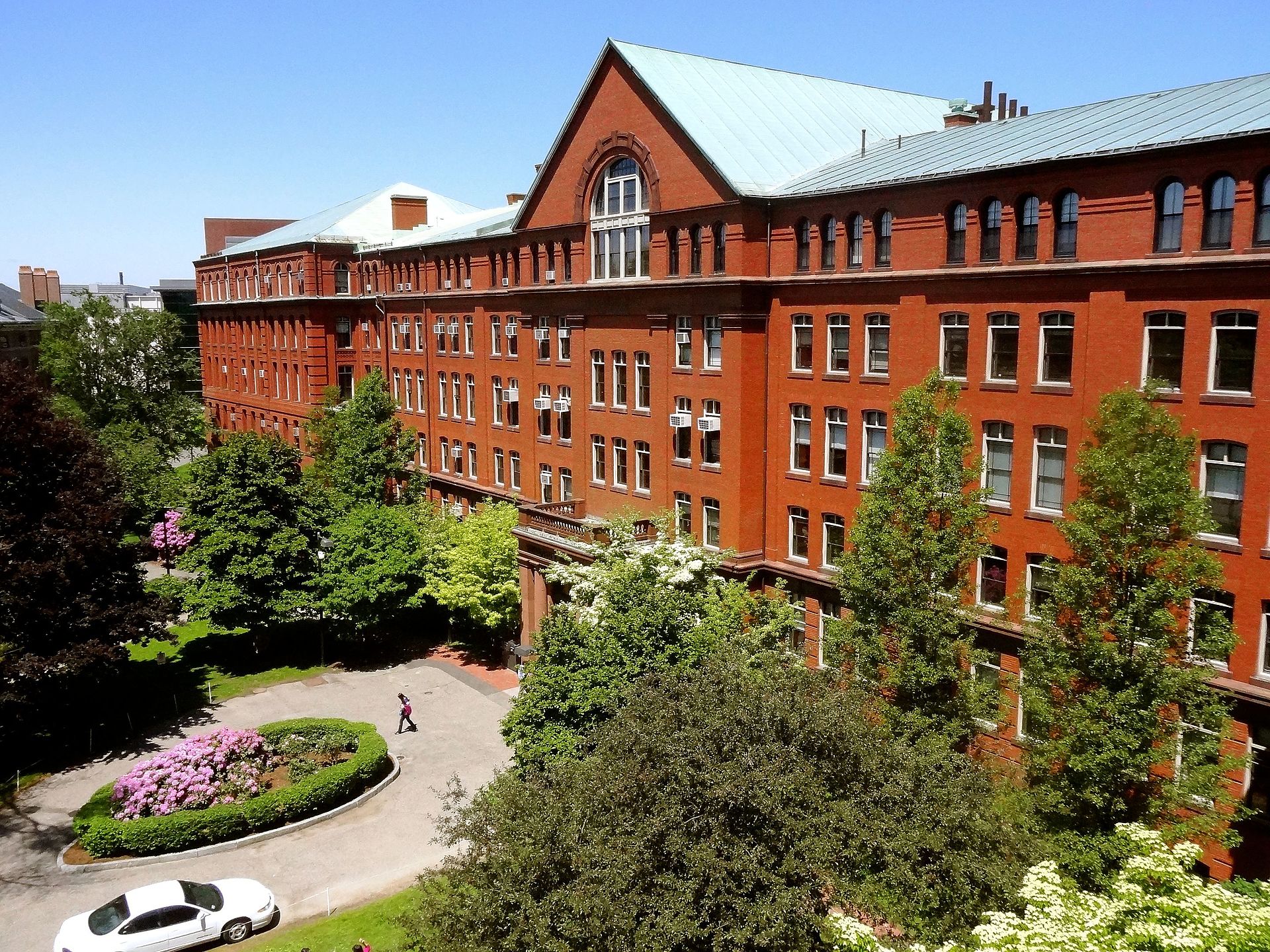
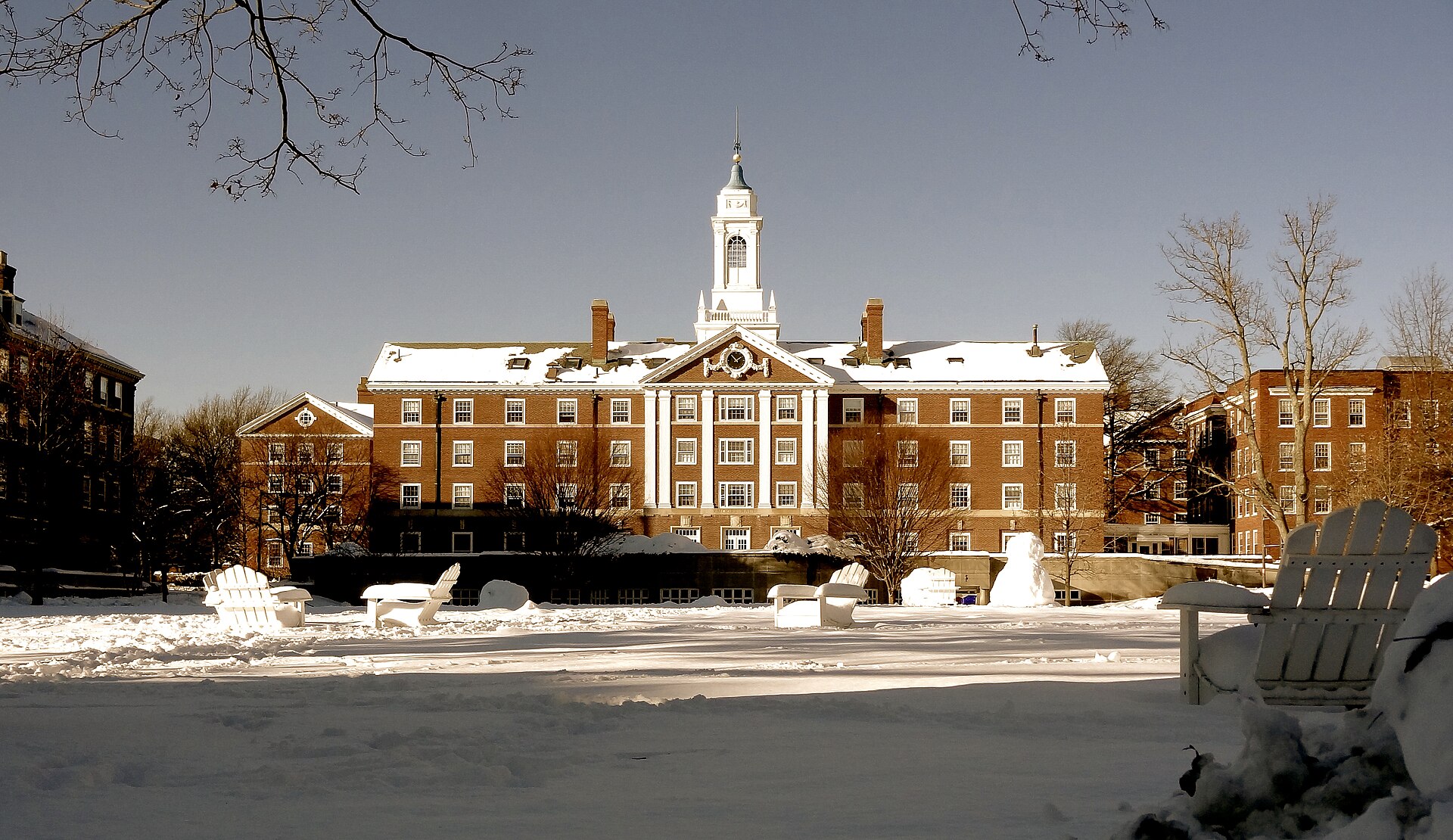
University Museum, Harvard Campus, Cambridge, Massachusetts
University Museum, Harvard Campus, Cambridge, MassachusettsRizka · CC BY-SA 3.0 · via Wikimedia Commons
Snow and Pforzheimer House, Harvard Campus, Cambridge, Massachusetts
Snow and Pforzheimer House, Harvard Campus, Cambridge, MassachusettsRizka · CC BY-SA 4.0 · via Wikimedia Commons
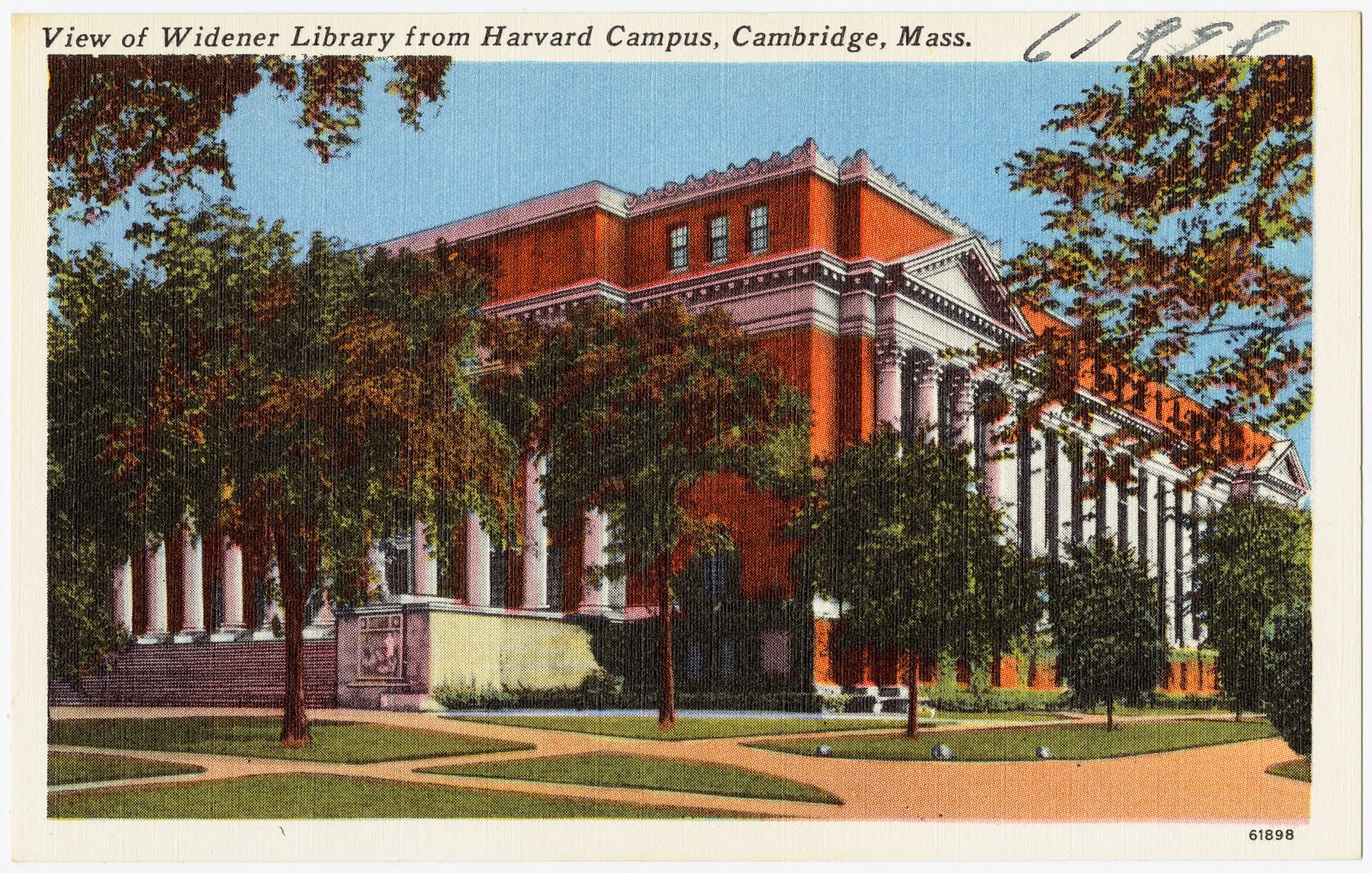
View of Widener Library from Harvard Campus, Cambridge, Mass (61898)
View of Widener Library from Harvard Campus, Cambridge, Mass (61898)Tichnor Bros. Inc., Boston, Mass. · Public domain · via Wikimedia Commons
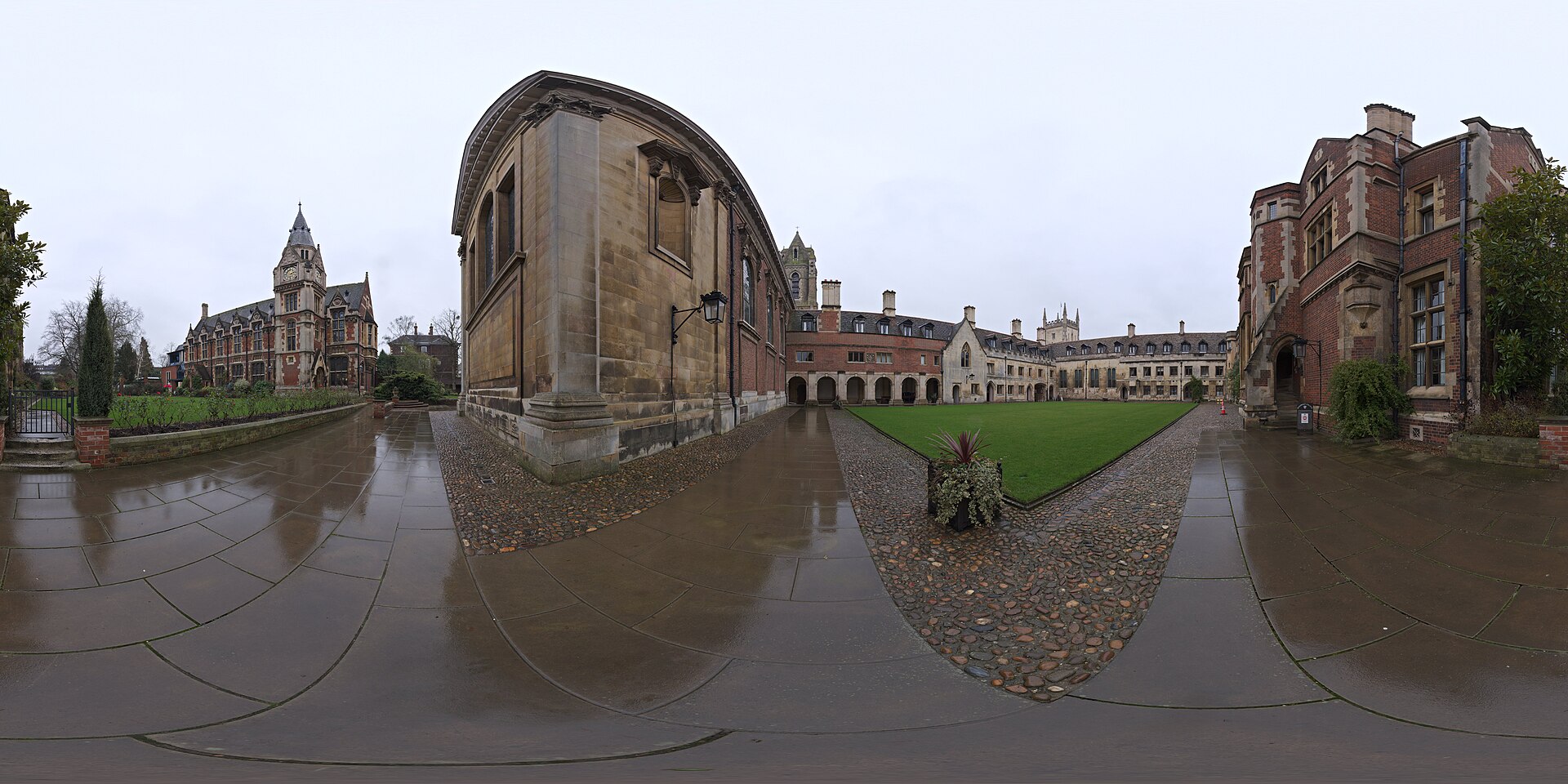
Panorama vom Areal der University of Cambridge.
Panorama vom Areal der University of Cambridge.Andreas Mischok · CC0 · via Wikimedia Commons
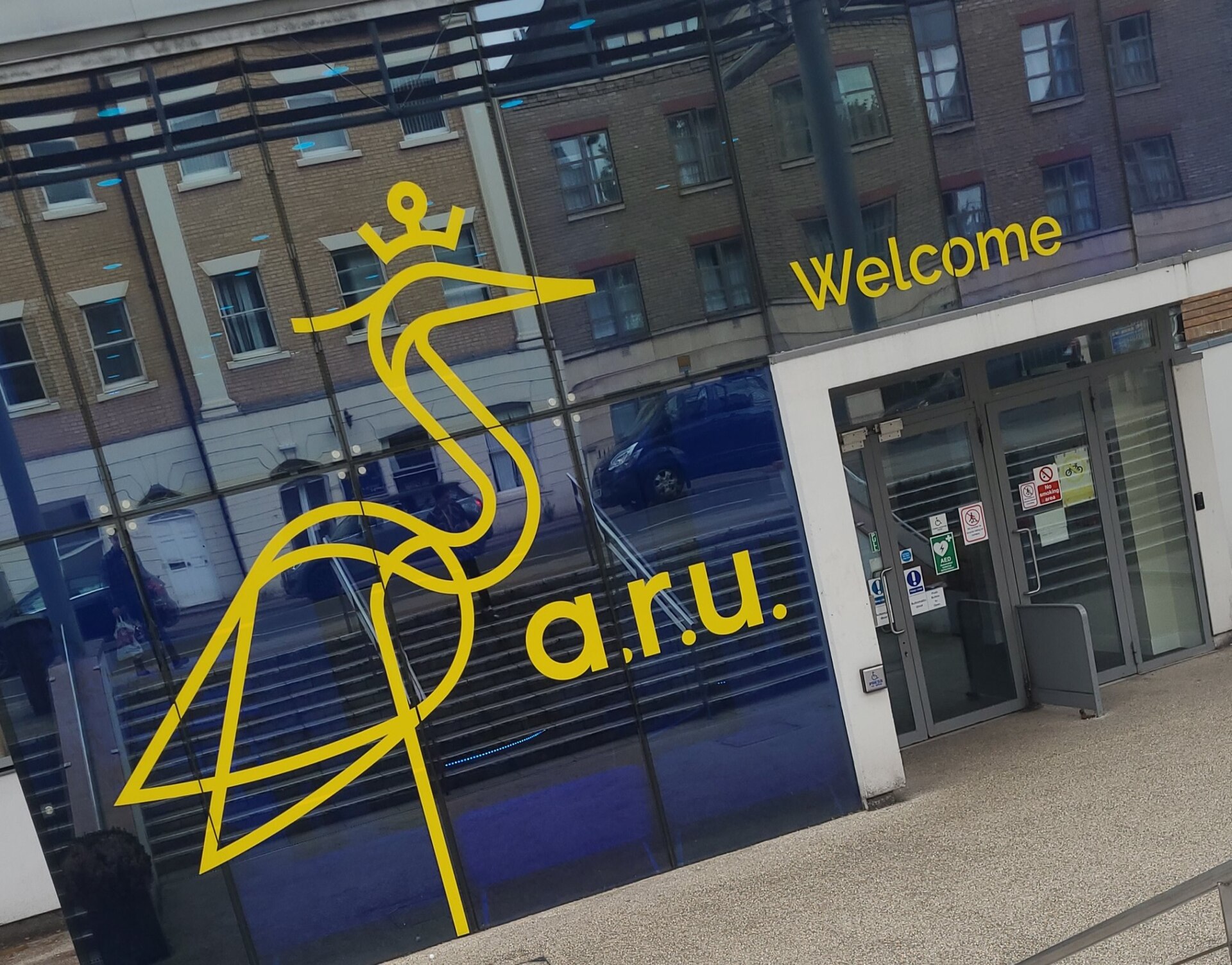
Main entrance to Anglia Ruskin University Cambridge Campus (Helmore Building). Taken by Lewis Spurrier-Best
Main entrance to Anglia Ruskin University Cambridge Campus (Helmore Building). Taken by Lewis Spurrier-BestBigLew99 · CC BY-SA 4.0 · via Wikimedia Commons
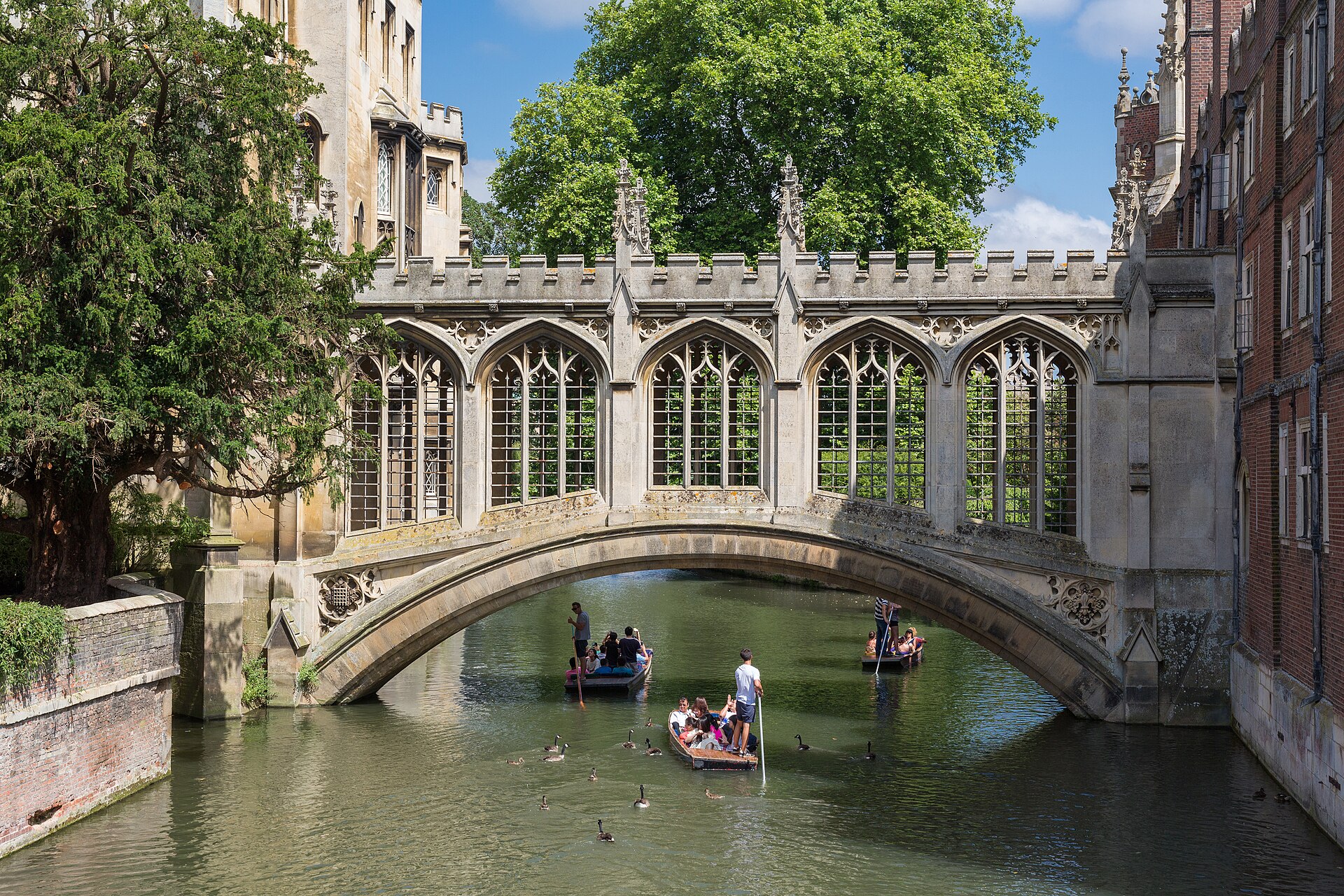
The Bridge of Sighs in St John's College, Cambridge, England.
The Bridge of Sighs in St John's College, Cambridge, England.Diliff · CC BY-SA 3.0 · via Wikimedia Commons

Why Cambridge

Why the University of Cambridge — Prestige, Supervisions & the Collegiate Experience

Cambridge is not simply a top-ranked university — it is a distinctive intellectual environment built around small-group teaching, collegiate life, and an expectation of genuine subject mastery. For international students, it offers one of the world's most rigorous undergraduate educations in an 800-year-old city purpose-built for academic life.

01Global Academic Prestige
Ranked #5 by Times Higher Education and #6 by QS World Rankings, Cambridge sits at the summit of global higher education. In core disciplines — Natural Sciences, Mathematics, Engineering, Economics, and Law — Cambridge consistently leads both UK and world subject rankings.
02The Supervision System
Cambridge's defining educational feature is the supervision — a weekly or twice-weekly session with 1–3 students and a subject specialist. You prepare work, receive individual feedback, and debate ideas at a depth impossible in lectures. No other teaching model develops independent thinking as intensively.
03Nobel Laureate Tradition
Cambridge is affiliated with more than 120 Nobel laureates — more than most countries. From the discovery of the electron and the double helix of DNA to the development of modern economics, Cambridge researchers have shaped human knowledge across every major field of inquiry.
04Collegiate Life
Cambridge's 29 undergraduate colleges each provide accommodation, dining, pastoral support, and a close-knit academic community. Your college is your home: a place where you live alongside students from every discipline, supervised by fellows and tutors who know you personally.
05Natural Sciences, Mathematics & Engineering
Cambridge's Natural Sciences Tripos is one of the most rigorous and flexible undergraduate science programmes in the world, allowing students to combine multiple sciences before specialising. Mathematics, Computer Science, and Engineering are consistently ranked top one or two globally.
06Cambridge — A City for Thinking
The city of Cambridge is compact, beautiful, and overwhelmingly shaped by the university. Students cycle between college courts, libraries, labs, and the river Cam. The concentration of intellectual life in a small historic city creates an atmosphere that is genuinely unlike any other undergraduate experience.

Selectivity

Cambridge Acceptance Rate — What the Numbers Mean for International Applicants

Cambridge's offer rate of approximately 20% may seem higher than US Ivy League acceptance rates, but the comparison is misleading. UK applicants use UCAS to apply to a maximum of five universities simultaneously, which means the self-selection among Cambridge applicants is extreme — the vast majority already hold strong predicted grades and have researched the requirements carefully. Among international applicants specifically, the competition is acute.

Cambridge does not publish course-by-course acceptance rates by nationality. For the most competitive subjects (Medicine, Natural Sciences, Mathematics, Economics), successful international applicants typically hold near-perfect academic profiles and perform well across every stage: assessments, written work, and interview. The offer rate across all subjects and all applicants understates the difficulty for the most competitive courses.

20%
Overall offer rate
41
IB typical offer
#6
QS World Rank
#5
THE World Rank

University at a Glance

Cambridge — Quick Facts

1209
Founded
24,000
Total students
40%
International students
11:1
Student-faculty ratio
#2
UK national rank
29
Undergraduate colleges

Application Process

Cambridge Application Components — UCAS, Assessments, Written Work & Interview

Unlike US universities that use the Common Application, Cambridge is applied to exclusively through UCAS (the UK's unified application system). The application has multiple distinct stages — each of which Cambridge evaluates carefully. A strong application requires preparation across all of them.

01RequiredUCAS Application & Personal Statement
Submit through UCAS by 15 October (6pm UK time). Includes your personal statement, predicted grades, school reference, and course choice. Cambridge cannot be combined with an Oxford application in the same cycle.
02RequiredMy Cambridge Application
A supplementary online form completed after your UCAS submission, due 22 October. Cambridge reviews documents submitted here — not those uploaded to UCAS. It captures additional academic context, subject interests, and any disruption to your studies.
03Course-DependentAdmissions Assessments
Most Cambridge courses require a subject-specific admissions assessment — either pre-registered (ESAT, TMUA, UCAT, LNAT) or college-arranged on interview day. Registration deadlines fall in late September. These are a primary shortlisting tool.
04Course-DependentWritten Work
Some humanities courses (English, History, Philosophy, and others) require submission of a piece of written work — typically an essay produced during your school studies. Submitted directly to your college after your UCAS application.
05If ShortlistedInterview
Shortlisted applicants are interviewed in December, either in person or online. Cambridge interviews are academic — more like a tutorial or supervision session than a traditional conversation. Interviewers present problems, texts, or ideas and evaluate how you think, not what you know.
https://www.undergraduate.study.cam.ac.uk/apply/how/ucas-application

The College System

Cambridge's 29 Colleges — Choosing, Applying & the Open Application

Cambridge is a collegiate university: each of its 29 undergraduate colleges is a semi-autonomous institution with its own accommodation, dining hall, library, pastoral support, and academic fellows. You are admitted to a specific college, not just to Cambridge. The college arranges your supervisions, provides your accommodation in first year (and usually beyond), and becomes your primary community for your entire degree.

You have two options: apply to a specific college, or make an open application. For equally well-qualified students, the route you choose does not significantly affect your overall chance of an offer. The open application allocates you to a college that has received fewer applications per place in your course area.

Applying to a Named College
Research colleges that offer your course, consider location, size, culture, and available subject fellows. Shortlist 3–5 colleges before deciding. Not all colleges offer all courses — check the course directory first.
Making an Open Application
Enter campus code '9' on UCAS. After the closing date, your application is allocated to a college with fewer applications per place. Useful if you genuinely have no preference and want to avoid the research burden of college selection.
The Winter Pool
After interviews, colleges may release strong applications that they cannot offer places to into the winter pool. Around one in four interviewed applicants enters the pool; of those, roughly one in five receives an offer from a different college. The pool is an additional safety net, not a fallback.
A Note on Colleges for International Students
International students can apply to any college. Some colleges have larger international student communities or particular strengths in specific subjects. TYCHR can advise on college selection based on your subject and profile, but no college is categorically better — it depends on your priorities.
https://www.undergraduate.study.cam.ac.uk/applying/ucas-application/making-open-application

Admissions Criteria

What Cambridge Admissions Looks For — Subject Passion, Academic Potential & Interview Performance

Cambridge's admissions process is fundamentally subject-focused. Unlike many US universities that evaluate holistic personal qualities broadly, Cambridge is primarily asking: does this applicant have the academic capability and intellectual curiosity to thrive in this subject, in this teaching model, at this level? Everything — the personal statement, the assessment, the written work, the interview — is evaluated through that lens.

01Academic Excellence in Your Subject
Cambridge expects the highest predicted grades in subjects relevant to your course — typically A*A*A at A-Level or 41–42 IB points with 776 at Higher Level. Grades are evaluated contextually against your school's profile and curriculum.
02Genuine Subject Passion
The personal statement is primarily a subject statement. Cambridge is not interested in a broad portrait of your activities — it wants evidence that you have pursued your chosen subject with genuine intellectual curiosity beyond the syllabus: independent reading, projects, competitions, and self-directed inquiry.
03Performance in Admissions Assessments
For most courses, your performance on the relevant admissions assessment (ESAT, TMUA, UCAT, LNAT, or college-arranged test) is a primary shortlisting criterion. Preparing specifically for your course's assessment is not optional — it is an essential part of application strategy.
04Interview — How You Think, Not What You Know
The Cambridge interview is an academic exercise, not a personality test. Interviewers present problems, unseen texts, or ideas and evaluate how you engage with unfamiliar material. The ability to think out loud, revise your reasoning under gentle challenge, and remain intellectually curious when uncertain is what the interview measures.
05Quality of Written Work (Where Required)
For humanities courses, submitted written work gives admissions tutors a direct window into your analytical and argumentative capability. It should demonstrate sustained reasoning, close engagement with evidence, and the kind of thinking that will serve you in supervision essays.

Key Dates

Cambridge Application Dates & Deadlines — 2027 Entry Timeline

Cambridge's 15 October deadline is earlier than most UK university deadlines (January). Plan all assessment registrations and school references well in advance. UCAT registration opens in the summer — many international students miss this.

StageDeadlineNotes
UCAT RegistrationBy 16 Sep 2026Medicine applicants only; test centres worldwide
LNAT RegistrationBy 15 Sep 2026Law applicants; complete test by 15 Oct 2026
ESAT & TMUA RegistrationBy 28 Sep 2026Engineering, NatSci, VetMed, Maths, CS, Economics
ESAT & TMUA Tests12–16 Oct 2026Taken at authorised test centres
UCAS Application15 Oct 2026 (6pm UK)Main deadline for all Cambridge applicants
My Cambridge Application22 Oct 2026 (6pm UK)Supplementary form; Cambridge reviews docs here, not UCAS
Interview Period7–18 Dec 2026In person or online; some colleges vary
Offer Decisions27 Jan 2027Main round decisions released
Final ConfirmationAugust 2027Conditional offers confirmed after A-Level / IB results
https://www.undergraduate.study.cam.ac.uk/apply/application-dates-deadlines

Student Life

Life at Cambridge — Colleges, Supervisions & the City

Cambridge is one of the most distinctive places to be an undergraduate student in the world. The city is compact, flat, and almost entirely shaped by university life — the colleges, libraries, museums, and sports grounds occupy the centre of the city, and almost everything a student needs is within cycling distance. The academic rhythm of Cambridge (eight-week terms three times a year, with long vacation periods for independent study) is fast-paced and intellectually intense.

College Accommodation
All undergraduates are guaranteed college accommodation for at least their first year, and most colleges provide accommodation for all three or four years. Living in college means sharing meals in hall, joining college sports teams and societies, and belonging to a specific academic community that knows you individually.
Supervisions — The Heart of Cambridge
The supervision is the distinctive feature of a Cambridge education. Once or twice a week, you meet with a subject specialist in a group of 1–3 students to discuss your work, receive feedback on essays or problem sets, and engage with ideas at a depth that lectures cannot provide. Supervisions are not assessed — they are an intensive space for intellectual growth.
Clubs, Societies & Sport
Cambridge has over 700 student clubs and societies — from the Cambridge Union (one of the world's most famous debating societies) to specialist academic clubs, music ensembles, theatre groups, and 80+ varsity sports. College sport is central to life: rowing, rugby, cricket, and football teams compete across colleges every term.
The Cambridge Calendar
Cambridge operates on three eight-week terms: Michaelmas (October–December), Lent (January–March), and Easter (April–June). The pace within term is concentrated and demanding. The long vacations are time for independent study, research internships, and travel — Cambridge expects its students to use the time outside term productively.
May Week & Cambridge Traditions
Cambridge's traditions are woven into the undergraduate experience: May Balls (formal college events at the end of Lent Term), Matriculation dinners, formal Hall, punting on the Cam, and the annual Bumps rowing races. For international students, these traditions are part of a genuinely immersive cultural experience.

Career Outcomes

Cambridge Career Outcomes — Employment, Alumni & Graduate Pathways

A Cambridge degree is recognised and respected in every country in the world. Employers in finance, law, consulting, technology, and academia view Cambridge graduates as among the most rigorously trained analytical thinkers available. The Cambridge alumni network spans every major industry and country, and active alumni mentoring networks exist in most major international cities.

Stats

92%
Graduate employment rate
$42,000
Average graduate starting salary

Categories

Finance & Consulting
Goldman Sachs, McKinsey, JP Morgan, BlackRock, and every major investment bank and management consultancy actively recruit at Cambridge. Economics and Mathematics graduates are disproportionately represented at the most competitive graduate finance roles.
Law & Government
Cambridge Law graduates enter the UK's most prestigious law firms and chambers, the Civil Service, and international organisations. Cambridge's Law Tripos is considered one of the most rigorous undergraduate legal educations in the world.
Medicine & Life Sciences
Cambridge's pre-clinical medicine programme is globally recognised. Cambridge Medicine graduates pursue careers in clinical medicine, medical research, and the pharmaceutical and biotech industries, with the Cambridge life sciences cluster providing direct graduate pathways.
Academia & Research
Cambridge produces a disproportionate share of leading academics across every discipline. Students who thrive in the supervision model and pursue research during vacations are well-positioned for doctoral programmes at Cambridge, Oxford, and leading US research universities.
Technology & Entrepreneurship
The Cambridge 'Silicon Fen' technology cluster, one of Europe's most innovative, provides direct pathways for Engineering and Computer Science graduates into high-growth companies, deeptech startups, and the global technology sector.

Common Questions

Cambridge Admissions FAQs — For International Students

Can I apply to both Cambridge and Oxford in the same year?+

No. UCAS rules prohibit applying to both Cambridge and Oxford in the same application cycle. You must choose one. This is a binding restriction — applications to both in the same year will be rejected by both.

Does Cambridge look at extracurricular activities?+

Not in the same way US universities do. Cambridge focuses primarily on academic ability and subject passion. Your personal statement should demonstrate engagement with your subject beyond the curriculum — independent reading, research, competitions — rather than a broad portfolio of activities. Community service and sports are not significant factors.

Is the Cambridge interview conducted in English for all international students?+

Yes. All Cambridge interviews are conducted in English, regardless of your nationality or first language. The interview is an academic exercise in which you engage with subject-specific problems, texts, or ideas. Strong English proficiency is expected by default.

What is the difference between a conditional and unconditional offer from Cambridge?+

Most Cambridge offers are conditional — they require you to achieve specific grades (e.g., A*A*A at A-Level or 41 IB points) in your final examinations. Unconditional offers are rare and typically given to students who have already completed their qualifications. Meeting your conditions is essential; Cambridge regularly withdraws offers when conditions are not met.

Can I defer my Cambridge application for a gap year?+

Cambridge accepts deferred entry applications. You can apply in Year 13 and request entry the following year. However, Cambridge expects deferred year plans to be purposeful and academically productive — a well-structured research, work, or travel plan should be outlined in your personal statement or application.

How does the pooling system work and should I be concerned about being pooled?+

Being placed in the winter pool is not a rejection — it means your application remains under consideration and may receive an offer from a different college. Approximately 1 in 5 pooled applicants ultimately receives an offer. It is a feature of the system, not a failure.

Does Cambridge accept the International Baccalaureate?+

Yes. Cambridge actively values the IB Diploma. The typical offer is 41–42 points with 776 at Higher Level in relevant subjects. Some courses specify required Higher Level subjects (e.g., Natural Sciences requires HL Mathematics and two further sciences). Your IB subject choices should align with your intended Cambridge course.

What happens if I narrowly miss my conditions?+

Cambridge's admissions tutors exercise discretion for near-miss results, particularly where the shortfall is small and confined to one subject. However, near-misses are not guaranteed to be accommodated. Contact your college directly as soon as results are available on results day — do not wait for the formal clearing process.

Academic Requirements

Cambridge Academic Requirements — The Honest Breakdown for International Students

Cambridge's academic bar is among the highest of any university in the world. The typical offer is A*A*A at A-Level or 41–42 IB points — but grades are the beginning, not the end, of what Cambridge evaluates. Most courses require a specific admissions assessment, many require written work, and all shortlisted applicants face a subject-specialist interview. Understanding what Cambridge actually measures across every stage is the foundation of a coherent preparation strategy.

41
IB typical offer
20%
Overall offer rate
7.5
IELTS minimum
110
TOEFL minimum

Academic Profile

The Cambridge Academic Profile — What Competitive Applicants Look Like

Cambridge sets typical offers by course and college, not a single university-wide standard. The ranges below reflect the most commonly cited offer levels for competitive courses and are offered as guidance — always verify requirements on your specific course page.

A-Levels
Typical offer: A*A*A for most STEM courses (e.g., Natural Sciences, Engineering, Mathematics, Computer Science). Humanities courses typically require A*AA or A*A*A depending on subject. At least one A* is usually required to be in a subject relevant to your course. Subject requirements are course-specific and non-negotiable.
International Baccalaureate
Typical offer: 41–42 points overall with 776 at Higher Level. For science courses, this usually requires 7 in HL Mathematics (Analysis and Approaches) and 7 in at least one HL science. Cambridge does not accept Standard Level as a substitute for required Higher Level subjects. The IB EE and TOK provide useful additional academic context but are not primary criteria.
US Applicants (AP-based)
US high school diplomas alone are insufficient. Cambridge requires US applicants to supplement with at least 5 AP exams at grade 5 alongside an SAT score of 1,460–1,500 or ACT 32–33. This is an additional requirement, not a replacement for subject-specific preparation. AP syllabuses must align with your intended Cambridge course.
Other International Qualifications
Cambridge accepts a wide range of international qualifications, from Singapore A-Levels (AAAA at H2) to German Abitur (1.0–1.2), Australian ATAR (98.5–99.5), and Hong Kong HKDSE. For many national qualifications, supplementary qualifications (A-Levels or IB) are required. Check the Cambridge international entry requirements page for your specific system.
https://www.undergraduate.study.cam.ac.uk/apply/before/entry-requirements

Standardised Testing

SAT, ACT & Cambridge — Why Admissions Assessments Are the Real Test

Cambridge does not require or actively use SAT or ACT scores as part of its admissions process for most applicants. This is fundamentally different from US university admissions. Instead of standardised US tests, Cambridge uses its own subject-specific admissions assessments — designed specifically to evaluate the academic potential of candidates for each course. These are not optional: for most courses, your assessment performance is the primary shortlisting tool that determines whether you are invited to interview.

SAT / ACT — Not Required for Most Applicants
Cambridge's standard admissions process does not incorporate SAT or ACT scores. For the large majority of international applicants (IB, A-Level, national qualification holders), these tests are irrelevant to your Cambridge application. The exception is US students applying on a US diploma alone, who should check the international qualifications page.
Cambridge Admissions Assessments — What Actually Matters
Each Cambridge course has a specified admissions assessment. These are rigorous, subject-specific tests that go well beyond your school syllabus. They are designed to reveal how you think in your subject — not just what you have memorised. For most competitive courses, strong assessment performance is the primary gate to interview invitation.
Strategy Implication
International students who have prepared for SAT or ACT should redirect that preparation energy toward their Cambridge admissions assessment (ESAT, TMUA, UCAT, or LNAT). The two skill sets overlap in mathematical reasoning but diverge significantly in subject depth and examination style.

Admissions Assessments

Cambridge Admissions Assessments — ESAT, TMUA, UCAT, LNAT & College Tests

Cambridge uses two types of assessments: pre-registered tests taken at test centres before shortlisting, and college-arranged tests taken on the day of your interview. Knowing which applies to your course — and registering on time — is critical. Missing the registration window is a common and costly mistake.

Pre-Register by 28 SepESAT — Engineering and Science Admissions Test
Required for: Engineering, Natural Sciences, Chemical Engineering & Biotechnology, and Veterinary Medicine. A multi-section test assessing mathematics and scientific reasoning. Taken at authorised test centres, 12–16 October. Covers mathematics, physics, biology, and chemistry depending on section choice. Prepare specifically: past papers are available and question style is distinct from A-Level and IB.
Pre-Register by 28 SepTMUA — Test of Mathematics for University Admissions
Required for: Mathematics, Computer Science, and Economics. Tests mathematical reasoning and mathematical argumentation beyond A-Level scope. Two 75-minute papers. Taken at authorised centres, 12–16 October. A strong TMUA score significantly strengthens shortlisting prospects for the most competitive Mathematics and Economics applicants.
Register by 16 SepUCAT — University Clinical Aptitude Test
Required for: Medicine. A computer-based test assessing verbal reasoning, decision making, quantitative reasoning, abstract reasoning, and situational judgement. Available at test centres internationally from July through September. Registration opens in May — international students should book test slots early as popular centres fill quickly.
Register by 15 SepLNAT — National Test for Law
Required for: Law. A two-section test: 42 multiple-choice questions based on argument analysis, and one 40-minute essay from three provided prompts. Taken online at registered test centres. Complete by 15 October for Cambridge applications. The essay section is read by Cambridge and requires clear analytical argumentation, not legal knowledge.
No Pre-RegistrationCollege-Arranged Assessments
Approximately 20 courses use assessments organised by the college on interview day. These include: English, History, Philosophy, Music, Linguistics, Architecture, and others. No advance registration is needed — the college makes all arrangements. However, these tests are not less demanding: they typically require close reading, analytical response to unseen material, or musical sight-reading and theory.
Peterhouse & Trinity OnlyCSAT — Computer Sciences Admissions Test
An additional test required specifically for Computer Science applicants to Peterhouse or Trinity colleges. If you are applying to these colleges for CS, register and prepare for both TMUA and CSAT.
https://www.undergraduate.study.cam.ac.uk/applying/admissions-assessments

Qualifications in Depth

IB & A-Level Requirements at Cambridge — Benchmarks, Subject Requirements & STEP

IB Diploma
Cambridge's typical IB offer is 41–42 points overall with 776 at Higher Level (usually interpreted as 7,7,6 in your three HL subjects). The points are a necessary but not sufficient condition — subject choice at Higher Level is equally important. For Natural Sciences, HL Mathematics (Analysis and Approaches strongly preferred) and two HL sciences are required. For Mathematics, HL Mathematics AA with 7 is expected. Standard Level subjects do not satisfy requirements that specify Higher Level.
A-Levels
Typical offers for competitive courses are A*A*A, with at least one A* in a subject directly relevant to your intended course. Some courses specify which subjects must carry the A* (e.g., A* in Mathematics for Engineering). A-Level subject rigour matters: Mathematics and Further Mathematics are expected for STEM applicants; taking three sciences alongside Mathematics significantly strengthens a NatSci or Engineering application.
STEP — Sixth Term Examination Paper
Mathematics applicants should be aware that some Cambridge colleges, and some offers, include a STEP requirement (STEP 2 and/or STEP 3 grades). STEP is an advanced mathematics examination far beyond A-Level scope, requiring creative problem-solving across proof, calculus, mechanics, and statistics. If STEP is included in your offer, it is a hard condition — prepare specifically and early.
Predicted Grades
Cambridge admissions tutors see your predicted grades, provided by your school or college in the UCAS reference. Predicted grades that fall below the typical offer are a significant red flag — most applications meeting the profile will have predictions at or above the typical offer level. Strong GCSE/IGCSE performance supports the credibility of high predicted grades.
https://www.undergraduate.study.cam.ac.uk/apply/before/entry-requirements

Subject Preparation

Subject Preparation for Cambridge — What to Study Beyond the Syllabus

Cambridge's personal statement expects evidence of genuine subject engagement beyond your school curriculum. Cambridge admissions tutors can distinguish between students who have simply studied their A-Level or IB syllabus and students who have pursued their subject independently. The following guidance outlines what beyond-syllabus preparation looks like for Cambridge's most popular courses.

Natural Sciences
Read beyond the syllabus in at least one science: popular resources include Feynman's QED (physics), The Selfish Gene (biology), and Oxford Very Short Introductions series. Engage with scientific papers through PubMed or arXiv at a reading level that challenges you. Science Olympiad participation, chemistry or biology competitions, and research experience all strengthen the subject engagement narrative.
Mathematics & Computer Science
Mathematics applicants should work through STEP preparation materials from Year 12. Engage with mathematical problem-solving beyond the curriculum: UKMT Senior Mathematical Challenge, AIME, or equivalent national competitions. For CS, original coding projects and familiarity with algorithms beyond school CS content demonstrate genuine preparation. Read Godel, Escher, Bach or equivalent texts on mathematical foundations.
Economics
Cambridge Economics requires HL Mathematics at IB (Analysis and Approaches) or A-Level Mathematics and is fundamentally a mathematical discipline at Cambridge. Read widely: The Economist, academic economics blogs (Marginal Revolution, Planet Money), and introductory economics texts such as Mankiw or Varian. Original economic analysis or data projects strengthen the application.
Law
Cambridge Law does not require legal knowledge before entry — the personal statement should instead demonstrate analytical thinking, comfort with argument and counter-argument, and engagement with legal or philosophical concepts. Reading judgments, engaging with legal philosophy texts, or participating in mooting and debating competitions demonstrates the kind of reasoning Cambridge Law tutors value.
Medicine
Medicine applicants need strong science preparation (Chemistry required; Biology and/or Physics standard) alongside clinical work experience. Cambridge Medicine is pre-clinical in Years 1–3, meaning the programme is heavily science-based rather than clinical. Demonstrating engagement with medical science (not just hospital observation) and with the ethical dimensions of medicine strengthens your application.
Humanities (English, History, Philosophy)
The personal statement for humanities courses should demonstrate sustained independent reading in your chosen subject. For English, engage with texts outside your school syllabus — earlier centuries, other literatures, critical theory. For History, demonstrate archival or primary source engagement and wide chronological range. For Philosophy, show familiarity with core philosophical problems and arguments beyond introductory texts.

English Language Requirements

English Language Requirements at Cambridge — IELTS & TOEFL Minimums

Applicants from countries where English is not the first language must demonstrate English proficiency. Cambridge's minimum requirements are among the highest of any UK university, reflecting the intensive reading, writing, and discussion demands of its supervision-based teaching model.

Cambridge's supervision model requires you to write essays and engage in extended academic discussion every week. English language proficiency is not tested in isolation at Cambridge — it is tested continuously throughout your degree. The IELTS and TOEFL minimums below are entry gates, not the target; aim above the minimum if possible.

TestOverall ScoreComponent MinimumNotes
IELTS Academic7.57.0 in each componentMost widely accepted; scores must be no more than 2 years old at course start
TOEFL iBT11025 in each sectionMyBest scores not accepted; single test sitting required
Duolingo English TestNot accepted—Cambridge does not accept Duolingo for standard admissions

Preparation Roadmap

Building a Cambridge-Ready Profile — What to Do at Each Stage

Year 10 (Age 14–15)Choose subjects that leave options open
Year: Year 10 (Age 14–15)
  • Select IGCSE or equivalent subjects that give access to the strongest A-Level or IB HL choices. Prioritise Mathematics, Sciences, and a strong humanities subject.
  • Begin reading in your area of subject interest — not textbooks, but engaging books, journals, and material that reveals what the subject is actually about at university level.
  • Investigate Cambridge courses and the college system. Understanding what you're working toward clarifies what preparation is relevant.
Year 11 (Age 15–16)Lock in subject rigour
Year: Year 11 (Age 15–16)
  • For IB students: choose HL subjects that align with your intended Cambridge course. Do not optimise for grade protection at the expense of subject relevance — Cambridge reads HL choices carefully.
  • For A-Level students: confirm your three (or four) A-Level subjects and ensure they include Mathematics if required by your intended course.
  • Research your course's admissions assessment and begin light preparation. TMUA and ESAT require mathematical reasoning beyond standard curricula.
  • Begin competitive engagement in your subject area: Maths Olympiad, science competitions, debating, writing competitions — whichever is relevant to your course.
Year 12 (Age 16–17)Build the subject engagement record
Year: Year 12 (Age 16–17)
  • Intensify subject preparation beyond the syllabus. Read in your discipline, pursue a personal project, or arrange mentored research through a programme like TYCHR.
  • Prepare seriously for your admissions assessment. Work through past papers, identify gaps, and prepare specifically for the question style and timing demands.
  • Draft your UCAS personal statement. Cambridge expects a subject-focused statement — most of the 4,000 characters (across 3 questions in the new format) should address why you want to study this subject and what you have done to prepare intellectually.
  • If required, begin identifying and preparing written work samples (for humanities courses).
Year 13 (Age 17–18)Application year
Year: Year 13 (Age 17–18)
  • Finalise and submit your UCAS application by 15 October. Complete My Cambridge Application by 22 October.
  • Sit your admissions assessment (ESAT, TMUA, UCAT, or LNAT) in October.
  • Prepare for interview: practise engaging with unseen academic material, thinking out loud, and revising your reasoning under challenge. Mock interviews are the most effective preparation.
  • If invited to interview in December: approach it as an intellectual conversation, not a test of what you know. Interviewers are evaluating your potential, not your existing knowledge.

Common Pitfalls

Academic Mistakes That Cost Cambridge Applications — And How to Avoid Them

Treating the personal statement as an activity list
Cambridge's personal statement (UCAS new 3-question format) is a subject statement. Spending word count on sports, community service, and character attributes — rather than demonstrating subject passion and intellectual preparation — is one of the most common errors international applicants make.
Not registering for admissions assessments on time
ESAT and TMUA registration closes 28 September — weeks before the UCAS deadline. UCAT registration opens in spring. Missing the registration window means being unable to sit the assessment and being effectively disqualified from shortlisting for your course. Calendar these dates in Year 12.
Preparing for SAT/ACT instead of the Cambridge assessment
International students who have invested heavily in SAT/ACT preparation sometimes assume this replaces Cambridge assessment preparation. It does not. The ESAT, TMUA, and LNAT have fundamentally different formats and scope. Redirect preparation time accordingly.
Choosing IB HL subjects for grade optimisation rather than course alignment
Taking HL Visual Arts, HL Psychology, and HL History because you expect higher grades is a visible red flag to Cambridge admissions tutors reading an application for a science course. Cambridge reads HL choices as evidence of genuine academic ambition and subject focus. Subject rigour at HL matters more than total point score alone.
Underestimating the interview
Many applicants who have strong grades and assessment scores are nonetheless rejected after interview. The Cambridge interview is a genuine academic exercise — interviewers present material you have never seen and evaluate how you engage with it. Without specific interview preparation, strong academic candidates can underperform severely.
Applying to Cambridge and Oxford in the same year
UCAS rules prohibit this. It is a hard restriction, not a soft guideline. Violating it results in rejection from both. Decide which university is your genuine first choice and apply exclusively there.

Fees, Costs & Financial Support

What Cambridge Actually Costs — An Honest Picture for International Students

Cambridge is a significant financial commitment for international students. Unlike Harvard or Princeton, which offer need-blind admissions and comprehensive grant-based aid packages, Cambridge's financial support for international undergraduates is limited — mostly partial, always means-tested, and applied for after receiving an offer. Understanding the real costs before applying is essential to making an informed decision.

The total cost of a Cambridge education for an international student, including tuition, college fees, and living expenses, is substantial. A small number of partial scholarships exist through the Cambridge Trust and individual colleges, but full scholarships for international undergraduates are rare. Most international students fund their Cambridge education through personal or family means, government scholarships from their home country, or a combination of partial Trust awards and external funding.

Annual Cost Estimate

Cambridge Cost of Attendance — Annual Estimates for International Students

All figures are approximate USD equivalents drawn from Cambridge's published estimates for international students. Actual costs vary by college, course (Medicine has higher fees), and individual spending. Exchange rate fluctuations affect USD equivalents significantly.

ComponentAnnual CostNotes
Tuition fees (international)$55,509Varies slightly by course; Medicine higher
College feesIncluded in tuition estimateCollege fees bundled into international fee by most colleges
Living costs (accommodation, food, personal)$18,000Cambridge estimate; living in college typically lower than private renting
Books, equipment & study costs~$1,200–$2,500Varies significantly by course (lab science vs humanities)
Total annual estimate$75,309Full cost of attendance per Cambridge facts estimate
Application fee (UCAS)$36One-time application cost (UCAS multi-choice fee)

Financial Aid for International Students

Financial Aid at Cambridge — What Exists and What Doesn't

Cambridge's financial aid picture for international undergraduates is fundamentally different from the US university model. There is no need-blind admissions policy, no full-need guarantee, and no comprehensive grant programme for international students. What exists is a smaller, means-tested, partially-funded scholarship landscape — genuinely helpful for some students, but not a solution to the full cost of attendance.

Cambridge Trust Awards
The Cambridge Trust provides mostly part-cost awards to overseas undergraduates who have received a college offer. Awards are means-tested and decided after admission. You cannot apply until you hold a conditional offer. Award amounts vary by country and individual circumstance — the Trust publishes country-specific awards through its scholarship finder.
College-Specific Awards
Individual colleges offer limited financial support to international students. The amount and availability vary significantly by college. Contact your college's admissions office directly after receiving an offer to understand what college-level support exists for your country of origin and course.
International Disabled Students' Fund
International students with disabilities who hold a Cambridge offer can apply for support from the International Disabled Students' Fund, administered through the Disability Resource Centre. This covers academic-related disability costs, not general living expenses.
Home Country Government Scholarships
Many governments offer scholarships specifically for citizens attending elite UK or global universities. These vary enormously in coverage and eligibility. TYCHR maintains awareness of major country-specific government scholarship programmes and advises relevant students. Research your home country's scholarship landscape early — many require parallel or prior applications.
https://www.undergraduate.study.cam.ac.uk/international-students/financial-support

Named Scholarships

Cambridge Scholarships for International Students — Cambridge Trust & Prince Philip Scholarship

Two primary scholarship sources exist for international undergraduate students at Cambridge. Neither provides a full scholarship in most cases — both are partial, means-tested, and applied for after receiving an offer. Plan your financing assuming these awards will not fully cover costs.

Cambridge's scholarship database (cambridgetrust.org) allows filtering by nationality, degree level, and subject. Use it after receiving an offer to identify all awards you may be eligible for. Some awards are country-specific and may not be widely publicised.

Partial · Means-TestedCambridge Trust Undergraduate Scholarship
Available to students with overseas fee status who have received a college offer. Awards typically range from £10,000–£15,000 per year toward tuition fees, based on financial need and academic merit. Full-cost awards are rare. You cannot apply until you have received a conditional offer — your college will then send award details and an application form. Decisions are made between March and July.
Hong Kong Residents OnlyPrince Philip Scholarship
Available to permanent residents of Hong Kong applying for a first degree at Cambridge. Provides cash awards and means-tested support for tuition fees and maintenance. Applications must be submitted simultaneously with your Cambridge application — not after receiving an offer. If you are from Hong Kong, research this scholarship before submitting your UCAS application.
https://www.cambridgetrust.org/our-scholarships/about-our-undergraduate-scholarships

Planning Your Finances

Planning for Cambridge as an International Student — The Honest Financial Picture

For the majority of international undergraduate students at Cambridge, the full cost of attendance is their responsibility. This is not a reason not to apply — a Cambridge education is genuinely transformative and the career returns are substantial. But it is essential to plan realistically and explore all available funding sources before committing.

Start with your home country
Government scholarships, bilateral education agreements, and national scholarship programmes should be the first funding source to explore. Many countries offer substantial support specifically for citizens attending globally ranked universities. These often require applications before or simultaneous with your Cambridge application.
Research Cambridge Trust awards by country
Use the cambridgetrust.org scholarship finder to identify awards available for your nationality. Some country-specific awards are well-funded (particularly for students from specific Commonwealth countries or regions with dedicated Trust partnerships). Don't assume the Trust cannot help without checking.
Plan for the full cost from the outset
Assume you will not receive scholarship funding when making your financial plan. If scholarship awards are subsequently confirmed, they reduce your costs. If you plan around expected scholarship funding that does not materialise, you may find yourself unable to complete your degree.
Consider the long-term financial return
A Cambridge degree commands substantial premium in global job markets, particularly in finance, consulting, law, medicine, and academia. For students pursuing careers where a Cambridge degree provides measurable career acceleration, the investment in full-cost fees may be economically rational — but this calculation is individual and context-dependent.

How to Apply for Support

Steps to Secure Funding for Cambridge — A Practical Timeline

01Research home country scholarships (Year 12)
Identify government, foundation, and bilateral scholarship programmes for citizens of your country attending UK universities. Note application deadlines — many require applications in the year before you apply to Cambridge, or simultaneously with your UCAS application.
02Search the Cambridge Trust scholarship finder (Year 12–13)
Visit cambridgetrust.org and filter by your nationality, degree level, and intended subject. Note which awards require parallel applications and which are applied for after receiving an offer.
03Apply for pre-offer scholarships simultaneously with UCAS (15 October)
Some scholarships (Prince Philip Scholarship for Hong Kong students; some country-specific awards) require simultaneous application with your UCAS form. Submit both at the same time, ensuring no deadline is missed.
04Receive conditional offer and contact your college
After receiving a conditional offer (typically January), contact your college admissions office. Inquire about college-specific financial awards available for students from your country and course. Your college will also send details of Cambridge Trust awards you may apply for.
05Apply for Cambridge Trust awards (after offer)
Complete the Cambridge Trust application form (sent by your college after offer). Provide documented evidence of financial need. Trust decisions are typically communicated between March and July. Unsuccessful applicants are not individually notified.
06Confirm full funding plan before accepting your offer
Before the deadline to accept your Cambridge offer, confirm your full funding plan: personal/family contribution plus any confirmed scholarship awards. Cambridge students who find themselves unable to fund their studies mid-course face significant disruption. Confirm before you commit.

Cost FAQs

Cambridge Cost & Financial Aid FAQs

Does Cambridge offer need-blind admissions like Harvard or Princeton?+

No. Cambridge does not have a need-blind admissions policy. Financial need is not formally evaluated during the admissions process, but neither does Cambridge meet full demonstrated need for international students. The financial aid system is much more limited than the US Ivy League model.

Can I apply for the Cambridge Trust scholarship before receiving an offer?+

For most Cambridge Trust awards, no — you apply after receiving a conditional offer, which arrives in January. The exception is some country-specific awards and the Prince Philip Scholarship for Hong Kong residents, which require simultaneous applications. Check the Trust's website for your nationality-specific requirements.

Are there scholarships specifically for students from India, Nigeria, or other developing countries?+

Some Cambridge Trust awards are country-specific and targeted at students from particular regions. Use the scholarship finder at cambridgetrust.org to identify awards relevant to your nationality. Many Commonwealth countries have dedicated award streams through the Trust. Additionally, your home government may offer scholarships for citizens attending Cambridge.

How much does a Cambridge Trust award typically cover?+

Most Trust awards are partial — typically £10,000–£15,000 per year toward tuition fees. Full-cost undergraduate scholarships are rare. The award reduces, but generally does not eliminate, the cost burden for international students.

Can international students work while studying at Cambridge?+

International students with a Student Visa can typically work up to 20 hours per week during term and full-time during vacations, subject to visa conditions. Cambridge's academic demands are intense and supervisions require substantial preparation time — many students find significant paid work during term difficult to sustain alongside academic commitments.

What are typical annual living costs in Cambridge?+

Cambridge University estimates living costs at approximately £11,000–£14,000 per year for students living in college. The city of Cambridge is more expensive than many UK cities outside London, though living in college accommodation (which most undergraduates do for at least year one) is generally less expensive than private renting.

UCAS Personal Statement & Written Applications

Cambridge Written Applications — UCAS Personal Statement, My Cambridge Application & Written Work

Cambridge's written application process is built around two core documents: the UCAS personal statement and My Cambridge Application. For humanities students, submitted written work adds a third, crucial dimension. Unlike US supplemental essays, Cambridge's written application has one dominant purpose: to demonstrate that you are genuinely passionate about your chosen subject, have pursued it seriously beyond your school syllabus, and can sustain independent intellectual engagement at university level.

The new UCAS personal statement format (introduced for 2026 entry) replaces the traditional single-essay statement with three structured questions, each focused specifically on academic motivation and preparation. This change is particularly significant for Cambridge applicants: Cambridge has always wanted a subject-focused personal statement, and the new format enforces exactly that structure.

Application Overview

Cambridge Written Application Overview — What You Submit and Why It Matters

Cambridge receives your written application through two routes: UCAS (your personal statement, predicted grades, and school reference) and My Cambridge Application (a supplementary form due one week after the UCAS deadline). For most humanities courses, written work submitted directly to your college is a third evaluative document. All of these materials are read by Cambridge admissions tutors as part of the shortlisting decision.

Required · Due 15 OctUCAS Personal Statement (New 3-Question Format)
From 2026 entry, the UCAS personal statement is structured as three questions, each with a maximum of 1,000 characters (approximately 150 words) and a minimum of 350 characters. Total: 4,000 characters. The three questions focus on (1) why you want to study this subject, (2) how your qualifications have prepared you, and (3) what you have done outside formal education to prepare. For Cambridge, every word counts: all three responses should be subject-focused.
Required · Due 22 OctMy Cambridge Application
A supplementary online form completed after UCAS submission. Cambridge will not review documents uploaded to UCAS for 2027 entry — all additional materials must be submitted here or directly to your college. It captures subject interests, academic context, study disruptions, and any additional information relevant to your application. Take it as seriously as the UCAS form.
Course-DependentWritten Work Submissions
Many humanities courses (including English, History, Philosophy, and others) require submission of a piece of written work — typically an essay produced in the normal course of your studies, submitted to your college. This is a direct sample of your analytical writing capability and is a primary evaluation tool for these courses. It should not be written specifically for the application.
Required via UCASSchool Reference
Your school counsellor or teacher submits a reference through UCAS that provides context for your academic performance and character. Cambridge tutors read this as part of the full application. Give your referee adequate time — at least 6 weeks before the October deadline.
https://www.undergraduate.study.cam.ac.uk/apply/how/ucas-application

The Three UCAS Questions

UCAS Personal Statement 2026 — The Three Questions & Cambridge Strategy

From 2026 entry, all UCAS applicants (including Cambridge applicants) answer three structured questions rather than writing a single free-form essay. Each question has a 1,000-character maximum (~150 words). The questions align well with what Cambridge has always prioritised — subject motivation and intellectual preparation — but the word limits are brutal. Every sentence must serve a purpose.

Required · ~150 wordsQuestion 1: Why This Subject?
Official Text: Why do you want to study this course or subject?
Strategic Guide: This is the most important of the three questions for Cambridge. Use every character to demonstrate genuine, personal intellectual engagement with your subject — not generic enthusiasm. A specific moment of discovery, a question that gripped you, or an idea from independent reading that changed how you see something is more persuasive than a statement of aspiration. Avoid: 'I have always been interested in...', 'This subject fascinates me because...', or references to career outcomes. Cambridge wants to see what the subject has done to your thinking — not what you plan to do with the degree.
Source: https://www.ucas.com/about-us/news-and-insights/reforming-admissions
Required · ~150 wordsQuestion 2: How Your Qualifications Have Prepared You
Official Text: How have your qualifications and studies helped you prepare for this course or subject?
Strategic Guide: Use this to connect your A-Level or IB subject choices to the Cambridge course you are applying for. Reference specific topics, concepts, or projects from your studies that have deepened your interest or prepared your thinking. For IB students: mention how specific HL coursework, Internal Assessments, or the Extended Essay has developed your academic skills. Do not list your subjects generically — choose two or three moments where your formal studies genuinely developed your capability or curiosity in this area.
Source: https://www.ucas.com/about-us/news-and-insights/reforming-admissions
Required · ~150 wordsQuestion 3: What You Have Done Outside Formal Education
Official Text: What else have you done to prepare outside of education, and why are these experiences useful?
Strategic Guide: Cambridge is asking for beyond-syllabus intellectual engagement — independent reading, research projects, competitions, online courses, or any subject-related activity pursued because of genuine interest rather than assessment. This is not the place for sports, community service, or personal achievements unless they directly connect to your subject. A book that changed how you understand your subject, a project you built, a competition you entered, a lecture series you attended — these are the kind of 'outside education' activities Cambridge finds persuasive. Quality over quantity: two deeply engaged activities outperform a list of ten.
Source: https://www.ucas.com/about-us/news-and-insights/reforming-admissions
https://www.thecompleteuniversityguide.co.uk/student-advice/applying-to-uni/ucas-2026-personal-statement-changes

My Cambridge Application

My Cambridge Application — The Supplementary Form Cambridge Actually Reads

My Cambridge Application is a supplementary online form that Cambridge requires most applicants to complete after submitting their UCAS form. The deadline is 22 October — one week after the UCAS deadline. This is critical: Cambridge has stated that for 2027 entry, it will not review documents uploaded to UCAS. All additional materials must be submitted through My Cambridge Application or directly to your college.

What My Cambridge Application Asks For
The form captures additional academic context beyond the UCAS application: more detailed information about your subject interests, any disruptions to your studies, academic achievements not captured in the UCAS form, and supplementary information that helps Cambridge tutors contextualise your academic record. It is an opportunity, not a bureaucratic formality.
Why It Matters
Cambridge admissions tutors read My Cambridge Application as an integral part of your file. Students who treat it as a box-ticking exercise and complete it carelessly are at a disadvantage compared to those who use it to provide genuine additional academic context and demonstrate the depth of their subject engagement.
Reporting Study Disruptions
If your studies have been disrupted — by health, family circumstances, school disruption, or other factors — My Cambridge Application is where this context can be provided. Cambridge considers disruption context carefully; it is always better to provide context than to let an unexplained gap or grade dip speak for itself.
Submitting Supporting Documents
Any documents you wish Cambridge to consider (transcripts, certificates, additional qualifications) should be submitted through My Cambridge Application, not uploaded to UCAS. Confirm with your intended college what documents are expected and in what format.
https://www.undergraduate.study.cam.ac.uk/apply/how/ucas-application

Written Work Submissions

Written Work at Cambridge — What It Is, Which Courses Require It & How to Select

Many Cambridge humanities courses require applicants to submit a piece of written work — typically an essay completed as part of your normal studies, submitted to your college shortly after your UCAS application. This written work is a direct demonstration of your analytical writing capability and is read carefully by admissions tutors. It is not an opportunity to write a new showcase essay for the application.

Courses Typically Requiring Written Work
Written work is typically required for: English, History, History of Art, Philosophy, Classics, MML (Modern and Medieval Languages), and ASTS (Asian and Middle Eastern Studies), among others. Always check your specific course's requirements, as these can change and vary between colleges. Your college will specify the format, length, and subject requirements for submitted work.
What to Submit
Submit a piece of written work that represents your best analytical thinking in your subject — ideally one that was graded by your teacher and returned with feedback. Do not write a piece specifically for your Cambridge application. Admissions tutors are reading for the quality of your reasoning, your ability to construct an argument, and your engagement with evidence — not a flawless final draft.
The Evaluative Purpose
Cambridge uses written work primarily to assess academic writing capability: the ability to read critically, synthesise material, construct sustained arguments, and engage with counterarguments. For humanities courses where supervision essays are produced weekly, this preview of your writing is directly predictive of your capability in the course itself.
Practical Advice
Identify your strongest written piece from Year 12 or 13 work early — before the application season begins. Ensure it has your teacher's annotation or grade mark. Check your college's written work guidelines for specific requirements on length, subject matter, and submission format. Submit it by the deadline specified by your college, which is typically shortly after the UCAS deadline.

Writing Strategy

Choosing What to Write About — The Subject-First Approach Cambridge Requires

The most common strategic error in Cambridge personal statements is bringing a US-style personal narrative to a UK subject-focused application. Cambridge does not want to know who you are as a person, what values you hold, or what challenges you have overcome (unless these directly illuminate your intellectual journey in the subject). Cambridge wants to know why you are genuinely interested in this subject, what you have done about it, and what evidence exists that you will thrive in its supervision-based teaching model.

Anchor in Subject — Every Sentence
With only ~150 words per question, every sentence must earn its place by advancing your subject case. Ask of every sentence: does this demonstrate my intellectual engagement with [subject]? If the answer is no, cut it. Generic sentences about problem-solving skills, teamwork, or personal growth are the sentences that get cut.
Specificity Is Everything
Cambridge tutors read dozens of personal statements per course per year. Statements that are specific — referencing named books, specific ideas, real intellectual moments, actual projects — stand out from those that describe enthusiasm generically. 'I read The Making of the English Working Class by E.P. Thompson and was struck by...' is infinitely more persuasive than 'I am passionate about history.'
Demonstrate That You've Gone Beyond the Syllabus
The third UCAS question explicitly asks what you've done outside formal education. But the entire personal statement should implicitly signal beyond-syllabus engagement. Books read independently, concepts pursued beyond what your teacher covered, questions you've found yourself unable to stop thinking about — these signals tell Cambridge you are the kind of learner who will thrive in its environment.
Connect Your Subject Choices to Your Course
Cambridge runs very specific courses (Natural Sciences, not just Science; Engineering, not General Engineering; Computer Science with Mathematics, not just CS). Your personal statement should demonstrate understanding of what the Cambridge course is, how it differs from other universities, and why its specific structure — the Tripos, the supervision model, the departmental culture — aligns with how you want to learn.

Common Essay Mistakes

Cambridge Application Mistakes to Avoid — What Weakens Written Applications

Writing a US-style personal narrative personal statement
Cambridge does not want your personal story, your origin narrative, or your greatest challenges. These belong in US Common App essays, not UCAS applications to Cambridge. The UCAS format now explicitly structures the statement around academic motivation — use all available space for that purpose.
Splitting attention across multiple subjects or interests
Cambridge admits students to specific courses, not to broad intellectual curiosity. If you are applying for Economics, your personal statement should be almost entirely about Economics — not about your interest in Philosophy and History as well. Split attention suggests you haven't committed to your chosen course.
Mentioning Cambridge by name in the UCAS personal statement
Your UCAS personal statement is sent to all five universities on your list simultaneously. If it mentions Cambridge (or any other university) specifically, every other university reads that reference too. Keep the personal statement subject-focused and university-neutral. Reference Cambridge (the collegiate system, specific programmes, supervision culture) only in My Cambridge Application or college-specific correspondence.
Treating the 150-word questions as too short to say anything meaningful
The new 1,000-character questions (~150 words) feel brutally short. The temptation is to use them for surface-level answers. Resist this. A single, precise, specific example that demonstrates genuine intellectual engagement achieves more in 150 words than three vague paragraphs about passion and aspiration.
Submitting written work written specifically for the application
Admissions tutors can usually detect work that was written as a showcase piece rather than as a genuine piece of coursework. The absence of teacher annotation or the peculiarly polished quality of a piece that lacks the thinking-through-the-problem characteristic of real academic work is a signal. Submit real, marked coursework.
Leaving My Cambridge Application incomplete or careless
My Cambridge Application is not a post-script to your UCAS form — it is an integral part of your Cambridge file. Cambridge has said it will not review documents uploaded to UCAS. Everything additional must come through My Cambridge Application. Treat it with the same care as your personal statement.

Application FAQs

Cambridge Application & Personal Statement FAQs

How different is the new UCAS personal statement format for Cambridge applicants?+

The new three-question format, introduced for 2026 entry, is actually a better fit for Cambridge than the old single-essay format. Cambridge has always wanted an academic, subject-focused statement — the new format explicitly structures applicants toward that. The main adjustment is the word limit: each question allows only ~150 words, so the previous strategy of using a single 4,000-character essay to build a narrative arc no longer applies.

Can I mention the Cambridge supervision system or collegiate structure in my personal statement?+

Not in the UCAS personal statement — that goes to all five universities on your UCAS form simultaneously. Reference Cambridge-specific features (supervisions, the Tripos, specific research groups or faculty) in My Cambridge Application, where it is read only by Cambridge.

Should I write about extracurricular activities in my personal statement?+

Only if they directly demonstrate engagement with your subject. Playing football or volunteering at a charity is not relevant to a Cambridge Economics application. An economics research project, a financial modelling workshop, or independent reading of academic economics papers is. Cambridge is not interested in a well-rounded activities profile — it wants subject-focused depth.

When should I start preparing for the Cambridge interview?+

As soon as you submit your UCAS application in October. If you are shortlisted, interviews take place in December — leaving only 6–8 weeks from UCAS submission to interview. Begin interview preparation (engaging with unseen academic material, practising thinking out loud, and working through past interview-style problems for your course) in parallel with your application.

How do I submit written work for humanities courses?+

Written work is typically submitted directly to your college, with instructions provided in the college's admissions materials. The deadline is usually shortly after the UCAS deadline. Check your specific college and course requirements carefully — requirements for length, subject, and marking annotations vary. Do not submit work through UCAS.

Is My Cambridge Application different from the UCAS personal statement?+

Yes. My Cambridge Application is a separate form completed after your UCAS submission, due 22 October. It contains different fields — additional academic context, disruption reporting, and supplementary materials. Do not assume that information in your UCAS form is automatically seen by Cambridge: for 2027 entry, Cambridge has confirmed it will not review documents uploaded to UCAS. All additional materials must be submitted via My Cambridge Application or directly to your college.

Courses — schools, degrees & intake

32 degrees across 6 groupings.

School of Arts and Humanities · 13 degrees

Anglo-Saxon, Norse, and Celtic

BachelorsEntry IB: 41–42 points with 776 at Higher LevelDeadline 2026-10-15

Classics

BachelorsEntry IB: 41–42 points with 776 at Higher LevelDeadline 2026-10-15

English

BachelorsEntry IB: 41–42 points with 776 at Higher LevelDeadline 2026-10-15

History

BachelorsEntry IB: 41–42 points with 776 at Higher Level; History at HL requiredDeadline 2026-10-15

History and Modern Languages

BachelorsEntry IB: 41–42 points with 776 at Higher Level; History at HL requiredDeadline 2026-10-15

History and Politics

BachelorsEntry IB: 41–42 points with 776 at Higher Level; History at HL requiredDeadline 2026-10-15

History of Art

BachelorsEntry IB: 41–42 points with 776 at Higher LevelDeadline 2026-10-15

Linguistics

BachelorsEntry IB: 41–42 points with 776 at Higher LevelDeadline 2026-10-15

Linguistics and Modern Languages

BachelorsEntry IB: 41–42 points with 776 at Higher LevelDeadline 2026-10-15

Modern and Medieval Languages

BachelorsEntry IB: 41–42 points with 776 at Higher Level; target language(s) at HL recommendedDeadline 2026-10-15

Music

BachelorsEntry IB: 41–42 points with 776 at Higher Level; Music at HL or ABRSM Grade 8 Theory at Merit requiredDeadline 2026-10-15

Philosophy

BachelorsEntry IB: 41–42 points with 776 at Higher LevelDeadline 2026-10-15

Theology, Religion, and Philosophy of Religion

BachelorsEntry IB: 41–42 points with 776 at Higher LevelDeadline 2026-10-15

School of Humanities and Social Sciences · 10 degrees

Archaeology

BachelorsEntry IB: 41–42 points with 776 at Higher LevelDeadline 2026-10-15

Asian and Middle Eastern Studies

BachelorsEntry IB: 41–42 points with 776 at Higher LevelDeadline 2026-10-15

Economics

BachelorsEntry IB: 41–42 points with 776 at Higher Level; Mathematics (Analysis and Approaches) at HL requiredDeadline 2026-10-15

Education

BachelorsEntry IB: 41–42 points with 776 at Higher LevelDeadline 2026-10-15

Environment, Law, and Economics

BachelorsEntry IB: 41–42 points with 776 at Higher LevelDeadline 2026-10-15

Geography

BachelorsEntry IB: 41–42 points with 776 at Higher LevelDeadline 2026-10-15

Human, Social, and Political Sciences

BachelorsEntry IB: 41–42 points with 776 at Higher LevelDeadline 2026-10-15

Land Economy

BachelorsEntry IB: 41–42 points with 776 at Higher LevelDeadline 2026-10-15

Law

BachelorsEntry IB: 41–42 points with 776 at Higher LevelDeadline 2026-10-15

Psychological and Behavioural Sciences

BachelorsEntry IB: 41–42 points with 776 at Higher Level; at least one HL science (Biology, Chemistry, Mathematics, or Physics) requiredDeadline 2026-10-15

School of Technology · 4 degrees

Chemical Engineering and Biotechnology

BachelorsEntry IB: 41–42 points with 776 at Higher Level; Mathematics (Analysis and Approaches), Chemistry, and a third science/maths subject at HL requiredDeadline 2026-10-15

Computer Science

BachelorsEntry IB: 41–42 points with 776 at Higher Level; Mathematics (Analysis and Approaches) at HL requiredDeadline 2026-10-15

Design

BachelorsEntry IB: 41–42 points with 776 at Higher Level; Mathematics (Analysis and Approaches) at HL at grade 7Deadline 2026-10-15

Engineering

BachelorsEntry IB: 41–42 points with 776 at Higher Level; Mathematics (Analysis and Approaches) and Physics at HL requiredDeadline 2026-10-15

School of Physical Sciences · 2 degrees

Mathematics

BachelorsEntry IB: 41–42 points with 776 at Higher Level; Mathematics (Analysis and Approaches) at HL requiredDeadline 2026-10-15

Natural Sciences

BachelorsEntry IB: 41–42 points with 776 at Higher Level; Mathematics and two science subjects at HL required; most admitted students score 43+ or 777 at HLDeadline 2026-10-15

School of Clinical Medicine and Veterinary Medicine · 2 degrees

Medicine

BachelorsEntry IB: 41–42 points with 776 at Higher Level; Chemistry at HL plus one of Biology, Mathematics, or Physics at HL required; most admitted students score 44+ or 777 at HLDeadline 2026-10-15

Veterinary Medicine

BachelorsEntry IB: 41–42 points with 776 at Higher Level; Chemistry at HL plus one of Biology, Mathematics, or Physics at HL requiredDeadline 2026-10-15

Department of Architecture and Design · 1 degrees

Architecture

BachelorsEntry IB: 41–42 points with 776 at Higher Level; portfolio of artwork requiredDeadline 2026-10-15

Want your real chances at University of Cambridge?

Create a free TYCHR account for your personalised admit-chance, a shortlist you can track, exact entry requirements, and essay + counselling help.