← All universities

University College London

London, United Kingdom · Urban

Russell GroupG5Golden TrianglePublicResearch
Acceptance
30.0%
QS World
#9
Tuition/yr
$46,200
Students
48,000
Founded
1826

UCL ADMISSIONS GUIDE

University College London Admissions Guide for International Students

University College London is one of the world's great research universities — founded in 1826 as England's first secular institution and now ranked 9th globally by QS. With 53% of its student body from outside the UK, UCL is one of the most genuinely international universities in the world. Its Bloomsbury campus places students at the intellectual and cultural centre of London, one of the most dynamic cities on earth.

Applying to UCL means navigating the UK UCAS system, meeting rigorous subject-specific entry requirements, and now crafting a new three-question personal statement format introduced for 2026 entry. This guide gives you the honest, specific picture of what UCL is looking for — and how to present your strongest application.

Campus

University College London — campus in pictures

Real, freely-licensed photographs of the campus (via Wikimedia Commons).

The new Francis Crick Institute building, due to open in 2016 (http://www.crick.ac.uk/the-new-building/)
The new Francis Crick Institute building, due to open in 2016 (http://www.crick.ac.uk/the-new-building/)The wub · CC BY-SA 4.0 · via Wikimedia Commons
The Institute of Education's Newsam Library, the largest education library in Europe.
The Institute of Education's Newsam Library, the largest education library in Europe.IOE Intoffice · CC BY-SA 3.0 · via Wikimedia Commons
SWC Building
SWC BuildingZsciencelife · CC BY-SA 4.0 · via Wikimedia Commons
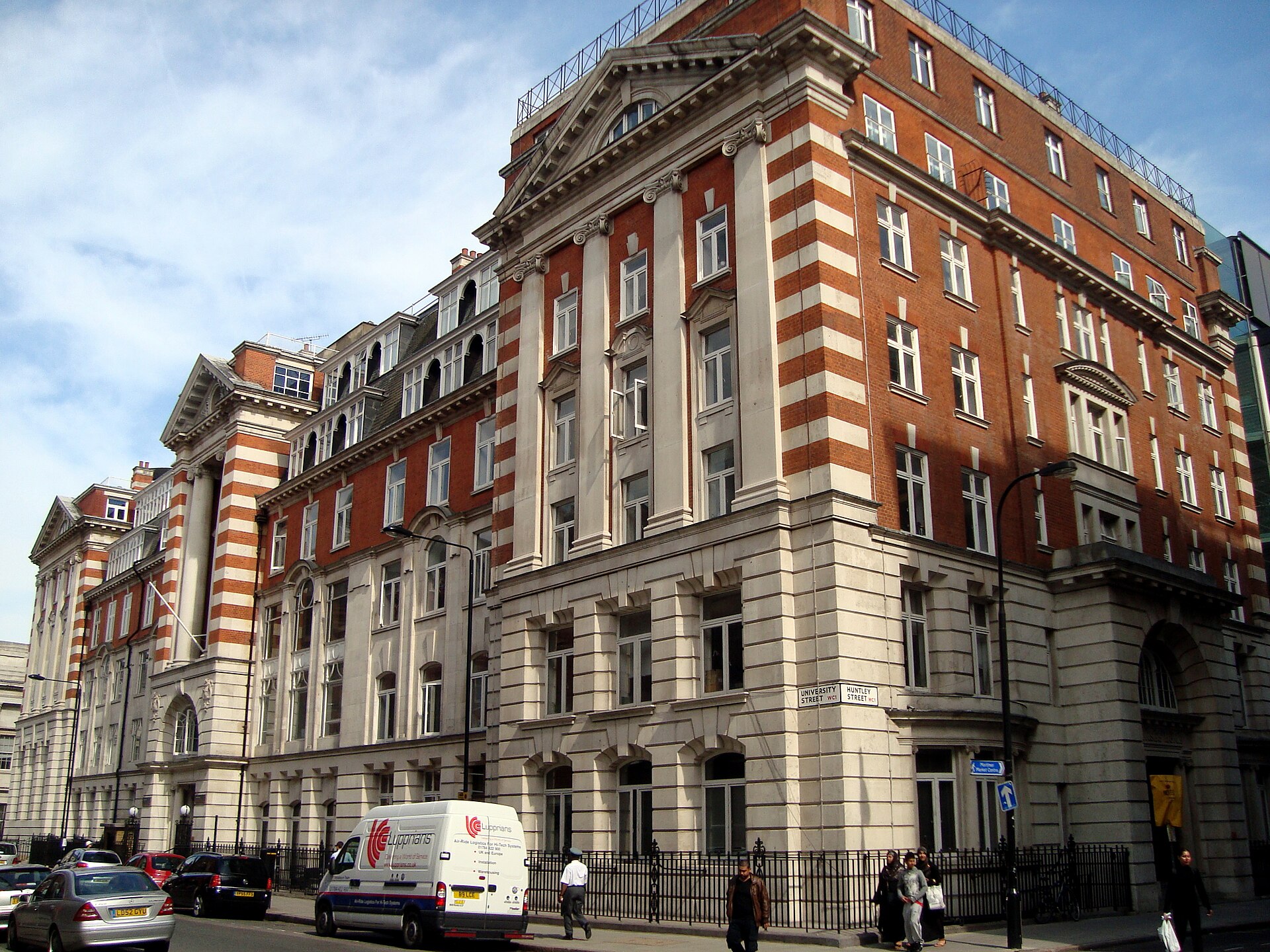
The Rockefeller Building, University College London
The Rockefeller Building, University College LondonGnesener1900 · CC BY-SA 3.0 · via Wikimedia Commons
The 2014 variety rugby match between University College London and King's College London
The 2014 variety rugby match between University College London and King's College LondonUCLU · CC BY 2.0 · via Wikimedia Commons
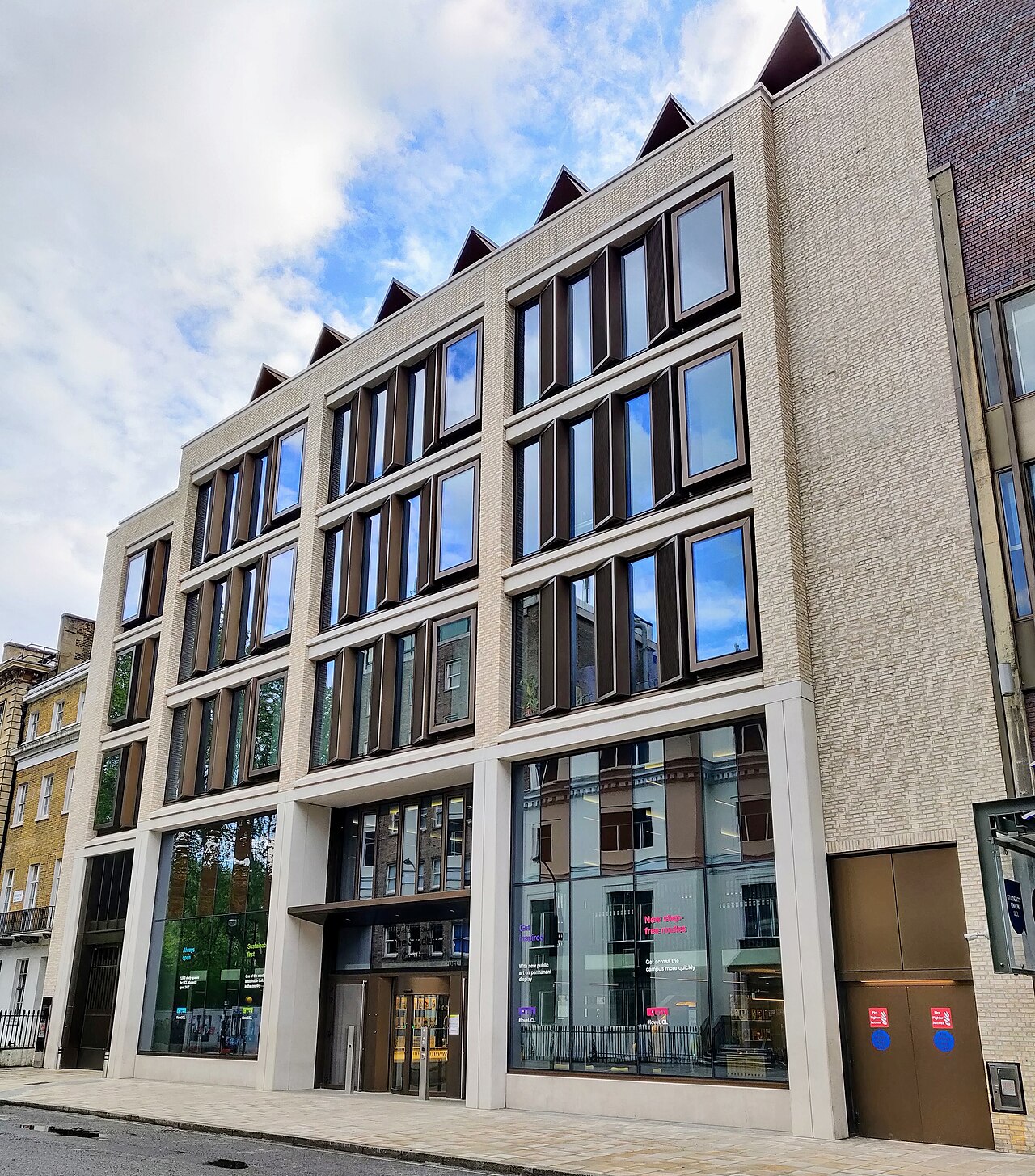
Student Centre in the afternoon, University College London
Student Centre in the afternoon, University College LondonShadowssettle · CC BY-SA 4.0 · via Wikimedia Commons

Why Choose UCL — Global Research, London, and a Truly International Campus

UCL is not a traditional, isolated campus university. It is woven into the fabric of one of the world's most important cities, and it draws the world to itself — more than half of its students are international. These are the reasons ambitious students from every country choose UCL.

1World-Leading Research Status
Ranked 9th globally by QS and 22nd by Times Higher Education, UCL is a member of the elite Russell Group, the G5 (alongside Oxford, Cambridge, Imperial, and LSE), and the Golden Triangle of UK research universities. Its researchers have produced breakthrough work in neuroscience, architecture, medicine, and social science.
2London as Your Campus
UCL's Bloomsbury campus sits minutes from the British Museum, the West End, Parliament, and the City of London's financial district. Students have unparalleled access to internships, cultural institutions, global companies, and government bodies that simply don't exist anywhere else.
3Genuinely International Community
53% of UCL's students are international — one of the highest proportions of any top-10 global university. You will study alongside peers from every continent, in a community that considers diversity a founding principle, not a marketing tagline.
4Breadth Across Every Discipline
From the Bartlett School of Architecture (the world's finest) to MBBS Medicine, Economics, Computer Science, Law, and Natural Sciences — UCL's range is extraordinary. The UCL East campus at Queen Elizabeth Olympic Park adds a new dimension for engineering and innovation.
5Historic Progressiveness
UCL was the first English university to admit students regardless of religion, and among the first to admit women on equal terms. That founding ethos — open, secular, evidence-driven — defines UCL's culture today. It is an institution that has always been ahead of its time.
6Career Outcomes in a Global Capital
90% of UCL graduates go on to work or further study within six months. London employers — from Goldman Sachs to the NHS, from McKinsey to the BBC — recruit directly from UCL. The city and the university are inseparable career assets.

UCL Selectivity — Acceptance Rate and Academic Profile

UCL is a selective institution, with an overall acceptance rate of 30%. Selectivity varies significantly by programme — Medicine and Law are far more competitive than the university average, while some programmes in the humanities and social sciences have higher intake rates. All programmes, however, require strong academic performance in relevant subjects.

Unlike US universities, which use holistic admissions across most programmes, UCL's admissions are primarily academic and subject-specific. Entry requirements are set per course, and offers are typically conditional on predicted or achieved A-Level or IB grades. Your personal statement and reference matter — but the academic offer is the foundation.

30%
Acceptance Rate
39+
IB Typical Band
53%
International Students
#9
QS World Rank

UCL at a Glance — Key Facts

1826
Founded
48,000
Total Students
53%
International Students
10:1
Student:Faculty Ratio
#5
National Rank (UK)
Public Research
University Type

UCL Application Components — UCAS, Personal Statement, Reference & More

UCL accepts applications exclusively through UCAS (Universities and Colleges Admissions Service) — the UK centralised application portal. There is no Common App or direct application route. Through UCAS, you can apply to up to five universities with one application.

01REQUIREDUCAS Application
UCL's UCAS institution code is U80. Your application includes personal details, qualification history, and references — all submitted through UCAS. No separate UCL portal or form is required.
02REQUIREDUCAS Personal Statement (New Format)
From 2026 entry, the UCAS personal statement is three structured questions (not a single essay), with a total character limit of 4,000. Each question has a minimum of 350 characters and a maximum of approximately 1,000. This is your primary opportunity to make the academic case for your course choice.
03REQUIREDAcademic Reference
One academic reference from a teacher or school counsellor, submitted through UCAS. It must be written from an institutional email address. For international students, this is typically from your school's principal or head of department.
04REQUIREDPredicted / Achieved Grades
Your academic record and predicted grades are central to UCL's evaluation. For IB students, predicted scores from your coordinator are submitted. A-Level predicted grades from your school. UCL will typically make a conditional offer based on these predictions.
05COURSE-SPECIFICAdmissions Tests
Some UCL programmes require admissions tests — including TMUA (for Mathematics and some Economics programmes), ESAT (for Engineering and Sciences), and UCAT (for Medicine). Check your specific course page on the UCL Prospectus. Register for tests separately through the UAT-UK or testing provider websites.
06COURSE-SPECIFICInterview
Medicine, some Architecture programmes, and selected other courses at UCL require an interview. Most undergraduate programmes do not interview. Check your specific programme page in the UCL Undergraduate Prospectus.
07REQUIRED FOR INTERNATIONALSEnglish Language Evidence
Non-native English speakers must meet UCL's English language requirements. IELTS Academic, TOEFL iBT, and Duolingo English Test are accepted. Results are typically required before enrolment rather than at application. Minimum requirements vary by course level.
https://www.ucl.ac.uk/study/prospective-students/undergraduate/how-apply

What UCL Admissions Officers Look For — Academic Rigour, Subject Fit, and Genuine Motivation

UCL's admissions process is primarily academic. Unlike holistic US admissions, UCL evaluates applicants primarily on whether they meet or are predicted to meet the academic offer for their specific programme. Your personal statement and reference support — but cannot substitute for — the academic threshold.

That said, within the pool of academically qualified applicants, UCL does evaluate personal statements carefully for evidence of genuine intellectual engagement with the subject. An application that demonstrates independent reading, self-directed research, or real-world engagement with the field stands out from one that simply lists grades.

01Strong Predicted Grades
UCL makes conditional offers based on predicted A-Level or IB grades. The core academic offer must be credible — strong teachers' predictions, supported by consistent performance, are essential. Offers typically range from A*AA to A*A*A for competitive programmes and ABB to AAA for others.
02Relevant Subjects Studied
UCL evaluates not just your grades but which subjects you have studied. Many programmes specify required or preferred subjects (e.g., Mathematics A-Level for Economics, Chemistry for Medicine). Misaligned subject choices can disqualify an otherwise strong applicant.
03Intellectual Motivation
The personal statement should demonstrate genuine passion for the subject — not for UCL as a brand. Admissions tutors are experts in their field and can identify authentic engagement versus generic enthusiasm. Specific books read, projects undertaken, or ideas explored carry weight.
04Academic Reference
Your school reference should speak to your academic character: how you engage with material beyond the minimum, your intellectual curiosity, and your predicted performance. Strong references contextualise strong grades; they also carry weight when grades are at the borderline.
05Course-Specific Fit
UCL's programmes are more specialised than a US liberal arts degree. You are applying to a specific department, not a general college. The clarity and precision of your programme choice — and your ability to articulate why that programme, at that level — is evaluated.

UCL Application Deadlines — UCAS Rounds, Medicine, and Key Dates

UCL receives applications exclusively through UCAS. There are no early decision or regular decision rounds as in the US system. UCL gives equal consideration to all applications received by the standard UCAS deadline for each course.

Dates below reflect the cycle for 2026 entry. Check ucas.com and ucl.ac.uk for exact deadlines for the cycle you are applying in, as UCAS deadlines shift by a day or two year to year.

CourseDeadlineNotes
Medicine (MBBS, A100)15 OctoberAll UCAS applications for Medicine must arrive by October deadline
Most undergraduate courses14–15 JanuaryStandard UCAS equal-consideration deadline
Late applications (Extra / Clearing)30 JuneUCL may consider after main deadline if spaces remain
UCAS application opensEarly SeptemberTypically opens first week of September each year
https://www.ucl.ac.uk/study/prospective-students/undergraduate/how-apply/ucas-explained

Student Life at UCL — London, Bloomsbury, and 300+ Societies

UCL's location in Bloomsbury — a neighbourhood famous for its literary, academic, and artistic heritage — means student life extends far beyond campus. The British Museum is a five-minute walk. The West End, the City, and countless cultural institutions are accessible by Tube from UCL's front door.

Students' Union UCL runs over 300 clubs and societies, from competitive sports clubs (with access to the Shenley 100-acre sports grounds) to theatre at the Bloomsbury Theatre, to student media, debating, and discipline-specific academic societies. The Union also operates bars, cafés, and organises events at London's most iconic venues.

Accommodation
UCL guarantees accommodation to first-year international students (subject to application deadlines). Halls are located across Bloomsbury, Camden, and further afield. Costs vary by hall and room type. Most students move to private accommodation from Year 2.
London as a Second Campus
For international students, the city is part of the education. Internships at global companies, volunteering at NHS hospitals, access to Parliament and museums, and the professional networks of a world capital are all part of the UCL experience.
Students' Union UCL
One of the most active students' unions in the UK, with 300+ clubs and societies, regular events, four campus bars, and year-round social programming. Ministry of Sound and Fabric are among the London venues where SU UCL organises events for students.
UCL East — New Campus
UCL East at Queen Elizabeth Olympic Park in Stratford is a new addition to UCL's estate, housing Engineering Sciences, Population Health, and interdisciplinary innovation programmes. It represents UCL's commitment to expansion and new disciplines.
Cultural and International Life
With 53% international students, UCL's social environment is uniquely diverse. International student societies, cultural celebrations, and a student body representing virtually every country make UCL feel less like a single-nationality university abroad and more like a global community.

Career Outcomes at UCL — Employment, London Advantage, and Alumni Network

90% of UCL graduates go into work or further study within six months of graduating — a figure consistent with UCL's status as one of the UK's most employer-respected universities. UCL's location in London is an integral part of this outcome: students have direct access to the largest concentration of global employers in Europe throughout their studies.

Average starting salaries for UCL graduates are approximately $40,000 USD equivalent, reflecting the range of disciplines and the mix of London-competitive and public-sector roles graduates enter. Finance, consulting, technology, medicine, law, architecture, and public policy are all well-represented UCL graduate destinations.

Stats

90%
Employment or further study within 6 months
$40,000
Average starting salary (USD equiv.)

Cards

Finance and Professional Services
The City of London is minutes from UCL's Bloomsbury campus. UCL Economics, Finance, and Law graduates are recruited directly by investment banks, law firms, and consulting practices throughout their degrees.
Technology and Engineering
UCL Computer Science and Engineering graduates are recruited by global technology companies including Google, Amazon, and DeepMind (founded by UCL alumni). The UCL Tech hub and UCL Advances (the entrepreneurship arm) support startup formation.
Medicine and Healthcare
UCL MBBS graduates complete foundation training in NHS hospitals across London and beyond. UCL has affiliated teaching hospitals including University College Hospital and Great Ormond Street, providing clinical training at the highest level.
Architecture and Built Environment
The Bartlett School of Architecture is routinely ranked the world's top architecture school. Its graduates lead firms, shape skylines, and win the profession's highest awards globally.
Research and Academia
UCL is one of the world's leading research universities by publication output. Undergraduate students frequently progress to postgraduate study at UCL or peer institutions globally, supported by UCL's research culture and academic reputation.

UCL Frequently Asked Questions

Does UCL consider SAT or ACT scores from international students?+

UCL is a UK university that uses A-Level and IB grades as its primary academic benchmark — not SAT or ACT. International students from US-style systems are evaluated on their GPA, AP scores, and course rigour. SAT/ACT scores may be submitted as supplementary evidence but are not required and are not a primary admissions factor at UCL.

Is UCL test-optional?+

For most programmes, UCL does not require standardised admissions tests such as SAT or ACT. However, some specific UCL programmes do require UK subject-specific admissions tests — including TMUA for Mathematics and related programmes, ESAT for Engineering and Sciences, and UCAT for Medicine. Always check your specific course page in the UCL Undergraduate Prospectus.

What is the new UCAS personal statement format for UCL?+

From 2026 entry, the UCAS personal statement has changed from a single free-form essay to three structured questions: (1) Why do you want to study this course or subject? (2) How have your qualifications and studies helped you prepare? (3) What else have you done outside education to prepare, and why is it useful? The total character limit is 4,000 with a minimum of 350 characters per question.

Can I apply to UCL without a UCAS application?+

No. UCL accepts applications exclusively through UCAS. There is no direct application route, no Common App, and no late-stage supplemental application. All international students must submit through ucas.com.

Does UCL interview all applicants?+

No — most UCL undergraduate programmes do not conduct interviews. Medicine (MBBS) and some Architecture programmes at the Bartlett are notable exceptions. A small number of other programmes may invite borderline applicants for interview. Check your specific programme page to confirm.

Does UCL offer financial aid or scholarships for international students?+

UCL offers the Global Undergraduate Scholarship (33 awards, covering full tuition for all recipients and maintenance allowance for 10), which is means-tested for students from low-income backgrounds (household income ≤£42,875). Merit-based scholarships and country-specific awards are also available. UCL does not offer need-blind international admissions or guarantee meeting full financial need in the way some US universities do.

What A-Level grades do I need for UCL?+

Entry requirements vary significantly by programme. The range is broadly from ABB (some humanities programmes) to A*A*A (Medicine, highly competitive Science programmes). Most competitive UCL programmes — Law, Computer Science, Economics — typically require A*AA to A*A*A. Always check your specific programme page in the UCL Undergraduate Prospectus, as offers are programme-specific.

What IB score do I need for UCL?+

UCL typically looks for 38–40 IB points for most competitive programmes, with a score of 39 as a common benchmark. Specific Higher Level subject requirements vary by programme. Medicine and Law require particularly strong HL scores. The facts on this page reflect a typical IB band of 39 points for UCL.

UCL ACADEMIC REQUIREMENTS

What UCL Expects Academically — The Honest Picture for International Students

UCL's admissions are predominantly academic. Unlike most competitive US universities, UCL makes offers primarily based on your grades or predicted grades in relevant subjects. Understanding how UK conditional offers work — and how IB, A-Levels, and international qualifications translate — is essential preparation.

UCL sets entry requirements per programme, not per university. This means that Computer Science at UCL may have different requirements than Economics, which may differ from Architecture. The first step for any international applicant is identifying the specific requirements on their programme's prospectus page.

UCL Academic Profile — Entry Benchmarks from the Facts

These are the sourced academic benchmarks for UCL admission. They represent typical offers and admitted student profiles — not the absolute minimum threshold, which is lower for less competitive programmes.

39+
Typical IB Score
3.5
Minimum GPA (US equivalent)
ABB–A*A*A
A-Level Range
30%
Acceptance Rate

UCL Admissions Tests — TMUA, ESAT, UCAT, and the UK Testing Landscape

UCL's test policy is nuanced and programme-specific. The university does not require SAT or ACT from international applicants — these are US standardised tests with limited relevance to UK admissions. Instead, UCL requires subject-specific UK admissions tests for certain competitive programmes.

For most programmes, no admissions test beyond your A-Level or IB qualifications is required. However, failing to register for a required subject test (e.g., UCAT for Medicine) by the registration deadline will disqualify your application regardless of academic strength.

MEDICINEUCAT — University Clinical Aptitude Test
Required for MBBS Medicine at UCL. Tests verbal reasoning, decision making, quantitative reasoning, abstract reasoning, and situational judgement. Taken in the summer before your application year. UCAT scores are used alongside predicted grades to shortlist for interview.
MATHS / ECONOMICSTMUA — Test of Mathematics for University Admission
Required or considered for Mathematics, some Economics, and quantitative Social Science programmes at UCL. Tests application of mathematical knowledge and reasoning in two 75-minute papers. Register through Pearson VUE.
ENGINEERING / SCIENCESESAT — Engineering and Science Admissions Test
Required for Engineering Sciences and some Natural Sciences programmes. Tests Mathematics and subject-relevant scientific knowledge. Taken in October of application year.
NOTENo SAT/ACT Requirement
UCL does not require or use SAT or ACT scores as a primary admissions criterion. International students from US-curriculum schools are evaluated on their GPA, AP results, and course rigour. Submitting SAT/ACT scores is voluntary and carries limited weight.
https://www.ucl.ac.uk/study/prospective-students/undergraduate/how-apply/ucas-explained

SAT, ACT, and AP at UCL — How US Qualifications Are Evaluated

UCL has considerable experience evaluating students from American, international, and non-UK curricula. If you are completing a US high school diploma or studying in an American system, UCL will assess your academic profile using your GPA, AP scores, and overall course rigour — not SAT or ACT.

UCL's minimum GPA equivalent is 3.5 for international qualifications. For competitive programmes, admitted students typically come from the top of their class with strong AP performance. Students with 4s and 5s across relevant AP subjects are the most competitive applicants from US-curriculum schools.

GPA Equivalency
UCL sets a minimum of 3.5 GPA for international students from US-style systems. Competitive programmes (Law, Computer Science, Economics) effectively require a 3.8–4.0 GPA from rigorous AP coursework.
AP Subject Scores
AP scores function similarly to A-Level grades in UCL's evaluation. A score of 5 in a relevant AP subject is the expected level. Students applying for Science programmes should demonstrate 5s in relevant science AP courses.
Course Rigour
UCL evaluates the difficulty of the curriculum a student has taken, not just the GPA. A 4.0 GPA from a non-rigorous curriculum is evaluated differently than a 3.8 from a full IB or AP-heavy course load.

IB and A-Level Requirements at UCL — Programme-Specific Benchmarks

The IB Diploma and A-Levels are both well-understood by UCL's admissions tutors. UCL makes explicit conditional offers in both systems, and the requirements are programme-specific. Below are the typical benchmarks across UCL's major programme categories.

For IB students, UCL's offers typically specify a total point score, a required score in the relevant Higher Level subjects, and may specify particular HL subjects. A score of 39 is the typical benchmark for most competitive UCL programmes, but Medicine and Law may require higher HL scores within this band.

IB Diploma — Typical UCL Offer
38–40 total points, with specific Higher Level requirements depending on the programme. A score of 39 with 7,6,6 or 7,7,5 at Higher Level is a strong benchmark. For Medicine, an offer of 39+ with 7,7,7 or high 6s in relevant sciences is typical. English Language and Mathematics at Standard Level minimum 5 are also commonly required.
A-Levels — Typical UCL Offer
Offers range from ABB to A*A*A depending on programme. Highly competitive programmes (Medicine, Law, Computer Science) typically require A*AA to A*A*A. Humanities programmes may offer AAA or AAB. Subject-specific requirements apply to most programmes — e.g., Chemistry required for Medicine, Mathematics for Economics.
GCSE / IGCSE Background
While GCSEs are not the primary entry requirement, UCL admissions tutors consider GCSE/IGCSE performance as context for predicted A-Level grades. Strong GCSE performance (7s and 8s) supports the credibility of high predicted grades and is particularly relevant for Medicine applicants.
Other International Qualifications
UCL accepts a wide range of international qualifications — Indian CBSE/ISC, Singapore A-Levels, Hong Kong HKDSE, Nigerian WAEC, Canadian provincial certificates, and many others. Each is evaluated on a country-specific basis. Check UCL's country-specific entry requirements pages in the Undergraduate Prospectus.

Subject Preparation UCL Expects — By Discipline

UCL admits students to specific programmes, not to a general college. The academic rigour expected varies substantially by discipline. These cards reflect the subject-level preparation that makes an application competitive in each area.

SCIENCESMedicine (MBBS)
Three sciences at A-Level (Biology and Chemistry required, plus one of Mathematics or Physics) or IB equivalent with high HL scores. UCAT required. GCSE Mathematics and English at Grade B (6) minimum. Personal statement must demonstrate clinical work experience and genuine motivation for medicine as a career.
QUANTITATIVEMathematics and Computer Science
A-Level Further Mathematics (for Mathematics programmes), or IB HL Mathematics: Analysis and Approaches. For Computer Science, strong mathematical background and evidence of programming interest or experience strengthens the application. TMUA may be required.
SOCIAL SCIENCESEconomics and Law
Mathematics A-Level or strong IB HL Mathematics is expected for Economics. Law requires strong analytical writing ability and broad evidence of legal interest in the personal statement. Both typically require A*AA or A*A*A at A-Level.
CREATIVEBartlett Architecture
Portfolio of creative work is typically required for Bartlett applicants. Admissions criteria assess both academic achievement (typically A*AA including Mathematics) and creative potential demonstrated through the portfolio. The Bartlett interview assesses creative thinking directly.
INTERDISCIPLINARYArts and Sciences (BASc)
UCL's unique four-year Arts and Sciences degree requires 39 IB points with 19 at Higher Level, or A*AA at A-Level. The personal statement should demonstrate breadth of intellectual curiosity, not just depth in one subject. Interview is typically required.

English Language Requirements at UCL — IELTS, TOEFL, and Duolingo Benchmarks

UCL sets English language requirements at five levels (Level 1 to Level 5), with most undergraduate programmes requiring Level 1 or Level 2. Your specific course page in the UCL Undergraduate Prospectus confirms which level applies. The minimum thresholds below are from UCL's official requirements pages.

IELTS Academic is UCL's preferred English qualification. Tests must be from approved providers and within the validity period (usually two years). For TOEFL, tests taken from January 2026 onwards are assessed on a new scoring format — check ucl.ac.uk for current TOEFL band conversions.

TestMinimumNotes
IELTS Academic (Level 1 — most programmes)6.5 overallMinimum 6.0 in each component
IELTS Academic (Level 2)7.0 overallMinimum 6.5 in each component
IELTS Academic (Level 5 — most demanding)8.0 overallMinimum 8.0 in each component
TOEFL iBT (Level 1)92 overallMinimum 24 per section (old scoring); see UCL for new 2026 thresholds
Duolingo English Test125Accepted at some UCL programmes — confirm with your course page
https://www.ucl.ac.uk/study/prospective-students/undergraduate/how-apply/english-language-requirements

Building Your Profile for UCL — Year by Year Strategy

The path to a competitive UCL application begins long before the UCAS application window opens. This is the year-by-year roadmap for international students targeting UCL.

1Years 9–10 / Grade 9–10: Foundation
Establish a strong academic foundation in subjects relevant to your intended UCL programme. If your school offers GCSE, IGCSE, or pre-IB courses, prioritise Mathematics and English — required for most UCL programmes. Begin exploring your subject area with independent reading.
2Year 11 / Grade 11: Subject Selection
Choose your A-Level or IB HL subjects strategically for your target UCL programme. Selecting the wrong subjects can disqualify an otherwise excellent application. Confirm subject requirements on UCL's programme pages before finalising your choices.
3Year 12 / Grade 12: Test Registration and Academic Excellence
Register for programme-specific admissions tests (UCAT in summer, TMUA/ESAT in October). Maintain strong AS or IB predicted scores. Begin engaging with your subject beyond the classroom — university-level reading, online courses, research projects, or relevant work experience.
4Summer Before Year 13: Work Experience and Research
For Medicine, clinical or volunteering experience is essential and must be described in your personal statement. For other programmes, independent projects, internships, or subject-specific summer schools demonstrate genuine engagement with the field.
5September–October (Year 13): UCAS Application
The UCAS application opens in early September. Medicine applicants must submit by 15 October. Write your personal statement across the three UCAS questions with care and specificity. Confirm your academic reference with your school well in advance.
6January–March: Offers and English Tests
UCL typically issues conditional offers within weeks of application. Begin or confirm English language test preparation. Ensure your IELTS or TOEFL result will be available before your UCL registration deadline.

Academic Application Mistakes to Avoid — For UCL International Applicants

  • Applying for a programme without checking whether your subject combination meets UCL's specific requirements — subject mismatches are a common and fatal error.
  • Failing to register for required admissions tests (UCAT, TMUA, ESAT) before the registration deadline — missing the test deadline makes you ineligible regardless of grades.
  • Submitting a personal statement that describes interest in UCL rather than passion for the subject — UCAS sends one personal statement to all five of your choices; it must be subject-focused, not institution-focused.
  • Overestimating the weight of extracurricular activities — UCL's undergraduate admissions are primarily academic. Strong grades in relevant subjects carry more weight than extracurricular lists.
  • Applying without verifying your English language requirements — different UCL programmes require different IELTS/TOEFL levels; assuming Level 1 (6.5) applies to all courses can result in issues at enrolment.
  • Ignoring the GCSE/IGCSE component — while not the primary factor, strong GCSE/IGCSE results support the credibility of predicted A-Level grades, especially for competitive programmes.
  • Applying too late — UCL gives equal consideration only to applications received by the standard January UCAS deadline. Late applications are considered only if places remain.

UCL COST AND FINANCIAL AID

Understanding the Cost of UCL — An Honest Breakdown for International Students

UCL is a world-class education in one of the world's most expensive cities. International students pay significantly higher tuition than UK home students, and London's living costs add substantially to the total. At the same time, UCL offers targeted scholarships and the city offers unmatched career access that can materially improve your post-graduation financial position.

The figures below are drawn from the facts file and represent estimated annual costs in USD. Actual costs depend on your programme, accommodation choices, and personal spending. UCL publishes cost estimates for each academic year — verify with ucl.ac.uk for current figures.

UCL Annual Cost Breakdown — International Student Estimates

All figures are annual estimates in USD. International tuition is set at the overseas fee rate, which is significantly higher than the UK home student fee.

ItemAnnual CostNotes
International Tuition (Overseas Rate)$46,200Per academic year; varies by programme
Cost of Living (London estimate)$24,000Accommodation, food, transport, personal
Total Estimated Cost of Attendance$67,320Tuition + living + additional costs
UCAS Application Fee$36One-time UCAS application fee (multiple choice)

Financial Aid for International Students at UCL — What is Available and What is Not

UCL does not operate a need-blind admissions system or guarantee to meet the full financial need of international students in the way some US universities do. There is no published average aid percentage for international undergraduates. Financial support for international students at UCL primarily comes through specific scholarship programmes rather than institution-wide need-based aid.

The most significant aid available to international undergraduates is the UCL Global Undergraduate Scholarship, which is targeted at students from low-income backgrounds. Beyond this, UCL offers a range of country-specific and faculty-specific awards. International students should research all available funding sources before accepting an offer.

Since avgAidPct is not available in the facts file for UCL, no average aid figure is stated here. UCL does not publish a general international student aid percentage comparable to US universities.

UCL Scholarships for International Students — Named Awards You Can Apply For

These are verified, named scholarships available to international undergraduate students at UCL. Eligibility and deadlines change each year — verify current details at ucl.ac.uk/scholarships.

MEANS-TESTEDUCL Global Undergraduate Scholarship
33 awards available for 2026/27 entry: 10 full awards (covering full tuition fees, annual maintenance allowance of approximately £12,000–15,000, and a fixed allowance for visa fees and Immigration Health Surcharge) and 20 tuition-only awards. A further 3 tuition-only awards are available specifically for Indian students. Eligibility: overseas fee status and household income of £42,875 or less. Application deadline: 27 April 2026. Successful applicants notified by 3 June 2026.
COUNTRY-SPECIFICUCL India Excellence Scholarship
A scholarship for undergraduate students from Indian institutions or of Indian background who meet specific academic criteria. Amount and eligibility are published on UCL's scholarships pages. Typically £5,000 towards tuition. Verify current availability at ucl.ac.uk/scholarships.
COUNTRY-SPECIFICOther Country and Regional Awards
UCL offers and partners with external funders for country-specific scholarships across Africa, Southeast Asia, the Middle East, and Latin America. These vary year to year. The UCL Scholarships and Funding database (ucl.ac.uk/scholarships) is the authoritative source — filter by nationality and level of study.
EXTERNALChevening Scholarships (UK Government)
The UK government's Chevening programme funds outstanding students from eligible countries to study at UK universities, including UCL. Awards are for postgraduate study, but undergraduate students should note this route for future study. Eligibility is country-specific and requires two years of work experience.
EXTERNALCommonwealth Scholarships
For students from Commonwealth nations, the Commonwealth Scholarship Commission offers funded places at UK universities. Available for undergraduate study in certain circumstances. Apply through your national nominating agency, not directly through UCL.
https://www.ucl.ac.uk/scholarships/ucl-global-undergraduate-scholarship

Is UCL Affordable for International Students? — The Honest Assessment

At approximately $67,320 per year total cost of attendance, UCL is a significant financial commitment. Unlike the most generous US universities (which may meet 100% of demonstrated financial need), UCL does not guarantee international student aid. Most international undergraduates at UCL are self-funded or supported by external scholarships.

That said, the UCL Global Undergraduate Scholarship provides meaningful full-tuition and maintenance support for students from low-income households. For students who qualify, this makes UCL genuinely accessible. For self-funded students, the four-year cost of a UCL degree in London is broadly comparable to three or four years at a comparable US private university.

UCL's undergraduate programmes are typically three years (four for some programmes including Medicine at six years), which moderates the total cost compared to four-year US programmes. The accelerated UK degree structure is a financial consideration in itself.

How to Fund Your UCL Education — Step by Step

1Check UCL's Scholarship Database
Visit ucl.ac.uk/scholarships and filter by your nationality, intended programme, and level of study. Make a list of every award you are eligible for, noting their deadlines — most scholarships have different timelines from the admissions process.
2Apply for UCL Global Undergraduate Scholarship
If you are from a low-income household (income ≤£42,875), this is the most significant award available. Apply through UCL's Portico portal by the April deadline after you have submitted your UCAS application and had your fee status confirmed.
3Research External National Scholarships
Your government, national development bank, or bilateral education agreements may fund study in the UK. Many countries have dedicated scholarships for students attending Russell Group universities. Apply well before your UCL UCAS deadline, as national scholarships often require government endorsement.
4Explore Student Loans from Your Home Country
Some national student loan programmes extend to international study. Research whether your country's student finance authority covers UK university tuition.
5Plan for London Living Costs Early
London is one of Europe's most expensive cities. Budget realistically — the £24,000 USD equivalent living cost estimate is a minimum for a student lifestyle. Accommodation in UCL halls is typically guaranteed for first-year international students who apply before the deadline.

UCL Cost and Funding FAQs

Does UCL offer need-blind admissions for international students?+

No. UCL does not operate need-blind admissions for international undergraduates. Financial circumstances are not part of the admissions evaluation, but UCL does not guarantee to meet any level of demonstrated financial need. Aid availability is limited and primarily through the Global Undergraduate Scholarship.

What is the application fee for UCL?+

UCL uses the UCAS application system. The UCAS fee is approximately $36 USD (the UCAS fee covers applying to up to five universities through a single application — it is not a UCL-specific fee).

How much does it cost to live in London as a UCL student?+

Estimated annual cost of living for a UCL student in London is approximately $24,000 USD (around £18,000–20,000). This is one of the higher living cost environments globally. Accommodation costs are the largest component — UCL-managed halls typically cost £8,000–£15,000 per year depending on room type.

Are there any UCL scholarships I don't need to be from a low-income household to receive?+

The UCL Global Undergraduate Scholarship is means-tested. However, country-specific awards and external scholarships (Chevening, Commonwealth) may have different eligibility criteria. The UCL scholarships database is the best place to search for awards with non-income eligibility criteria.

Is a UCL degree cheaper than a US university degree?+

For most programmes, UCL's three-year degree structure means a total cost of approximately $200,000 over three years at current rates — broadly comparable to two to three years at an equivalent US private university. The accelerated UK degree structure is a meaningful financial differentiator versus a four-year US programme.

UCL PERSONAL STATEMENT STRATEGY

The UCAS Personal Statement at UCL — Why It Matters More Than You Think

The UCAS personal statement is the only narrative element of your UCL application. There is no Harvard supplement, no Common App essays, no short answer questions — just your answers to three UCAS questions, read by your programme's admissions tutor alongside your grades and reference.

For UCL specifically, the personal statement is evaluated primarily for academic motivation and subject-specific preparation. An admissions tutor in the UCL Department of Economics or the Bartlett School of Architecture reads your statement asking: does this applicant genuinely understand what they are applying to study, and can I see evidence that they are prepared for it? A generic, enthusiasm-driven statement carries little weight.

UCAS Personal Statement Overview — The New Three-Question Format (2026 Entry Onwards)

From the 2026 entry cycle, UCAS replaced the single 4,000-character free-form personal statement with three structured questions. This change applies to all UK university applications, including UCL. The three questions are read together as a cohesive statement by admissions tutors.

The total character limit remains 4,000 characters across all three responses. Each response has a minimum of 350 characters and an approximate maximum of 1,000 characters per question, though the constraint is the total character count. Avoid repeating the same information across questions — each should introduce new evidence of your preparation and motivation.

https://nzassociates.co.uk/ucas-personal-statement-2026/

The Three UCAS Personal Statement Questions — With UCL-Specific Strategy

These are the three official UCAS personal statement questions for 2026 entry onwards. All three are required and read together by UCL admissions tutors.

REQUIRED — SUBJECT MOTIVATIONQuestion 1: Why This Subject?
Official Text: Why do you want to study this course or subject?
Strategic Guide: This is the most important question for UCL, where admissions is subject-specific. Do not describe general intellectual curiosity or broad ambition — describe your relationship with this particular discipline. What sparked your interest? What specific ideas, problems, or discoveries in this field have shaped your thinking? For UCL applicants, mentioning subject-relevant reading, research, or intellectual encounters gives admissions tutors the signal they are looking for: that you know what you are signing up to study.
Source: https://nzassociates.co.uk/ucas-personal-statement-2026/
REQUIRED — ACADEMIC EVIDENCEQuestion 2: Academic Preparation
Official Text: How have your qualifications and studies helped you prepare for this course or subject?
Strategic Guide: This question is your academic case. Don't just list qualifications you are taking — explain how specific coursework or projects have developed skills or knowledge relevant to your UCL programme. For Sciences: specific experiments, investigation topics, or mathematical skills. For Humanities and Social Sciences: critical analysis skills, essay writing, specific texts studied. For Medicine: the Sciences studied and clinical relevance. Make the connection explicit — don't assume admissions tutors will join the dots for you.
Source: https://nzassociates.co.uk/ucas-personal-statement-2026/
REQUIRED — EXTRACURRICULAR EVIDENCEQuestion 3: Preparation Beyond Education
Official Text: What else have you done to prepare outside of education, and why are these experiences useful?
Strategic Guide: For UCL, this question is less about extracurricular breadth (as it would be at a US university) and more about subject-relevant preparation outside school. Work experience for Medicine applicants, coding projects for Computer Science, a personal architecture portfolio for Bartlett, legal volunteering or court visits for Law — these are the kind of experiences that carry genuine weight. Generic clubs or leadership roles without a clear subject connection are less compelling. Choose one or two specific experiences and explain precisely what you learned from each.

Writing the UCAS Personal Statement — The UCL-Specific Approach

Because the UCAS personal statement is sent to all five of your university choices (including those that are not UCL), it must be subject-focused rather than university-focused. You cannot write about UCL specifically — the statement goes equally to every university on your UCAS application. Write for the subject, not the institution.

This is a meaningful difference from US admissions essays. At Harvard, you write 'Why Harvard?' supplements. At UCL, the personal statement is entirely about why you want to study the subject, what preparation you have, and what you have done outside the classroom. UCL's admissions tutors are subject experts evaluating your academic fit — write to that audience, not to a generic admissions office.

The three-question format rewards economy and specificity. With a maximum of approximately 1,000 characters per question (roughly 150 words), every sentence must do real work. Draft at twice the length, then cut ruthlessly to the most precise and specific version.

Strategies for Each UCAS Question — Tactics for UCL Applicants

Question 1 Strategy: Specificity Wins
The weakest personal statements begin with 'I have always been fascinated by...' and proceed through a life narrative to the decision to study the subject. The strongest begin at a specific intellectual moment — a book read, a problem encountered, a concept that didn't make sense until it suddenly did. Name the book. Describe the idea. Be specific.
Question 2 Strategy: Make the Academic Link Explicit
Admissions tutors in each department know their own discipline. They can see whether a student has engaged seriously with relevant material. For Question 2, explicitly connect a piece of coursework, an extended essay topic, or an investigation project to a skill or question in your intended degree. 'My IB Extended Essay on game theory applications in political coalitions deepened my understanding of strategic interaction, which I look forward to exploring formally in UCL's Economics department' is the level of specificity that works.
Question 3 Strategy: Depth Over Breadth
UK universities do not use the 10-activity extracurricular list that US Common App uses. For Question 3, choose one or two genuinely relevant outside-education experiences and spend your characters explaining what you learned. A student who spent two weeks in a hospital ward and can articulate specific observations about clinical practice is more compelling than one listing ten tangentially related activities.
Medicine Personal Statement
For MBBS Medicine at UCL, the personal statement is particularly scrutinised. It must include evidence of clinical work experience (ideally hospital or GP surgery placement), evidence of scientific curiosity beyond the curriculum, and clear motivation for medicine as a career rather than medical school as a destination. UCL's medicine admissions are among the most competitive in the UK.

Choosing What to Write About — Selecting the Right Evidence for UCL

With only approximately 1,000 characters per question, every piece of evidence you include in the UCAS personal statement must earn its place. These are the principles for choosing what to include and what to cut.

Prioritise Subject-Relevant Experiences
UCL admissions tutors are evaluating whether you are intellectually prepared for their degree. A summer coding project is more relevant for Computer Science than a leadership position in a school club. A clinical volunteering placement is more relevant for Medicine than athletic achievement. Always ask: 'Does this demonstrate readiness for my specific UCL programme?'
Avoid the Generic Narrative
Stories that could belong to any applicant for any subject anywhere in the world consume precious characters without adding value. 'I have always been interested in people, which is why I want to study Psychology' tells an admissions tutor nothing they didn't expect. A specific experiment you conducted, a specific book that changed your thinking, a specific clinical moment — these are the details that distinguish.
Reference Real Ideas, Not Just Subjects
The strongest UCL personal statements demonstrate that the applicant has engaged with the actual intellectual content of the discipline, not just its existence. Name a specific economist. Reference a specific landmark case for Law. Describe a specific medical condition that prompted further research. This demonstrates the depth of preparation that UCL expects.
Read the Programme Syllabus First
Before writing a single character, read the UCL Undergraduate Prospectus page for your intended programme in detail. Note which modules and research areas the department advertises. Your personal statement is stronger if it demonstrates awareness of what the degree actually involves — not just the subject in the abstract.

Personal Statement Mistakes to Avoid — The UCL-Specific List

  • Writing about why you want to go to UCL — the UCAS personal statement is sent to all five choices. It must be subject-focused, not institution-specific.
  • Beginning with a quote — admissions tutors are familiar with this convention and it wastes characters. Begin with your most specific and compelling evidence.
  • Describing extracurricular achievements without connecting them to academic preparation — at UCL, subject-relevant preparation carries far more weight than leadership or sport.
  • Repeating the same information across all three questions — each question should introduce new evidence. If all three answers describe the same activity, you have wasted two-thirds of your characters.
  • Using all your characters on Question 1 and running out of space for Questions 2 and 3 — plan your character allocation across all three questions before you start writing.
  • Generic medicine motivation statements — describing medicine as a passion for helping people is not sufficient for UCL Medicine, which is one of the most competitive programmes in the UK. Specific clinical insight and scientific engagement are expected.
  • Failing to proof-read for errors — UCAS character limits catch most formatting issues, but spelling and grammatical errors in a personal statement are visible signals of carelessness to an academic admissions tutor.
  • Misrepresenting experiences or achievements — UK universities take academic honesty seriously; the UCAS personal statement is signed by the applicant and references must corroborate claims made.

UCAS Personal Statement FAQs

Does UCL read the personal statement carefully or just check grades?+

UCL's admissions tutors are subject experts who read personal statements within their disciplinary context. For competitive programmes where many applicants meet the academic threshold (Law, Medicine, Computer Science), the personal statement is a genuine differentiator. For less competitive programmes where few applicants meet the threshold, grades take more weight. In all cases, a weak personal statement can damage an otherwise strong application.

How important is the personal statement for Medicine at UCL?+

Very important. UCL Medicine (MBBS) uses both UCAT scores and the personal statement to shortlist applicants for interview. A strong personal statement is necessary but not sufficient — UCAT performance also matters significantly. Medicine applicants should expect their personal statement to be read word-for-word by experienced clinical academics.

Can I mention specific UCL professors or research in my personal statement?+

You can reference research areas or academic ideas that align with UCL's work, but be careful about naming specific staff members. UCAS personal statements are seen by all five of your chosen universities — references to UCL-specific content look odd to the other four institutions reading the same statement.

What is the new UCAS three-question format and when does it apply?+

From 2026 entry (applications submitted from September 2025), UCAS replaced the single personal statement essay with three structured questions: (1) Why this subject? (2) Academic preparation? (3) Outside-education preparation? Each has a minimum of 350 characters and the total limit is 4,000 characters. This applies to all UCAS applications including UCL.

Should I use all 4,000 characters?+

You should use as many characters as needed to make your strongest case — no more, no fewer. An 800-character answer that is specific and compelling is better than a 1,000-character answer padded with generalities. However, very short responses (below 600 characters per question) typically do not allow enough space to make a convincing academic case.

Does UCL require a supplemental essay or writing sample beyond the UCAS personal statement?+

No — UCL does not require any additional essay or writing sample as part of the standard UCAS application. Some programmes (Bartlett Architecture, Arts and Sciences BASc) may require a portfolio or additional submission — check your specific programme page.

Courses — schools, degrees & intake

72 degrees across 13 groupings.

Faculty of Arts and Humanities · 8 degrees

English BA

BachelorsEntry IB 38, 17 points in three HL subjects, no HL below 5Deadline 2027-01-13

Comparative Literature BA

BachelorsEntry IB 38, 17 points in three HL subjects, no HL below 5Deadline 2027-01-13

Fine Art BA

BachelorsEntry IB 36, 17 points in three HL subjects, no HL below 5Deadline 2027-01-13

Arts and Sciences BASc

BachelorsEntry IB 38, 18 points in three HL subjects, no HL below 5Deadline 2027-01-13

Classics and the Ancient World BA

BachelorsEntry IB 36, 17 points in three HL subjects, no HL below 5Deadline 2027-01-13

Philosophy BA

BachelorsEntry IB 38, 17 points in three HL subjects, no HL below 5Deadline 2027-01-13

History of Art BA

BachelorsEntry IB 36, 17 points in three HL subjects, no HL below 5Deadline 2027-01-13

Creative Arts and Humanities BA

BachelorsEntry IB 36, 17 points in three HL subjects, no HL below 5Deadline 2027-01-13

Faculty of Social and Historical Sciences · 8 degrees

Economics BSc (Econ)

BachelorsEntry IB 39, grade 7 in Mathematics HL, no HL below 5Deadline 2027-01-13

History BA

BachelorsEntry IB 38, grade 6 in History HL, no HL below 5Deadline 2027-01-13

Geography BSc

BachelorsEntry IB 36, 17 points in three HL subjects, no HL below 5Deadline 2027-01-13

Geography BA

BachelorsEntry IB 36, 17 points in three HL subjects, no HL below 5Deadline 2027-01-13

Anthropology BSc

BachelorsEntry IB 36, 17 points in three HL subjects, no HL below 5Deadline 2027-01-13

Archaeology BA

BachelorsEntry IB 36, 17 points in three HL subjects, no HL below 5Deadline 2027-01-13

Ancient History BA

BachelorsEntry IB 36, 17 points in three HL subjects, no HL below 5Deadline 2027-01-13

Geography and Economics BSc

BachelorsEntry IB 38, 17 points in three HL subjects, no HL below 5Deadline 2027-01-13

Faculty of Mathematical and Physical Sciences · 13 degrees

Mathematics BSc

BachelorsEntry IB 39, grade 7 in Mathematics HL, no HL below 5Deadline 2027-01-13

Mathematics MSci

BachelorsEntry IB 39, grade 7 in Mathematics HL, no HL below 5Deadline 2027-01-13

Physics BSc

BachelorsEntry IB 39, grade 7 in Mathematics HL + grade 6 in Physics HL, no HL below 5Deadline 2027-01-13

Astrophysics BSc

BachelorsEntry IB 39, grade 7 Mathematics + grade 6 Physics (or vice versa) HL, no HL below 5Deadline 2027-01-13

Astrophysics MSci

BachelorsEntry IB 39, grade 7 Mathematics + grade 6 Physics (or vice versa) HL, no HL below 5Deadline 2027-01-13

Chemistry BSc

BachelorsEntry IB 38, grade 6 Chemistry HL + grade 6 in one of Biology/Physics/Mathematics HL, no HL below 5Deadline 2027-01-13

Chemistry MSci

BachelorsEntry IB 38, grade 6 Chemistry HL + grade 6 in one of Biology/Physics/Mathematics HL, no HL below 5Deadline 2027-01-13

Data Science BSc

BachelorsEntry IB 39, grade 7 in Mathematics HL, no HL below 5Deadline 2027-01-13

Earth Sciences BSc

BachelorsEntry IB 36, 17 points in three HL subjects including a science, no HL below 5Deadline 2027-01-13

Geology BSc

BachelorsEntry IB 36, 17 points in three HL subjects including a science, no HL below 5Deadline 2027-01-13

Geophysics BSc

BachelorsEntry IB 36, 17 points in three HL subjects including Mathematics and a science, no HL below 5Deadline 2027-01-13

Environmental Geoscience BSc

BachelorsEntry IB 36, 17 points in three HL subjects including a science, no HL below 5Deadline 2027-01-13

Statistics BSc

BachelorsEntry IB 39, grade 7 in Mathematics HL, no HL below 5Deadline 2027-01-13

Faculty of Engineering Sciences · 13 degrees

Computer Science BSc

BachelorsEntry IB 39, 20 points in three HL subjects including grade 7 in Mathematics HL, no HL below 5Deadline 2027-01-13

Computer Science MEng

BachelorsEntry IB 39, 20 points in three HL subjects including grade 7 in Mathematics HL, no HL below 5Deadline 2027-01-13

Electronic and Electrical Engineering BEng

BachelorsEntry IB 39, grade 7 in Mathematics HL, no HL below 5Deadline 2027-01-13

Electronic and Electrical Engineering MEng

BachelorsEntry IB 39, grade 7 in Mathematics HL, no HL below 5Deadline 2027-01-13

Civil Engineering BEng

BachelorsEntry IB 39, 17 points in three HL subjects, Physics at HL or SL, no HL below 5Deadline 2027-01-13

Civil Engineering MEng

BachelorsEntry IB 39, 17 points in three HL subjects, Physics at HL or SL, no HL below 5Deadline 2027-01-13

Chemical Engineering BEng

BachelorsEntry IB 38, grade 6 Mathematics HL + grade 6 Chemistry HL, no HL below 5Deadline 2027-01-13

Chemical Engineering MEng

BachelorsEntry IB 38, grade 6 Mathematics HL + grade 6 Chemistry HL, no HL below 5Deadline 2027-01-13

Biochemical Engineering BEng

BachelorsEntry IB 38, grade 6 Mathematics HL + grade 6 in one of Biology/Chemistry/Physics HL, no HL below 5Deadline 2027-01-13

Biochemical Engineering MEng

BachelorsEntry IB 38, grade 6 Mathematics HL + grade 6 in one of Biology/Chemistry/Physics HL, no HL below 5Deadline 2027-01-13

Biomedical Engineering BEng

BachelorsEntry IB 39, grade 7 Mathematics HL + grade 6 Physics HL (Biology acceptable in lieu of Physics if Physics at SL), no HL below 5Deadline 2027-01-13

Biomedical Engineering MEng

BachelorsEntry IB 39, grade 7 Mathematics HL + grade 6 Physics HL, no HL below 5Deadline 2027-01-13

Crime and Security Science BSc

BachelorsEntry IB 36, 17 points in three HL subjects, no HL below 5Deadline 2027-01-13

Faculty of Life Sciences · 5 degrees

Biochemistry BSc

BachelorsEntry IB 38, 18 points in three HL subjects including Biology, Chemistry, and Mathematics HL, no HL below 5Deadline 2027-01-13

Biochemistry MSci

BachelorsEntry IB 38, 18 points in three HL subjects including Biology, Chemistry, and Mathematics HL, no HL below 5Deadline 2027-01-13

Biological Sciences BSc

BachelorsEntry IB 38, grade 6 Biology HL + grade 6 in one of Chemistry/Mathematics/Physics HL, no HL below 5Deadline 2027-01-13

Biological Sciences MSci

BachelorsEntry IB 38, grade 6 Biology HL + grade 6 in one of Chemistry/Mathematics/Physics HL, no HL below 5Deadline 2027-01-13

Biomedical Sciences BSc

BachelorsEntry IB 38, grade 6 Biology HL + grade 6 Chemistry HL, Mathematics preferred, no HL below 5Deadline 2027-01-13

Faculty of Medical Sciences · 3 degrees

Medicine MBBS

BachelorsEntry IB 39, grade 7 Chemistry HL + grade 6 Biology HL (or vice versa), no HL below 5Deadline 2026-10-15

Applied Medical Sciences BSc

BachelorsEntry IB 38, grade 6 in two sciences at HL including Biology or Chemistry, no HL below 5Deadline 2027-01-13

Cancer Biomedicine BSc

BachelorsEntry IB 38, grade 6 Biology HL + grade 6 Chemistry HL, no HL below 5Deadline 2027-01-13

Faculty of Brain Sciences · 3 degrees

Psychology BSc

BachelorsEntry IB 39, grade 7 + grade 6 in two subjects from Biology/Chemistry/Mathematics/Physics/Psychology HL, no HL below 5Deadline 2027-01-13

Audiology BSc

BachelorsEntry IB 36, 17 points in three HL subjects including a science, no HL below 5Deadline 2027-01-13

Experimental Linguistics BSc

BachelorsEntry IB 36, 17 points in three HL subjects, no HL below 5Deadline 2027-01-13

The Bartlett Faculty of the Built Environment · 5 degrees

Architecture BSc

BachelorsEntry IB 36, 17 points in three HL subjects, no HL below 5Deadline 2027-01-13

Architecture MSci

BachelorsEntry IB 36, 17 points in three HL subjects, no HL below 5Deadline 2027-01-13

Architectural and Interdisciplinary Studies BSc

BachelorsEntry IB 36, 17 points in three HL subjects, no HL below 5Deadline 2027-01-13

Engineering and Architectural Design MEng

BachelorsEntry IB 38, grade 6 Mathematics HL + grade 6 Physics HL, no HL below 5Deadline 2027-01-13

Construction Project Management MSci

BachelorsEntry IB 36, 17 points in three HL subjects, no HL below 5Deadline 2027-01-13

Faculty of Laws · 1 degrees

Law LLB

BachelorsEntry IB 39, 19 points in three HL subjects, no HL below 5Deadline 2027-01-13

Faculty of Population Health Sciences · 1 degrees

Business and Health BSc

BachelorsEntry IB 36, 17 points in three HL subjects, no HL below 5Deadline 2027-01-13

UCL Institute of Education · 2 degrees

Early Childhood Education BA

BachelorsEntry IB 32, 14 points in three HL subjects, no HL below 4Deadline 2027-01-13

Education, Society and Culture BA

BachelorsEntry IB 32, 14 points in three HL subjects, no HL below 4Deadline 2027-01-13

School of Slavonic and East European Studies (SSEES) · 3 degrees

Russian and East European Studies BA

BachelorsEntry IB 36, 17 points in three HL subjects, no HL below 5Deadline 2027-01-13

Polish BA

BachelorsEntry IB 34, 15 points in three HL subjects, no HL below 5Deadline 2027-01-13

Czech BA

BachelorsEntry IB 34, 15 points in three HL subjects, no HL below 5Deadline 2027-01-13

School of European Languages, Culture and Society (SELCS) · 7 degrees

French BA

BachelorsEntry IB 36, 17 points in three HL subjects, no HL below 5Deadline 2027-01-13

German BA

BachelorsEntry IB 36, 17 points in three HL subjects, no HL below 5Deadline 2027-01-13

Dutch BA

BachelorsEntry IB 36, 17 points in three HL subjects, no HL below 5Deadline 2027-01-13

French and German BA

BachelorsEntry IB 36, 17 points in three HL subjects, no HL below 5Deadline 2027-01-13

French and Spanish BA

BachelorsEntry IB 36, 17 points in three HL subjects, no HL below 5Deadline 2027-01-13

Italian BA

BachelorsEntry IB 36, 17 points in three HL subjects, no HL below 5Deadline 2027-01-13

Spanish BA

BachelorsEntry IB 36, 17 points in three HL subjects, no HL below 5Deadline 2027-01-13

Want your real chances at University College London?

Create a free TYCHR account for your personalised admit-chance, a shortlist you can track, exact entry requirements, and essay + counselling help.