The University of Melbourne
Melbourne, Australia · Urban
AUSTRALIA'S #1 UNIVERSITY
The University of Melbourne Admissions Guide for International Students
Australia's premier research university sits at the heart of one of the world's most liveable cities. The Melbourne Model — broad undergraduate degrees feeding into elite graduate professional schools in Medicine, Law, and Engineering — produces graduates who are versatile, deeply educated, and sought after worldwide.
With 45% of its student body from overseas and a QS global ranking of #19, the University of Melbourne is one of the most internationally diverse elite universities in the world. Admission is merit-based and grades-first — no personal essays, no recommendation letters, no extracurricular lists. If you have the academic results, Melbourne will seriously consider you.
Campus
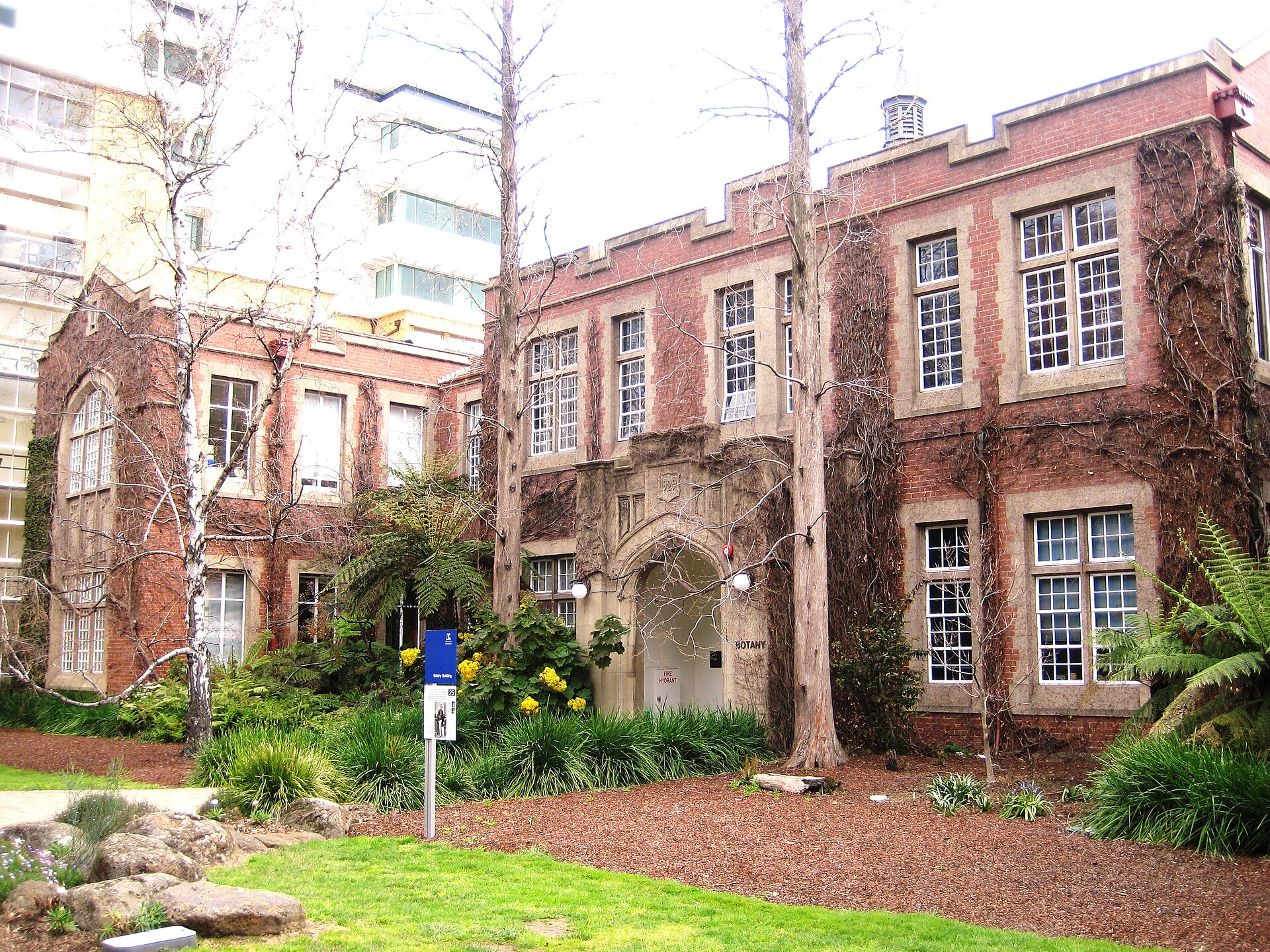
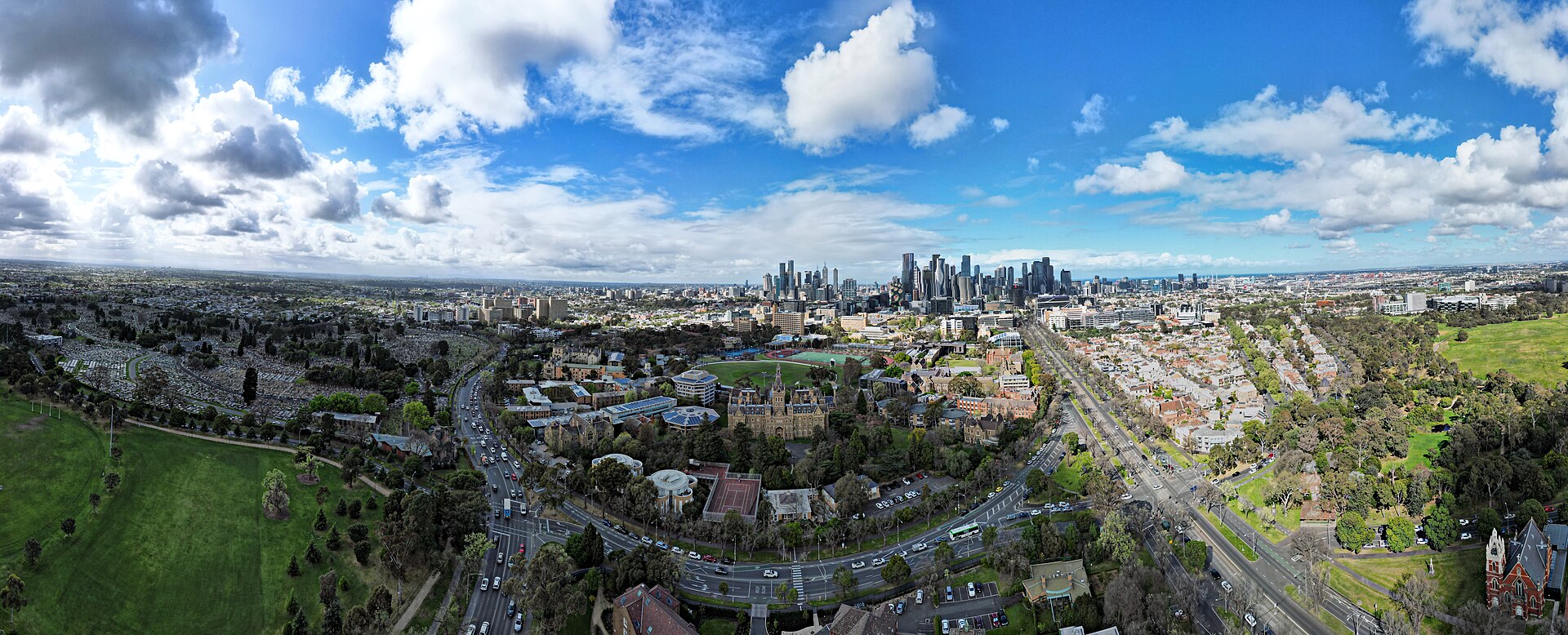
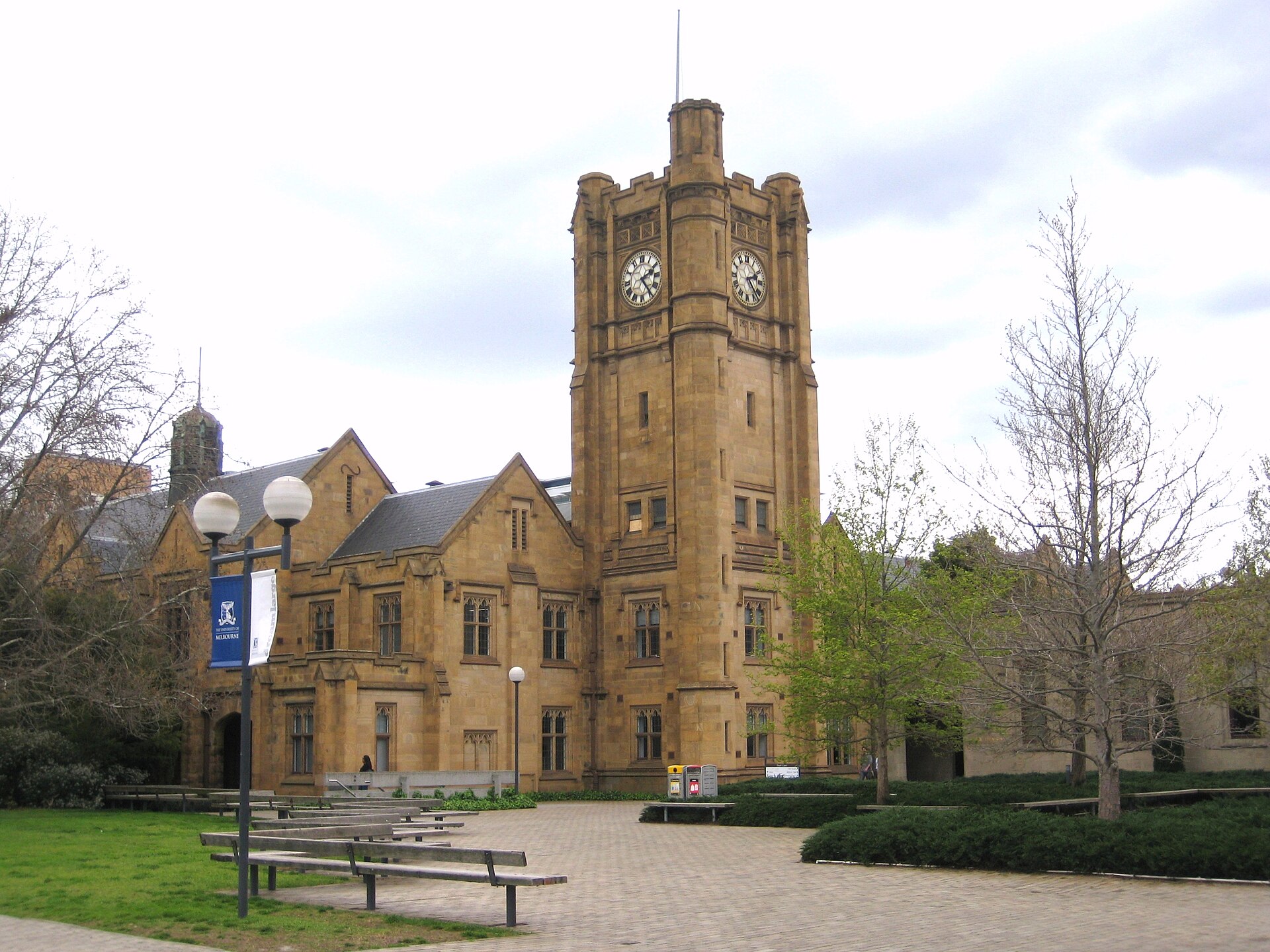
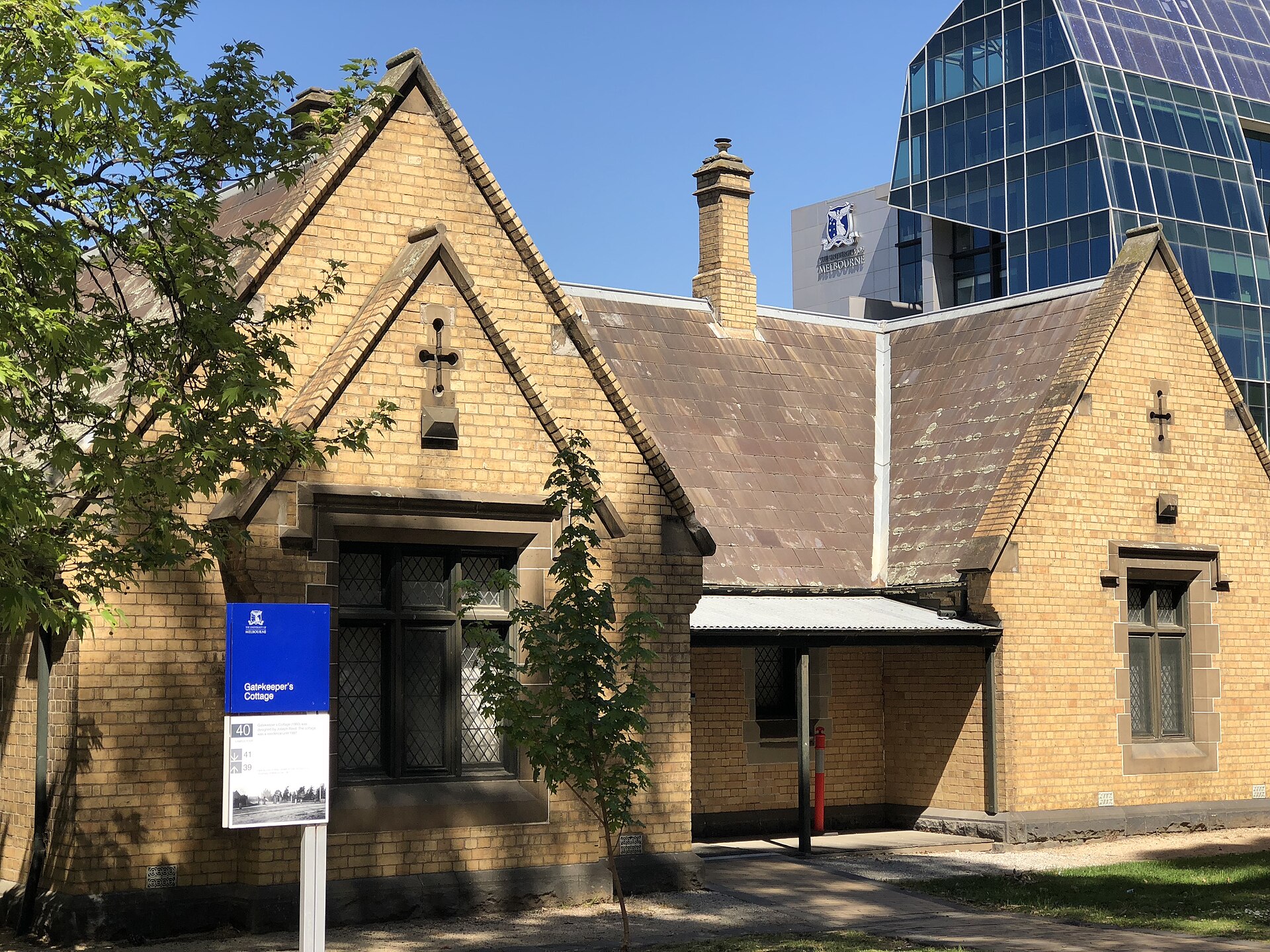
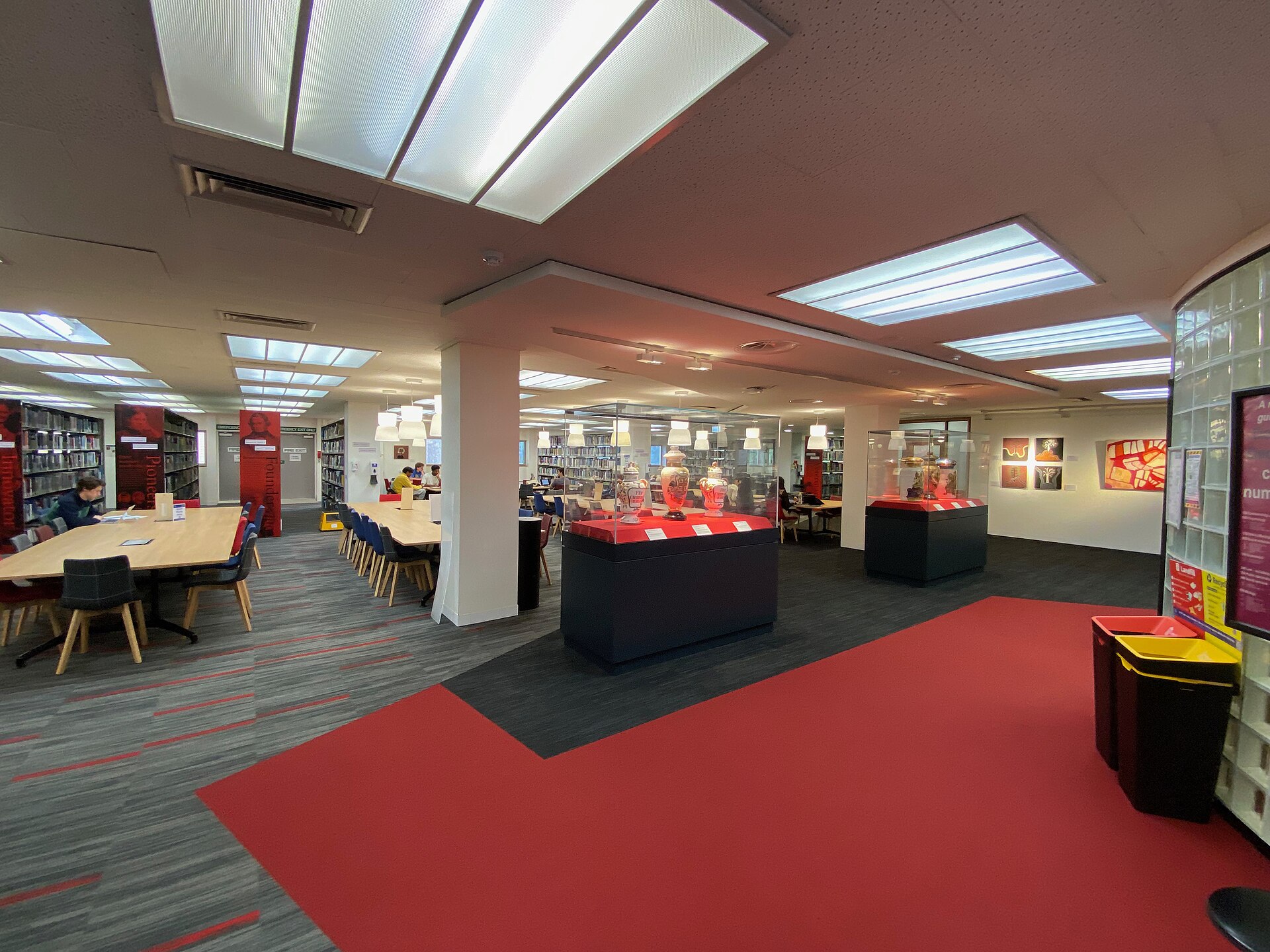
The University of Melbourne — campus in pictures
Real, freely-licensed photographs of the campus (via Wikimedia Commons).

WHY MELBOURNE
Why Choose Melbourne — Prestige, Research & Asia-Pacific Advantage
The University of Melbourne is not simply the best university in Australia — it is one of the most strategically positioned research universities in the world for students who want careers across Asia, Australia, and the Pacific.
SELECTIVITY
Acceptance Rate & Academic Profile Who Gets In
The University of Melbourne's overall acceptance rate reflects its position as a broad-intake research university. However, competitive programs — particularly Biomedicine, Law (graduate entry), and Medicine — are significantly more selective. For international students, admission is grades-first: your academic qualification and its equivalent score determine your eligibility.
Melbourne does not use a holistic admissions process. There are no essays, recommendations, or interviews for standard undergraduate admission. Entry is determined by academic qualification alone — your IB total, A-Level grades, or equivalent translated to an indicative ATAR. Higher-demand courses require higher entry scores. For the most competitive programs, the difference between the stated minimum and a comfortable offer is significant.
AT A GLANCE
University of Melbourne — Quick Facts
HOW TO APPLY
Melbourne Application — Direct & VTAC Pathways
Unlike US or UK universities, Melbourne uses a straightforward merit-based system. No personal essays or teacher recommendations are required for most undergraduate courses. The process differs based on where you are completing your qualification.
WHAT MELBOURNE WANTS
What Melbourne Admissions Looks For Grades-First, Qualification-Based
The University of Melbourne's undergraduate admissions process is deliberately transparent. Academic performance is the primary — and usually decisive — criterion. Unlike the US or UK holistic system, admission is determined by your academic qualification and its equivalent score. Your grades carry the full weight of your application.
For international students, your qualification (IB Diploma, A-Levels, country-specific secondary certificate) is converted to a notional ATAR equivalent, which determines eligibility for your chosen degree. Each undergraduate course has a minimum entry score, and for popular programs a competitive cut-off that is typically much higher than the minimum. Subject prerequisites — particularly mathematics — must be met for specified degrees.
KEY DATES
Application Deadlines — Semester 1 & Semester 2
Melbourne offers two intakes per year. Semester 1 (February) is the main intake with the largest number of available places. Semester 2 (late July) is available for most undergraduate courses. Apply early — international student visas require processing time, and competitive program places fill before the deadline.
Deadlines are indicative based on published guidance. Always verify the current cycle deadlines at study.unimelb.edu.au — they are updated annually and may vary by program.
| Intake | Programs | Deadline | Notes |
|---|---|---|---|
| Semester 1 (February) | Standard undergraduate programs | 30 November | Main intake; most places available |
| Semester 1 (February) | Medicine, Law (professional) | 31 August | Earlier deadline for professional programs |
| Semester 2 (late July) | Standard undergraduate programs | 31 May | Mid-year intake; apply directly to Melbourne |
LIFE AT MELBOURNE
Student Life — Campus, City & Community Parkville & Beyond
The University of Melbourne's Parkville campus is one of Australia's most beautiful — sandstone buildings and modern research facilities set in tree-lined grounds, minutes from the Melbourne CBD. With 45% of students from overseas, the campus is one of the most genuinely international in the world.
Melbourne is consistently rated one of the world's most liveable cities, and student life reflects that. The Carlton neighbourhood adjacent to campus is a hub of cafés, bookshops, and student life. The CBD, arts precincts, and parks are all within easy reach. The city's multicultural character — reflected in food, festivals, and neighbourhoods across the metropolitan area — makes it a natural home for international students from every region.
CAREER OUTCOMES
Graduate Outcomes & Career Prospects Employment & Employability
The University of Melbourne ranks among the top universities in the world for graduate employability — consistently #1 in Australia. The graduate-professional structure of the Melbourne Model means many graduates hold both an undergraduate and a professional degree by the time they enter the workforce.
Melbourne graduates enter the workforce with the combination of breadth from their undergraduate degree and depth from their graduate professional qualification. Key employment sectors include professional and financial services, healthcare, law, technology, government, and education. The Asia-Pacific focus of Melbourne's research and alumni network opens doors across the region in ways few other universities can match.
Stats
Cards
COMMON QUESTIONS
University of Melbourne — Frequently Asked Questions
Do I need to write a personal essay to apply to Melbourne?+
For most undergraduate courses, no — admission is grades-based. You will need a Statement of Purpose (300–500 words) explaining your motivation for your chosen course. Melbourne Law School (JD) requires a 1,000-word statement.
What IB score do I need?+
The minimum IB Diploma score is 38 for Bachelor of Science, 40 for Bachelor of Commerce, and 42 for Bachelor of Biomedicine. These are minimums — competitive entry for popular programs can be higher. Subject prerequisites (particularly mathematics) must also be satisfied.
Can I apply for Semester 2 (mid-year) entry?+
Yes. Most undergraduate programs offer a Semester 2 (July) intake. The direct international application deadline is 31 May. Not all courses may be available for mid-year entry — check individual course pages.
Does Melbourne offer scholarships for international undergraduates?+
Yes. The Melbourne International Undergraduate Scholarship provides 25% tuition fee remission for the full undergraduate degree, awarded to approximately 110 students annually. No separate application is required — eligible students are automatically considered at the time of admission. Eligibility is restricted to citizens of countries with a GDP per capita of USD $10,000 or below (World Bank data).
Do I apply through VTAC or directly to Melbourne?+
If you are completing your IB Diploma in Australia or New Zealand, apply through VTAC. If you are completing overseas qualifications anywhere else — including IB outside Australia/NZ, A-Levels, or other national qualifications — apply directly through Melbourne's online portal.
What is the Melbourne Model and how does it affect my degree?+
The Melbourne Model is a two-stage academic structure: students complete a broad three-year undergraduate degree (e.g. Bachelor of Science or Commerce), then progress to a graduate professional degree (e.g. Medicine, Law, Engineering). Medicine, Law, and Engineering are graduate-entry — you cannot study them directly as an undergraduate. Plan for a longer pathway of 5–7 years total.
Are SAT or ACT scores recognised?+
SAT and ACT are recognised as supplementary evidence of academic ability, but they are not Melbourne's primary admission criterion. Your secondary qualification (IB, A-Levels, or equivalent) is what counts. Strong SAT/ACT scores may support applications but do not replace the academic qualification requirement.
What English language score do I need?+
For most undergraduate programs: IELTS Academic 6.5 overall (no band below 6.0), TOEFL iBT 79, PTE Academic 58, or Duolingo English Test 120. Some programs require higher scores. Test results must be no more than two years old.
ACADEMIC REQUIREMENTS
Melbourne Academic Profile — What International Students Need
Melbourne's admissions system is refreshingly transparent: academic performance is the primary — and usually decisive — criterion. But knowing how your qualification converts, which scores are genuinely competitive, and which prerequisites are non-negotiable can be the difference between an offer and a disappointment.
ENTRY BENCHMARKS
Academic Entry Requirements by Degree
Melbourne uses your qualification's ATAR equivalent as the primary entry criterion. Every qualification — IB Diploma, A-Levels, Gaokao, Indian national boards — is mapped to an ATAR equivalent. The IB minimum scores below are sourced from published university guidelines. A-Level and country-specific requirements are published on individual course pages at study.unimelb.edu.au.
IB scores for Arts, Design, and Fine Arts are indicative ATAR-conversion estimates. Verify current minimums at study.unimelb.edu.au before applying — entry scores are updated annually.
| Degree | Ib Minimum | Competitiveness | Math Required |
|---|---|---|---|
| Bachelor of Science | 38 | Moderate — higher for popular majors | Yes |
| Bachelor of Commerce | 40 | Competitive | Yes |
| Bachelor of Biomedicine | 42 | Highly competitive | Yes |
| Bachelor of Arts | ~35–38 (indicative) | Moderate | No |
| Bachelor of Design | ~35–38 (indicative) | Moderate; portfolio may be required | No |
| Bachelor of Fine Arts / Music | ~35–38 (indicative) | Audition or portfolio required | No |
STANDARDISED TESTING
SAT, ACT & Standardised Test Policy Optional — Not the Primary Criterion
The University of Melbourne does not require the SAT or ACT for undergraduate admission. Entry is determined by your secondary qualification — not by US standardised test scores. If you have strong SAT or ACT results, they can be submitted as supplementary evidence, but they will not substitute for your academic qualification.
This is a fundamental difference from the US admissions system. At Melbourne, your Year 12 academic performance — your IB total, A-Level grades, or national leaving certificate results — is what counts. If your IB or A-Level results are strong, you do not need SAT/ACT scores to build a competitive application. Focus your energy on your primary qualification.
IB & A-LEVELS
IB Diploma & A-Level Requirements at Melbourne
THE MELBOURNE MODEL
Understanding the Melbourne Model — Broad Undergraduate + Graduate Professional
The Melbourne Model is the defining feature of a University of Melbourne education. Introduced in 2008 as a major restructure of Melbourne's curricula, it replaced nearly 100 undergraduate degrees with a set of broad 'New Generation' undergraduate degrees that feed into elite graduate professional schools.
Under the Melbourne Model, you do not study Medicine, Law, or Engineering as an undergraduate. Instead, you complete a three-year generalist degree — Bachelor of Science, Arts, Commerce, Biomedicine, Environments, Design, Fine Arts, or Music — developing depth in your discipline and breadth subjects from outside it. You then apply to a graduate professional degree (MD, JD, Master of Engineering, etc.) for a further 2–4 years. The result is a graduate who is both broadly educated and professionally expert.
PREREQUISITES
Subject Preparation — What Melbourne Requires
ENGLISH REQUIREMENTS
English Language Requirements
All international students must demonstrate English language proficiency through an approved test. The minimums below apply to most undergraduate programs. Some programs (Medicine, Education, Communications) require higher scores. Results must be no more than two years old at the time of application.
| Test | Overall | Sub Scores | Notes |
|---|---|---|---|
| IELTS Academic | 6.5 | No individual band below 6.0 | Most widely accepted; Home Edition not accepted |
| TOEFL iBT | 79 | Writing 21, Speaking 18, Reading 13, Listening 13 | TOEFL Home Edition not accepted |
| PTE Academic | 58 | No individual score below 50 | PTE Academic only; not PTE General |
| Cambridge CAE | 176 | No component below 169 | Cambridge English: Advanced |
| Duolingo English Test | 120 | Check individual course requirements | Not accepted for all programs |
YEAR-BY-YEAR PLAN
Building Your Profile for Melbourne — Grade 9 to 12
Because Melbourne is grades-first, the most impactful thing you can do is build an exceptional academic record — particularly in subjects relevant to your intended degree. Extracurriculars and awards will not substitute for strong grades.
PITFALLS TO AVOID
Common Academic Mistakes in Melbourne Applications
Items
- Applying to Bachelor of Biomedicine or Commerce without checking mathematics prerequisites — missing mathematics in your qualification is an automatic disqualifier.
- Expecting holistic review — Melbourne does not evaluate extracurricular activities or personal statements as part of academic eligibility. Only grades count for entry decisions.
- Confusing the VTAC and direct application pathways — applying through the wrong system risks your application being delayed or missed.
- Underestimating the English language requirement — IELTS 6.5 is the minimum for most programs, but Medicine and Education require higher. Never assume your English proficiency meets the threshold without a verified test result.
- Applying for Biomedicine intending to directly enter Medicine without understanding the competitive graduate entry structure — there is no guaranteed Medicine place after completing Biomedicine; MD admission is a separate, competitive graduate application.
- Relying on the minimum IB score — the minimum entry score and the competitive cut-off for popular programs can differ significantly. Aim above the stated minimum.
- Leaving the English test booking too late — results must be current, test centres book up, and some programs have earlier document submission requirements.
Faqs
Do I need work experience for undergraduate admission?+
Not for standard undergraduate degrees. Academic qualification is sufficient. Some graduate-entry professional programs (particularly MBA and certain specialist masters) do require relevant work experience, but that is not an undergraduate consideration.
What if my predicted IB grades are at the minimum?+
Predicted grades at the minimum threshold may receive a conditional offer, but final results below the minimum will result in the offer being withdrawn. Aim to exceed the minimum to make your conditional offer secure.
Is IELTS UKVI accepted by Melbourne?+
Melbourne accepts IELTS Academic. IELTS for UKVI is typically accepted as equivalent. IELTS Indicator (the online home version) is NOT accepted.
COST & FINANCIAL AID
Cost of Studying at Melbourne — Honest Numbers for International Students
Studying at the University of Melbourne is a significant financial commitment for international students. International (overseas fee) students pay the full international tuition rate — there is no general need-based aid programme for international undergraduates comparable to the US system.
Unlike US universities that offset tuition with substantial need-based grants, Australian universities charge full international rates. Melbourne's primary scholarship for international undergraduates is merit-based with strict GDP eligibility. Understanding the true cost and available funding pathways is essential to building an honest financial plan.
ANNUAL COSTS
Annual Cost Breakdown — International Undergraduates
The figures below represent estimated annual costs for international undergraduate students at Melbourne. All amounts are in USD. Individual program tuition varies — specialist programs (Medicine, Law) may cost more than the estimate below.
All figures from the university facts file; USD amounts based on approximate AUD conversion. Budget an additional 10–15% for visa fees, mandatory OSHC health insurance, textbooks, and return travel.
| Item | Amount | Notes |
|---|---|---|
| International Tuition (annual) | $31,000 | USD estimate; varies by program |
| Total Cost of Attendance (annual) | $49,000 | Tuition + all living and personal costs |
| Cost of Living (annual) | $21,000 | Accommodation, food, transport, personal expenses |
| Application Fee (one-time) | $65 | Approximately AUD $100 |
FINANCIAL AID POLICY
Financial Aid for International Undergraduates
The University of Melbourne does not operate a general need-based financial aid programme for international undergraduate students. International students pay the full overseas fee rate. The primary financial support mechanisms are the Melbourne International Undergraduate Scholarship, Australian government-funded awards, and home country government scholarships.
Unlike Harvard, Princeton, or other US universities that meet 100% of demonstrated financial need regardless of nationality, Melbourne does not offer income-based tuition reductions for international undergraduates. If the full cost of attendance is a barrier, the available options are targeted and eligibility-restricted. Plan your funding strategy early — ideally 12–18 months before your intended start date.
SCHOLARSHIPS
Melbourne Scholarships for International Undergraduates
FINANCIAL REALITY
The Affordability Reality for International Students
At approximately $31,000 USD per year in tuition and $49,000 USD total annual cost of attendance, studying at Melbourne is a major investment — comparable in headline cost to many mid-tier US private universities. Unlike those universities, Melbourne does not offset this with significant need-based aid for international undergraduates.
The calculation looks different when you consider total degree cost: Melbourne undergraduate degrees are typically three years (not four), reducing total expenditure by one full year of fees and living costs versus a US four-year programme. For students who qualify for the Melbourne International Undergraduate Scholarship (25% tuition remission), the effective annual tuition drops to approximately $23,250 USD. Melbourne's cost should be weighed against the combination of degree quality, graduate employability, and Australia's quality of life. For many international families from South and Southeast Asia, Melbourne represents an accessible alternative to the US or UK research university at comparable global standing.
All figures are estimates. Actual costs in AUD depend on currency exchange rates at the time of study. The AUD has historically been below parity with the USD, which moderates the real cost for many international families.
HOW TO FUND YOUR DEGREE
Steps to Fund Your Melbourne Education
COST QUESTIONS
Cost & Scholarships — Frequently Asked Questions
Does Melbourne offer need-based financial aid to international undergraduates?+
No. The University of Melbourne does not operate a need-based aid programme for international undergraduate students. International students pay the full overseas fee rate. The Melbourne International Undergraduate Scholarship provides merit-based tuition remission but has strict GDP-based eligibility criteria.
How much does the Melbourne International Undergraduate Scholarship save?+
The scholarship provides 25% tuition fee remission for the full duration of the undergraduate degree. At annual tuition of approximately $31,000 USD, the scholarship reduces this to approximately $23,250 USD per year — a saving of roughly $7,750 per year, or more than $23,000 over a three-year degree.
Do I need to apply separately for the Melbourne International Undergraduate Scholarship?+
No. Eligible students (citizens of countries with GDP per capita ≤ $10,000 USD) are automatically considered when they apply for undergraduate admission. No separate scholarship application or essay is required.
Can I work while studying to offset costs?+
Yes. International students on an Australian student visa are permitted to work up to 48 hours per fortnight during study periods, and full-time during scheduled university breaks. Melbourne's strong local economy — particularly in hospitality, retail, and professional services — means part-time work is generally available.
Is Melbourne cheaper than UK or US universities?+
Melbourne's annual costs are broadly comparable to mid-range UK universities and below most US elite private universities. The three-year undergraduate degree structure means total degree cost is lower than a four-year US degree at the same annual rate.
What is OSHC and is it compulsory?+
OSHC (Overseas Student Health Cover) is mandatory health insurance for all international students on an Australian student visa. It covers basic medical and hospital visits. Budget approximately AUD $600–900 per year (USD $400–600). It is non-optional — you cannot obtain a student visa without it.
ESSAYS & APPLICATIONS
Melbourne Applications — The Honest Truth About Essays in Australian Admissions
If you have been preparing for US university applications, the most important thing to understand about Melbourne is this: there are no personal essays for undergraduate admission. Australian undergraduate entry is grades-first. The written requirements at Melbourne are a Statement of Purpose for your application, and — if you're applying to the Law School — a 1,000-word statement for the JD.
This guide explains exactly what written material is required, when it matters, and how to approach it strategically — particularly for students targeting the Melbourne International Undergraduate Scholarship and the Melbourne Law School Juris Doctor, where written quality can be genuinely decisive.
OVERVIEW
What Written Material Does Melbourne Actually Require?
Melbourne's undergraduate application does not ask you to write a Common App-style personal essay. There is no prompt about your greatest challenge, your identity, or what you will contribute to campus life. The written requirements are more practical and focused — but they still matter.
STATEMENT OF PURPOSE
Writing Your Statement of Purpose — Strategy & Approach
The Statement of Purpose (SOP) for Melbourne's direct application is a 300–500 word document explaining your motivation for your chosen course. It is not an American personal essay — it should be concise, specific, and focused on academic and professional rationale, not personal narrative.
Melbourne's admissions team reads your SOP alongside your academic results. A well-written SOP demonstrates clarity of purpose, understanding of the Melbourne Model's two-stage structure, and a credible connection between your academic background and chosen degree. A poorly written SOP rarely costs you an offer if your grades are strong — but for borderline cases, a clear and persuasive SOP can make a meaningful difference.
MELBOURNE LAW SCHOOL
The Melbourne Law School JD Statement — 1,000 Words That Matter
The Melbourne Juris Doctor (JD) is a graduate-entry law degree — you apply after completing (or near the end of) your undergraduate degree. The application requires a 1,000-word personal statement, which carries significantly more weight than the standard SOP.
Melbourne Law School selects its JD cohort from a pool of academically strong candidates, which means the personal statement becomes a genuine differentiator. Use the full 1,000 words. Address your motivation for law, your relevant experiences, why Melbourne Law specifically (faculty, the Melbourne Law Masters programme, the clinical programme, the city's legal landscape), and your professional goals. The statement should tell a coherent story — not a list of accomplishments.
COURSE SELECTION
Choosing Your Melbourne Degree — Strategic Course Selection Under the Melbourne Model
Under the Melbourne Model, your undergraduate degree choice is a strategic decision. It is the foundation for your graduate professional pathway. Choosing the wrong undergraduate degree for your long-term goals can mean a longer or less certain route to your target profession.
The most common strategic errors: choosing Bachelor of Biomedicine because it sounds relevant to Medicine, without understanding that MD entry is competitive from any undergraduate degree — not guaranteed from Biomedicine. Or choosing Bachelor of Arts as the 'easiest' entry route, without considering whether it positions you competitively for the graduate professional degree you actually want.
WRITING APPROACH
How to Write an Effective Melbourne Statement
WHAT NOT TO DO
Common Mistakes in Melbourne Written Applications
- Writing a US-style emotional personal narrative (hardship story, identity reflection) instead of an academically focused statement of purpose — Melbourne is looking for academic clarity and professional intent, not personal revelation.
- Praising Melbourne generically ('world-class university', 'excellent ranking') without demonstrating specific knowledge of the degree structure, faculty, or graduate pathway you are targeting.
- Ignoring the 1,000-word allocation for the JD statement — the competition fills every word with substantive content; submitting a thin 600-word statement reads as underinvestment in your own application.
- Submitting a statement without proofreading — grammar and spelling errors in a 300–500 word document are clearly visible and reflect on your English language proficiency.
- Writing the same generic statement for multiple Australian universities — Melbourne's Melbourne Model is distinctive and should be referenced specifically; a generic statement reads as low effort.
- Focusing on why you want to live in Melbourne (the city) rather than why you want to study this specific degree at this specific university.
- Assuming that because admission is grades-first, the written statement doesn't matter — for borderline admissions, for the JD application, and for scholarship decisions, writing quality can be decisive.
WRITTEN APPLICATION QUESTIONS
Written Application — Frequently Asked Questions
Do I need to write a personal essay for Melbourne undergraduate admission?+
No — not in the US Common App sense. You need a Statement of Purpose (300–500 words) explaining your motivation for your chosen course. This is a professional, academic statement — not a personal narrative essay. Your grades, not your story, determine your eligibility.
What exactly should I write in my Statement of Purpose?+
Address: why you have chosen this specific degree (with reference to Melbourne's structure and your academic background); what graduate or professional pathway you are targeting after your undergraduate degree; why Melbourne specifically. Keep it focused, concrete, and free of generic filler.
Is the JD personal statement evaluated differently from the undergraduate SOP?+
Yes. The Melbourne Law School JD statement (1,000 words) is a meaningful evaluation component — not a formality. JD admissions involve a competitive pool of academically qualified candidates, and the personal statement is a genuine differentiator. Treat it with the same seriousness as a US law school application essay.
Do I need to write anything for the Melbourne International Undergraduate Scholarship?+
No. Eligible students are automatically considered when they apply for admission — there is no scholarship essay or separate scholarship application required.
How important is the SOP compared to my IB or A-Level results?+
For standard undergraduate admission, your academic results are the primary criterion. A strong SOP rarely converts a below-minimum academic result into an offer. However, for borderline cases and professional degree applications (JD, MD pathway), the SOP becomes significantly more important.
Should I mention the Melbourne Model in my statement?+
Yes — if it is genuine and relevant. Demonstrating that you understand Melbourne's undergraduate-to-graduate structure, and that you have consciously chosen this two-stage pathway, signals thoughtful research and commitment to your educational plan. This is particularly relevant for students targeting Medicine, Law, or Engineering.
Can I use AI tools to help write my statement?+
Use AI as a drafting aid, not a ghostwriter. A statement that reads as AI-generated — smooth, generic, impersonal — is less convincing than one with genuine voice and specific content. Write the ideas yourself; use AI to improve structure and language. The goal is a statement that only you could have written.
Courses — schools, degrees & intake
10 degrees across 6 groupings.
Faculty of Arts · 1 degrees
Bachelor of Arts
Faculty of Business and Economics · 1 degrees
Bachelor of Commerce
Faculty of Science · 2 degrees
Bachelor of Science
Bachelor of Agricultural Sciences
Faculty of Architecture, Building and Planning (Melbourne School of Design) · 2 degrees
Bachelor of Design
Bachelor of Environments
Faculty of Fine Arts and Music (Victorian College of the Arts) · 2 degrees
Bachelor of Fine Arts
Bachelor of Music
Faculty of Medicine, Dentistry and Health Sciences · 2 degrees
Bachelor of Biomedicine
Bachelor of Oral Health
Want your real chances at University of Melbourne?
Create a free TYCHR account for your personalised admit-chance, a shortlist you can track, exact entry requirements, and essay + counselling help.